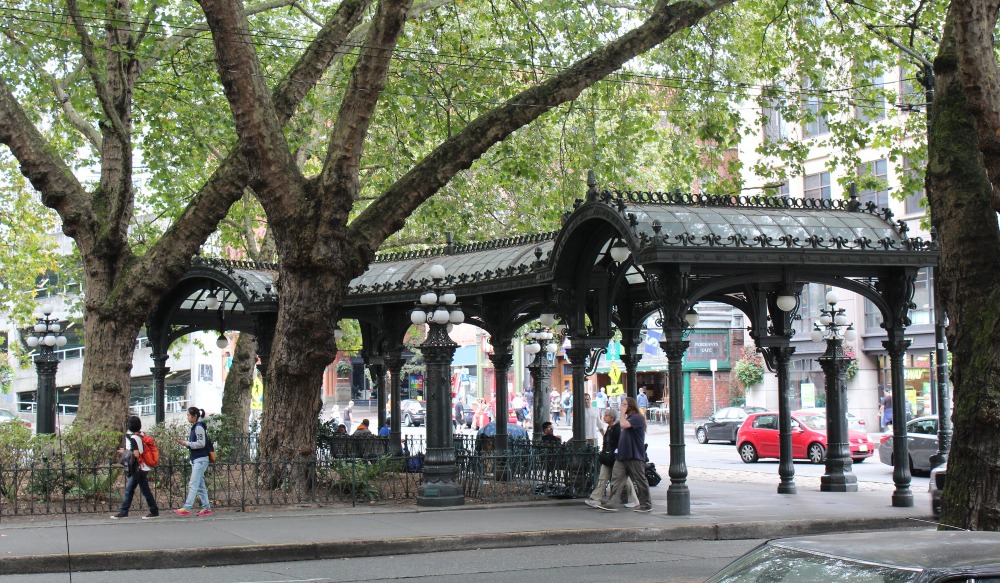

When Seattleites have guests from out of town, the first places they visit are Pike Place Market, Pioneer Square, and the Chinatown-International District and Ballard. These are iconic Seattle places that tell a story about Seattle’s past, perseverance and activist spirit, and they are protected because of having been designated as historic districts.
They remain economic engines as well. Their success is a result of their unique character and authenticity and that requires vigilance. Seattle has eight historic special districts, each with a dedicated group of citizens, authorized by the City Council to ensure adherence to preservation guidelines when changes are proposed.
Lately, however, the requirement of historic district review over changes to the streetscapes is being blamed as an unnecessary obstacle to improving safety on the streets in the districts. Amendment 16 to Council Bill (CB) 121296 is intended to remove the historic boards’ authority over the addition of traffic control devices, which would be assigned solely to the City Traffic Safety Officer/Traffic Engineer: CB 121296 – Amendment 16
Safety first
The authors agree that safety is of greatest priority. In our ever-evolving world, not all risks can be anticipated. However, without review by the boards, there will be unintended consequences that impact the character of the districts. Review by each board is essential because it ensures that proposed changes in the historic districts are available for public review and gives the community a meaningful voice before decisions are made.
The issue is not traffic safety but notification and collaboration with historic district review boards to avoid unintended consequences, such as what’s happened in Chinatown International District: closure of Jackson Street during Tet and Chinese New Year, installation of a dragon design plaque upside down, another with the zodiac animals in the wrong starting order, and a problematic curb extension that can’t be removed. No one can be expected to know all cultural norms and how they can be adjusted or tweaked; hence the need for a review board to inform applicants before they go ahead with a project.
Examples of successful outcomes in collaboration between the historic boards and SDOT include the use of metal ADA ramp materials in Pioneer Square and Pike Place Market instead of yellow plastic, selection of planters for the Pike Place pilot project, and the Ballard Board’s approval of corten planters instead of plastic at Ballard Ave and 20th Ave NW.
The co-sponsors of Amendment 16, Councilmembers Foster and Rinck, have asserted that the Traffic Engineer should have the authority, not the historic boards. But authority and expertise are not mutually exclusive. The historic boards provide specialized knowledge that can help the Engineer identify solutions that meet transportation needs while respecting Seattle’s historic character. Each board reviews design changes and includes at least one architect. With timely City briefings and site visits, the boards can support a collaborative review process that leads to the most well-informed solution. Preserving each board’s role will strengthen, not slow, the Traffic Engineer’s efforts, and respect the need for due public process.
Co-signers:
Betty Lau Margaret Pihl Cathleen O’Callaghan
Discover more from Post Alley
Subscribe to get the latest posts sent to your email.

