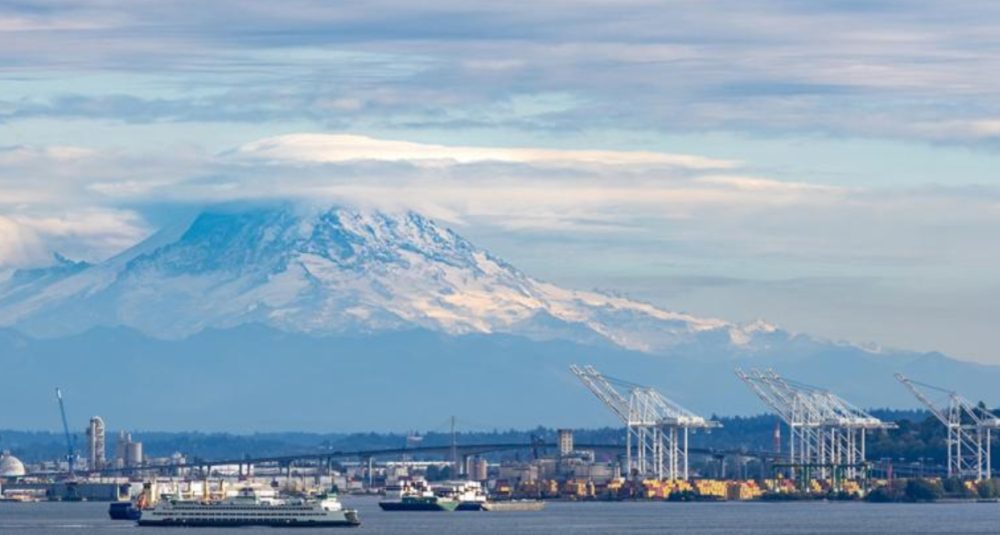

Pat Davis, the longest-serving Seattle Port Commissioner who recently passed away, joked that the Port Commission “is not a springboard to higher office, it’s a gangplank.”
Since the 1990s, seven Port of Seattle commissioners who have pursued state or local elective position have come up empty-handed.

The Port election curse was evident again this election cycle when Commissioner Toshiko Hasegawa’s hopes to jump from the waterfront to a King County Council position were dashed by state Rep. Rebecca Saldana.
Hasegawa, a commissioner since 2022, lost to Saldana by 61 percent to 38 percent. She was defeated despite a deep political pedigree, a progressive platform nearly identical to Saldana’s and many endorsements. The contest was one of the County Council’s most costly: nearly $600,000 was raised by the two candidates.
Some commissioners have escaped the curse: Paul Schell won election to one term as Seattle Mayor after long career in public and business life, including seven years as a commissioner; Lloyd Hara, a longtime city and county official before serving five years as commissioner, was elected County Assessor from 2009 to 2015; and Gael Tarleton, a defense analyst, UW administration and commissioner, won election to a 36th District House seat in 2012.
It is certain other Port Commissioners have contemplated seeking other offices, or were encouraged to run, but stayed put when they realized their chances of winning were slim.
The peculiar nature of the Commission, a body of five part-time officials who oversee but do not directly manage the Port, creates several obstacles that curtails dreams of higher office.
The airport and seaport may be well known, but the Port District and its commissioners have long labored in near anonymity. They must campaign in a county of 2.4 million, a very different proposition than a far smaller council or legislative district. Press coverage is sparse and, from the commissioners’ perspective, mostly focuses on negatives such as cost overruns or airport noise, rather than their work to invest in seaport and airport to bolster the economy and create jobs.
“The biggest problem is that we are not known,” said former commissioner Paige Miller, who served between 1988 and 2006. She ran unsuccessfully in 2005 against Seattle City Councilmember Richard Conlin. And with what coverage they do get, “you are always the black hat.”
Failed bids by commissioners to win other offices date back at least to 1993 when Jim Wright, a marine-equipment salesman, lost in the King County Executive primary to Gary Locke in a race to unseat Tim Hill. Locke went on to defeat Hill.
After Miller’s defeat, in 2011 former Commissioner John Creighton fell short in his campaign against longtime King County Council member Jane Hague of Bellevue.
Former commissioners Stephanie Bowman and Rob Holland ran unsuccessfully for the state Legislature in 2012. A year later, Holland cut short his term following accusations of misuse of a Port credit card and clashes with staff.
Former Commissioner Bill Bryant, an international trade consultant and Port Commissioner from 2008 to 2015, ran as a Republican for governor in 2016 but was defeated by Democrat Jay Inslee. Despite his moderate leanings, Bryant could not escape the shadow of Donald Trump.
In 2024, Commissioner Hamdi Mohamed vied unsuccessfully for an appointment to the King County Council after Joe McDermott’s resignation. The council appointed Jorge L. Barón to the post; he went on to win a full term. Former Port Commissioner Courtney Gregoire entertained running for state Attorney General but did not. Current Commission President Ryan Calkins has been mentioned often as a potential City Council candidate.
In the earlier days of the Port – created by voters in 1911—commissioners were drawn from the Seattle business and maritime establishments. Their focus was on building docks, marinas, and warehouses to support the region as a center for international trade. After World War II, the Port added Seattle-Tacoma International Airport to its portfolio, which demanded billions of dollars in investment.
In that era, commissioners had their own business careers apart from the Port. They shunned outside attention and had little interest in building a local base of support that could be a launching pad to other offices. The mission was simple: “We build things and rent them out,’’ said one former Port official.
In recent years, backgrounds of commission candidates have broadened considerably. Miller was a Magnolia activist who got involved with the Port over development of Terminal 91 below her community. Davis was a League of Women Voters member involved in the organization’s scrutiny of the Port. The business establishment thought Davis’s victory heralded the end of the Port, but she went on to push for the dramatic expansion of maritime and airport facilities and to expand the region’s role in international trade. Attorneys, an investment advisor, small-business owners, and an environmental activist have all won seats on the commission.
The Commission’s racial diversity has also expanded. In addition to Holland, a Black man, Hara, Hasegawa, and Mohamed, in 2019 Sam Cho, a businessman of Korean heritage, won a seat and became the youngest and first person of color elected as commission president.
As the pool of candidates has broadened, they bring a set of priorities ranging well beyond the Port’s traditional business objectives. Job-training programs like Port Jobs begun 36 years ago have greatly expanded into funding a Maritime High School, initiating a large Diversity in Contracting effort, and efforts to improve employment conditions the thousands of taxi drivers, food-service workers of immigrant employees at Sea-Tac Airport.
Since she took office, Hasegawa said, “we’ve transformed a relatively unrecognizable and unknown public institution into a powerhouse for progressive policy,” a claim that would certainly have shocked her predecessors just a few years ago.
The Port funds more than $20 million in community programs each year, largely from of the property-tax levy collected countywide.
But the bulk of the Port’s work remains in its airport, marine cargo, cruise, fishing, and recreational boating businesses. Those enterprises, while vital to the economy, are often noisy, polluting, and expensive. Low-paid immigrant workers fill many port-related jobs. The Port battled local communities for 20 years before it could build a third runway at Sea-Tac. Hasegawa’s own Beacon Hill neighborhood is especially vocal about low-flying jets headed for the airport.
“The Port is a competitive business,’’ Miller said, putting the organization sometimes at odds with the interests of individual communities. The constant dilemma for commissioners is ‘’how to you please your customers, and please your constituents.’’
As one industry observer puts it, “the major problem is that you have to make difficult financial decisions. At some point, your staff is going to say you have to do something that will impact the community. And you’re going to resent the staff. The only time you get attention is when something goes wrong.”
Miller said she was encouraged to run against Conlin but didn’t realize the barriers Port Commissioners faced. She called for a northward extension of the waterfront trolley but couldn’t get support from City Hall. She also was a Monorail backer, which voters rejected.
The key to moving up the electoral ladder, it appears, is to have built-in name recognition and ties to a community or district before joining the Port Commission.
This was the case for Schell, well-known as Seattle’s community development director overseeing renovation of the Pike Place Market, an arts advocate and innovative developer. As a commissioner, he, Miller, Davis, and other commissioners were central to the Port’s redevelopment of the derelict central waterfront. That reputation was the foundation of Schell’s 1997 victory over Charlie Chong, a feisty West Seattle resident and development critic.
Hara, too, came to the Port after 13 years as Seattle City Treasurer and strong ties to the Japanese American community.
Gael Tarleton was a former defense analyst, Russia expert, and UW fundraiser and strategic advisor when she ran for the Port in 2007. As a commissioner, the Ballard resident was a strong advocate for the area’s fishing and cargo industry and protection of industrial lands. Those efforts translated readily when she ran for the Legislature’s 36th District in 2012.
“I was the complete master of my base,’’ said Tarleton. “Ultimately, you have to know why your voters should follow you into that next job.”
She failed, however, to make to leap to statewide office in 2020, when she lost a bid for Secretary of State.
Even given the usual obstacles confronting Port commissioners, the margin of Toshiko Hasegawa’s 23-percentage-point loss to 37th District Sen. Rebecca Saldana may appear surprising. The race for the County Council’s 2nd District featured two Democrats with similar origin stories with immigrant forebearers, progressive politics and mirror-image platforms on housing, climate change, economic and social justice.
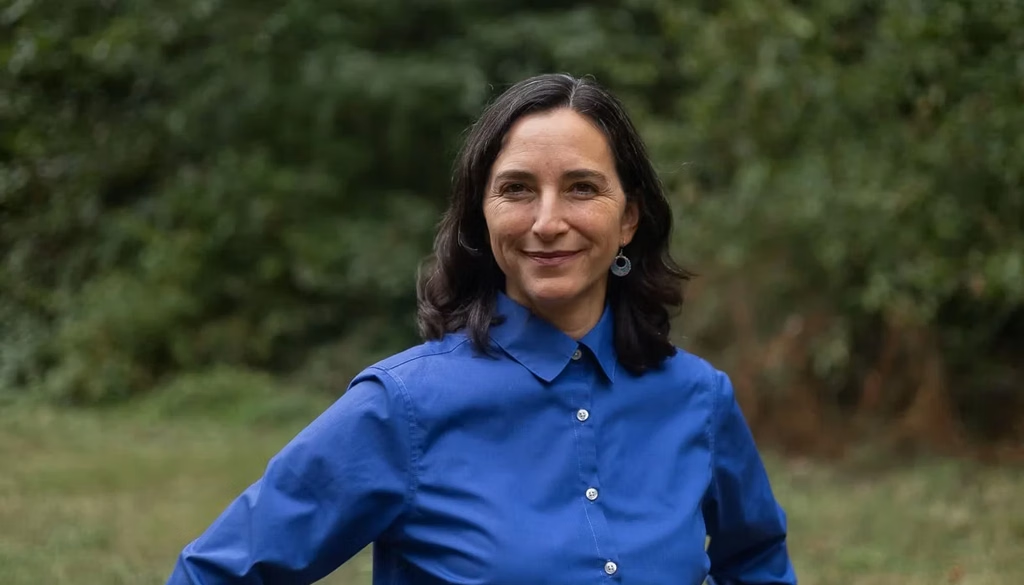
Saldana’s father was an undocumented farm worker who later became a Boeing worker. Hasegawa’s grandparents were held in a concentration camp during World War II, and father Bob Hasegawa is a longtime Teamsters leader and state senator. Hasegawa was raised, and still lives, in her grandparents’ house on Beacon Hill.
Saldana is a former union organizer who headed Puget Sound Sage, a labor-backed group working for economic and environmental change in south Seattle. Hasegawa had been a legislative staffer, worked on criminal-justice issues, and served as director of the Washington State Commission on Asian and Pacific American Affairs.
Both were battling over home turf in the council’s District 2, which covers southeast Seattle from I-90 to Renton.
Saldana, however, had a critical edge: That district is nearly identical to Saldana’s 37th District which she has represented for 10 years, whereas Hasegawa has been Port Commissioner for only about four years.
Hasegawa advocated for many Port proposals to stake out her claim as progressive leader: expanded job training for immigrant, minority and other disadvantaged communities, pushing for a costly airport child-care center and upgraded health-care standards for private-sector airport employees, a “Teal New Deal’’ for clean energy and shipping. She cited her experience along with other commissioners in overseeing Port mega-projects, including the successful $399 million Concourse C project.
Saldana emphasized her legislative experience, particularly bills on worker rights, wage theft, paid family leave, and unemployment benefits for striking workers.
The election divided Seattle’s progressives. Saldana was endorsed by King County Democrats, County Councilmembers Sarah Perry, and Claudia Balducci and five Seattle City Council members, along with a host of unions. Hasegawa was endorsed by former Gov. Jay Inslee and Gary Locke, County Executive Girmay Zahilay and current County Councilmembers Rod Dembowski and Steffanie Fain and four members of the Seattle City Council, along with the Seattle Times.
But Saldana won the endorsement that seems to matter most these days to the under-30 crowd — the Seattle Stranger’s. The paper heartily endorsed Saldana, calling Hasegawa “amateurish.”
Hasegawa admitted that losing the endorsement was a fatal blow. “In that district, the only path to win is to get the Stranger endorsement,’’ she said. “The writing was on the wall in July. Nevertheless, we gave it every effort. I’m very proud of that.”
She acknowledged the Port’s PR struggles. The Commission recently acted on its 2027 budget and raised the tax levy, ‘’but not one person from the public showed up.”
Tarleton noted the built-in advantage of legislators campaigning on their home turf.
“Saldana carried her base with her,’’ Tarleton said.
Will Port Commissioners hungry for higher office escape the curse in the future? Miller is not optimistic. “If you are going to run from the Port, do it early in your career,’’ she said, before the inevitable controversies arise that could damage your brand.
Tarleton, who made the successful transition to the Legislature, doesn’t advise that path at all for others considering higher local or state offices. “If I had ambitions for higher office, I wouldn’t have run for the Port. I probably would have figured out how to prepare to run for Congress or statewide.”
Discover more from Post Alley
Subscribe to get the latest posts sent to your email.