
This story previously ran in the Salish Current as part of its Community Voices. It is used here by permission.
The recent election of a new provincial government in British Columbia has significant ramifications for our neighbors up north. By giving the B.C. Conservative Party a solid majority after the provincial election in late October, British Columbia voters have sent a strong signal that they are ready for change. The somewhat surprising political shift came at the expense of the progressive left New Democratic Party (NDP), which held power in Victoria for nearly a decade.
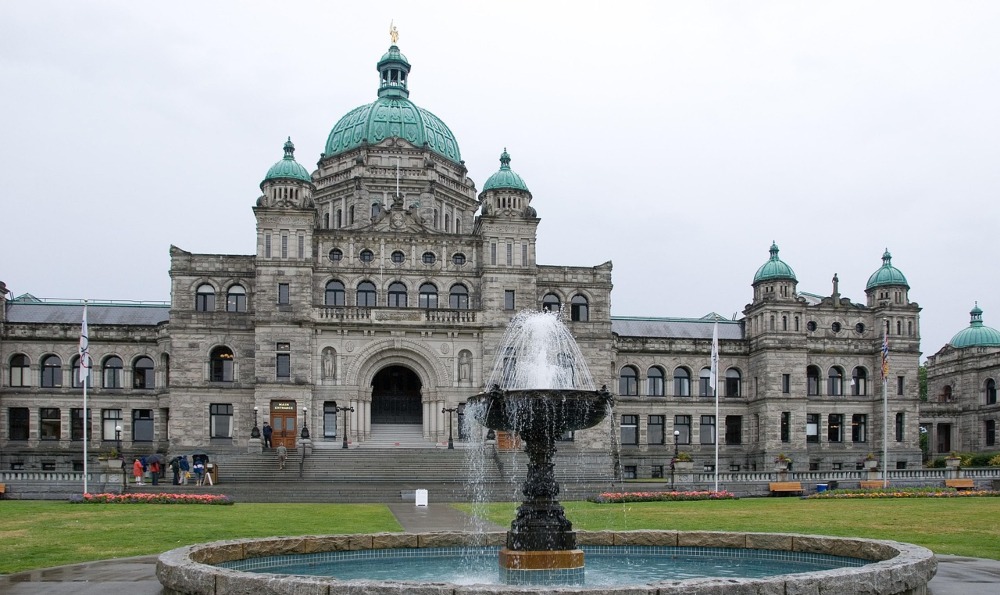
Will the changing political tide in Victoria have material ramifications for folks south of the border? The answer is most likely yes but it may be too early to answer the question with clarity. Many of the newly-elected Conservative members of the Legislative Assembly (MLAs) are unseasoned compared to their predecessors from the NDP. That means there will be a transition period as incoming MLAs find their way to Victoria’s Parliament Buildings to learn the ropes of provincial governance.
Conservative Party interim leader Lorne Doerkson, a longtime resident of the Cariboo region whose background includes newspaper publishing, financial planning and even rodeo riding is himself relatively unknown outside of B.C. political circles. But he hasn’t wasted time in amplifying his party’s bold agenda. Industrial growth is a key part of the Conservative equation. Doerkson has vowed to kickstart the province’s economy by ramping up the production of liquified natural gas, opening up more shipping activity on B.C.’s north coast, and overhauling the province’s carbon tax system.
Doerkson’s vision harkens back to the premiership of Gordon Campbell, who held B.C.’s highest office from 2001 to 2011. Yet Campbell, whose B.C. Liberal Party featured a coalition of political moderates and fiscal conservatives, championed simultaneous themes of economic growth and climate emissions reduction. This was best symbolized by Campbell and former California Governor Arnold Schwarzenegger famously signing the Pacific Coast Collaborative to Protect Shared Climate and Oceans, which committed B.C. and California, along with Washington and Oregon, to regional carbon reduction targets and clean energy technologies.
The Conservatives are less likely to toe that line between prioritizing industry and the environment, especially on climate change, as they navigate a complex intra-party dynamic between more fiscal and cultural trajectories of political conservativism.
From the Cascadia perspective, all of this contrasts with recent history. The New Democrats’ stranglehold on B.C. politics in recent years made for an easy alignment with Democrat lawmakers in Olympia despite ongoing tensions at the federal level. Who could forget former Premier John Horgan’s southern excursion in 2019, when the late B.C. leader addressed the Washington State Legislature in Olympia and symbolically held court with former governor Jay Inslee in Seattle to champion regional high-speed rail and a future Canucks-Kraken NHL hockey rivalry?
Those warm relations seem like a distant memory in the wake of the White House’s tariffs, a deterioration of U.S.-Canada relations across the board and the approval of specific industrial mega-projects along the 49th parallel. The Canadian federal government’s green-lighting of the border-adjacent Roberts Bank port expansion, with its profound ecological impacts for the Salish Sea and nearby communities like Point Roberts and Blaine, was met with little meaningful pushback from B.C.’s NDP government. Conversely, despite recent improvements to Amtrak’s Cascades rail service connecting Vancouver to Seattle and Portland, more recent prospects for the high-speed rail proposal championed by the Cascadia Innovation Corridor appear to have dimmed slightly (though in fairness WSDOT has ramped up public engagement efforts including its High-Speed Rail and I-5 Program public survey).
Still, it’s worth taking the long view when digesting these twists and turns of the B.C.-Washington relationship. The truth is that British Columbia politics have again taken an inward-looking turn within Canada, as B.C. residents grapple with many of the same issues hampering quality of life in other places. According to pollster Angus Reid, runaway living costs, housing affordability, healthcare accessibility, public safety and a softening job market resonated with B.C. voters as the most pressing public issues. Though environmental challenges will remain a priority, especially with B.C.’s densely populated Lower Mainland taking much of the brunt of massive industrial developments like an expanded port and a new petroleum pipeline, they did not move the needle in this election.
But it’s worth noting that B.C. and Washington have historically tackled some of these challenges together through grassroots collaboration and government diplomacy. During the early 1970s, relations between the two hit a low ebb owing to the Ross Dam/ Upper Skagit Watershed controversy in the North Cascades. Instead of exchanging barbs via the media, however, Premier Dave Barrett and Governor Dan Evans convened in person at Western Washington University as part of an ambitious three-day Symposium on Canadian-American Relations.
We should hold up the Barrett-Evans talks in Bellingham as the model regardless of which party takes office in Victoria or Olympia. The massive political shifts taking place on both sides of the border shouldn’t be cause for further regional division or isolation. Rather, we might use them as a reason to bring B.C. and Washington back to the table to figure out the pressing, jointly-shared quality-of-life issues in Cascadia, even as the economic-cultural fight at the federal level rages on.
Discover more from Post Alley
Subscribe to get the latest posts sent to your email.

