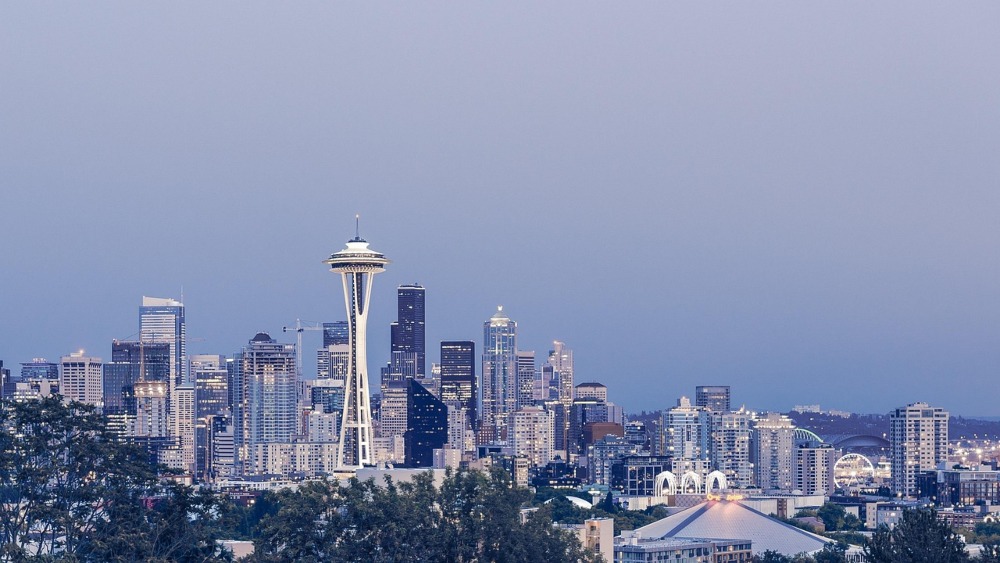

The City on Puget Sound has received a stunning new accolade. In case you haven’t heard, Seattle joined New York, London and Paris, judged the top four cities in the world. That’s right, Seattle placed among the top four — ahead of San Francisco, Tokyo, Boston and Zurich.
The top ranking comes from Oxford Economic, a commercial advisory firm based in Oxford, England. Last week Oxford issued its annual index of 1,000 global cities. In assessing cities, Oxford looks at five categories: economics, human capital, quality of life, environment and governance. Seattle scored 92.8 out of 100, placing it in the top ranks. (San Francisco rated fifth at 91.9.)
Seattle scored well in economics with the city’s metro area generating $632 billion in GNP last year. That works out to $152,000 per capita, making Seattle’s workforce of 4.2 million among the most productive on earth.
What separates Seattle from single industry towns is this city’s balance between major tech firms and its industrial heritage. Microsoft and Amazon provide contrast to Boeing’s airspace command and to major retailers like Costco, Starbucks and Nordstrom.
Seattle was top ranked in human capital with its highly-educated population. However, there are worrisome signs. Oxford Economics observed that immigration restrictions imposed by the federal government threaten to limit international talent, adversely impacting Seattle.
When it comes to quality of life, Seattle also scores high, thanks to comfortable per-person earnings and to the ready availability of cultural attractions. Counted among the cities’ amenities are the Seattle Symphony, Seattle Opera, Seattle Art Museum, Pacific Northwest Ballet and even grunge music. The city received an exceptional score for physical environment, ideally situated between Puget Sound and Lake Washington with majestic Mount Rainier hovering on the horizon. Adding to Seattle’s environmental attributes are its green spaces, trees and the stunning new 20-acre Waterfront Park.
The top-ranked cities – Seattle along with them — all share four qualities: they attract people from all over, invest in culture and make life cleaner and easier, as well as staying ahead of change.
Although it’s surprising to find Seattle placed among the world’s top four cities, the relative city newcomer has collected other “bests” and “mosts” and “tops.” One of the city’s early recognitions arrived in May,1996, when Newsweek’s cover pictured Washington D.C. pundit Michael Kinsley (newly hired to edit Microsoft’s Slate magazine) wearing a yellow rain slicker face-to-face with a salmon. The text: “Swimming to Seattle. Everybody else is moving there. Should you?”
Next significant honor came when Seattle was named the nation’s “Most Liveable City.” Much credit for the tribute came from Mayor Greg Nickels’ efforts to improve quality of life. Nickels, as president of the U.S. Conference of Mayors, had urged member cities to pledge to meet the goals of the Kyoto Protocol reducing greenhouse gases and promoting climate action. More than 1,000 cities signed up, following Nickels’ example.
Dozens of other titles and awards followed the city’s rise on the national scene. Seattle was named “Top City to Find a Mate;” “Best City for Singles,” “Happiest City” and – who would have guessed? — “America’s Politest City.”
Among Seattle’s recent tributes are “Top U.S. City for Public Transportation,” “Top Destination for Solo Travelers in the U.S.,” “Great American Biking City” and “Most Walkable City in the U.S.” Honors follow one another, ranging from serious praise to silliness like “Home of the Best Hot Dog.”
Through all Seattle’s boom and bust, then bust and boom again, the city continues to be defined as innovative, outdoorsy, global, progressive, independent and a great town for grunge, coffee, software, airplanes and the web.
However, lest the city grow complacent, it’s important to heed possible danger signs. John Cook, GeekWire publisher and co-owner, recently wrote that “our shifting image should concern us.” He said Seattleites have become “ambivalent, even hostile to the very incentives that helped build prosperity.” He quoted the Washington Post saying, “Seattle mayor waves goodbye to prosperity;” the Wall Street Journal observing “Seattle turns hostile to great businesses it helped make,” and the New York Times reporting, “Seattle’s socialist mayor taunts the rich as rift with Starbucks widens.”
Cook calls it “civic drift” and says that “competitors are beginning to notice.” He reports San Francisco, for one, could easily overtake Seattle. Furthermore he laments that this city has always had a strain of “Lesser Seattle.”
Cook recently participated in a discussion moderated by David Hyde and Sandeep Kaushik of “Blue City Blues.” He appeared along with San Francisco columnist Jonathan Weber and historian Margaret O’Mara. The panelists considered similarities and contrasts between the two West Coast cities. Although San Francisco reigns as the undisputed capital of AI, home to Open AI and Anthropic, both firms have opened engineering centers in Seattle.
One thing the debate panelists agreed on is that San Francisco Mayor Daniel Lurie has been achieving success in his role as the city’s chief cheerleader, coming across not as a billionaire but as a regular guy. O’Mara reckons that building a tech hub comes down to having three things: capital, research universities and quality of life. She said, “It’s not just making things nice for Amazon engineers, but it’s about making the city safe, vital and fun.”
Competition between the cities (whether Seattle ranks in the Top Four cities or whether San Francisco takes top billing) seems beneficial for both — especially if they compete on the basis of making their cities safer, more vital and a lot of fun.
Discover more from Post Alley
Subscribe to get the latest posts sent to your email.