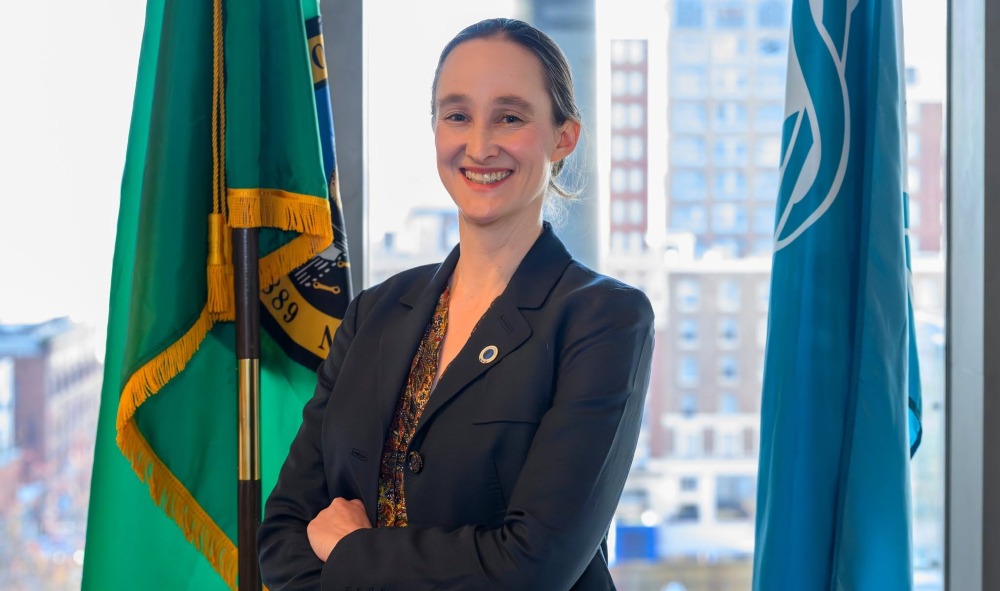

Mayor Katie Wilson’s 2027-28 budget proposal, submitted to the City Council in the final days of September, has been greeted with a mixture of praise and criticism, bouquets and brickbats. The cheers for the socialist mayor’s first fiscal proposal came from a surprising source: the city’s business community.
Criticism came mainly from members of the Seattle City Council, holder of the city’s purse strings. While Seattle’s mayor proposes the budget, it is the council that gets final say, voting to pass next year’s budget in late November. What’s ahead for city expenditures will now be debated — pro and con — for the next two months.
There are reasons to like Wilson’s budget proposal. Most admirably Wilson did something her predecessor, former Mayor Bruce Harrell, an experienced politician, had not achieved. By contrast, Mayor Wilson, a relative newcomer, is seeking to close the city’s projected general fund deficit. That gap –- a shortage that plagued the city since the pandemic — had been pegged at $175 million.
The persistent shortfall was created by use of one-time funds to pay for on-going new programs included in city budgets since 2020. Throughout that time, Harrell had managed to create balanced budgets on paper that were not sustainable. In other words, Seattle has been living beyond its means.
How does the new mayor’s proposed budget deal with this profligacy? Mostly by cutting departmental budgets, eliminating 128 positions (all but 15 of them not presently filled). What the mayor did not do was to propose greatly increased shelter and housing, contrary to expectation of what Wilson, as a democratic socialist, would advocate.
Nor did Mayor Wilson call for increased taxes –- something that had also been anticipated. Nevertheless, she managed to add 66 police positions, universal school lunches, numbers of new shelter beds and two new public restrooms.
Her budget proposal was balanced without making use of reserves or emergency funds, but she did employ the city’s payroll (aka “Jumpstart”) tax, originally intended for affordable housing and food programs. Receipts from the tax will be used to fill fiscal gaps, something for which Mayor Harrell had earlier taken considerable heat. Critics now are saying the jumpstart tax has just become “one more slush fund.”
Wilson’s restraint in budgeting came on the heels of concerns raised by former Washington Gov. Christine Gregoire and the business community stressing the need to balance the budget without resorting to increased taxes. Downtown’s reaction has been positive. Jon Scholes, president of Downtown Seattle, cited the budget as “an example of fiscal discipline.” Joe Nguyen of the Seattle Chamber of Commerce called it “a thoughtful approach to a difficult challenge.”
Neighborhood and union leaders also praised the mayor’s proposal, citing her use of existing resources. Even Sara Nelson, who lost her reelection to the council last year, seemed optimistic. Nelson who tracks City Hall on her CivicTide website praised the mayor’s budget as “politically pragmatic.”
But there was harsh criticism elsewhere, most glaringly from members of the City Council. Council President Joy Hollingsworth greeted the proposal with praise but some skepticism, predicting pushback from councilmembers, progressives and the Fire Department union, specifically for proposed cuts in overtime pay.
Councilmember Dan Strauss, who chairs the council’s budget committee, said that the council has made major strides in maintaining public services despite the deficit. He said, “That work is paying off. If she wants to take credit for work we’ve been doing, that’s her prerogative.”
Councilmember Bob Kettle, chair of the public safety committee, attacked the mayor’s budget for proposed public safety funding. Kettle insisted that “this is not the time to underspend on public safety.” He said the city needs to fund at least 150 more officers a year.
Councilmember Rob Saka agreed while lambasting the lack of funding for more CCTV cameras at the Seattle Center. He said he was shocked the city had asked for help from bystanders and businesses at the Bite of Seattle crime scene.
Councilmember Maritza Rivera slammed the mayor’s approach to gun violence deterrence. Rivera has been pushing to hire the National Network for Safe Communities, a New York-based think tank, to direct work deterring youth gun violence. Costs would amount to half a million dollars.
Councilmember Deborah Juarez questioned Wilson’s commitment to police department funding. She recalled Wilson coming into council chambers in 2020 to scream “defund the police.” However, given that council meetings were held virtually during the pandemic, Juarez’s recollection may be flawed.
The councilmembers’ objections to Mayor Wilson’s proposed budget will now be debated for the next weeks. Fiscal reality may dictate how the council can alter provisions. As budget director Aly Pennucci pointed out, “If the council wants 150 more police officers, they’ll need to come up with $30 million in cuts to other departments.” So far there have been no suggestions for possible savings.
Discover more from Post Alley
Subscribe to get the latest posts sent to your email.