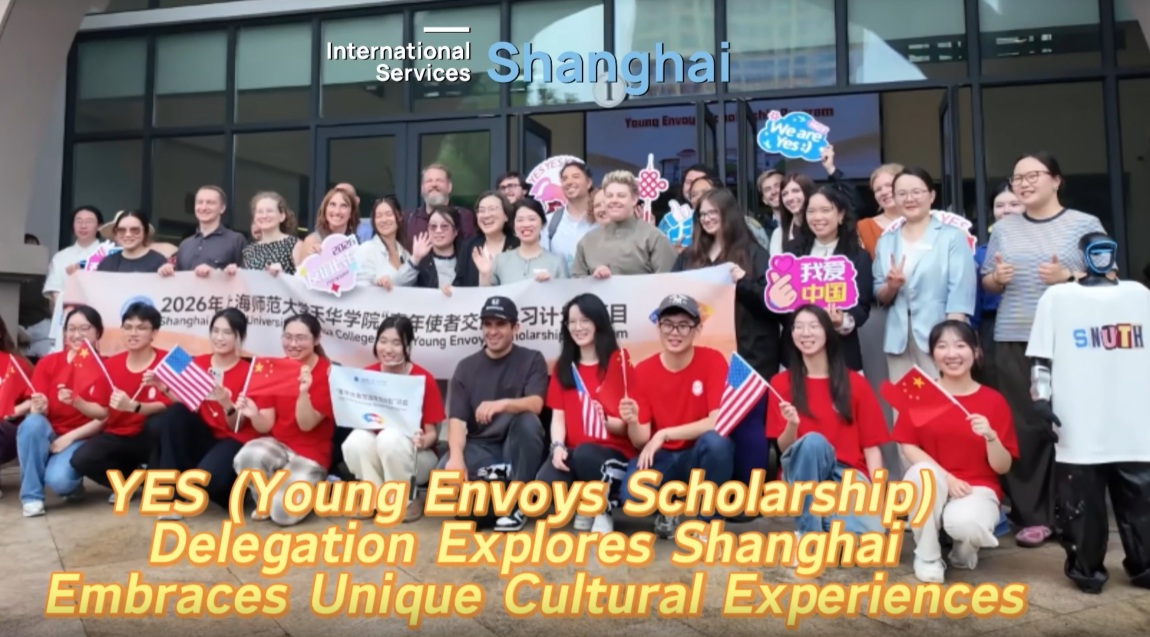

At his welcoming ceremony hosted by President Trump at the White House on Sept. 24, Chinese president Xi Jinping announced that China would invite 100,000 young Americans to China for study and exchange programs over the next five years.
This was Xi’s second such invitation. In Nov. 2023, when he was in San Francisco for the APEC leaders’ meeting, Xi announced the invitation of 50,000 young Americans to China in five years. Just two years and a half later, according to China Daily, that goal had already been reached.
It was actually in the Seattle area Xi began his idea of such initiatives. On his first state visit to the United States in September 2015, President Xi toured Washington state before flying to Washington D.C. to meet with President Obama. During his visit at the Lincoln High School in Tacoma, Xi invited 100 students to visit China as his guests. The following year, 100 Lincoln High students traveled to China, all-expenses-paid. In fact, a total of 118 students and teachers were on that trip. They toured Fuzhou, Tacoma’s sister city, Chengdu and Beijing.
Now with Xi Jinping’s expanded invitation of “100,000 in 5 years,” what is the reaction?
Fox News sounded alarm, “Xi’s 100K invitation to America’s youth sets off alarm bells over what could follow them home.” It quoted critics warning that Beijing could use the exchange program to spread propaganda, influence a new generation of Americans, and brainwash them while over there.
Washington Examiner called out safety concerns for schools and universities, “Xi wants 100,000 American students in China. Don’t take the bait.” It mentioned State Department warning for Americans to “exercise increased caution” while visiting China due to “the arbitrary enforcement of local laws.”
Defending Education detailed China’s soft-power influence campaigns with such exchange programs with its report “Little Red Classrooms: Young Envoys Scholarship Program,” an update on its 2023 report “Little Red Classrooms: China’s Infiltration of American K-12 Schools.” It pointed out that the Young Envoys Scholarship (YES), the organization carrying out Xi Jinping’s initiatives, was run by China Education Association for International Exchange, which in turn was identified by U.S. lawmakers as part of China’s “United Front,” an agency working to neutralize opposition to the Communist Party.
While safety and influence may be of concern, the cost is probably the first and foremost factor for an American school considering joining such an exchange.
City University of Seattle, a participant of Xi Jinping’s first invitation of 50,000 young Americans, for instance, showed how typically such China tours were paid for in this post of “YES Program Highlights” for the spring trip 2026:
“Location: Hangzhou and Shanghai;
Duration: March 24 to April 1;
Costs: Chinese host covers most program expenses, including accommodations, meals, transportation, and activities.
Participant Costs: Only international health insurance and flights.
Visa Benefits: Participants receive a 5-year F visa, with the visa application fee waived by the Chinese embassy.
Eligibility: Open to the U.S. citizens between 13 to 45 years old, including CityU students, friends, and relatives;
Availability: Only 12 slots — early application is strongly encouraged.”
With their in-country expenses or even all-expenses paid for by the Chinese hosts, 83 American universities and 27 K-12 schools have been documented as participating in China’s YES (Young Envoys Scholarship) program, filling up fast the first 50,000 slots.
But what did these young Americans see in China?
The first group of Lincoln High students to visit China, for instance, toured Tiananmen Square, visited the Forbidden City, and climbed the Great Wall in Beijing, mingled with students at a high school in Fuzhou, and saw pandas up close at the research base of giant panda breeding in Chengdu.
As for the students of CityU of Seattle, they participated in a Cross Border E-commerce & Digital Trade Bootcamp in Hangzhou, given by Zhejiang Financial College, visited Alibaba the company and met its representatives. They also toured Shanghai, including visiting the famous Bund and the Shanghai museum.
Were these young Americans brainwashed while in China?
Hu Ping, Chinese dissident in exile in the U.S., believes so. He said in 2024 that China wanted these American youths to form a positive impression of the CCP rule in China and in turn influence U.S.-China relations and U.S. China policy. He suggested that young Americans invited to China should instead visit the former residence of the late dissident Nobel Peace laureate Liu Xiaobo, the bridge where a man hanged a streamer with anti-Xi Jinping and anti-CCP slogans during the pandemic, etc.
An economics fellow at the Manhattan Institute, Daniel Di Martino, also voiced his dim view of Xi’s new initiative: “This is clearly intended to indoctrinate young Americans in China. But if some people should go, let the DSA members and let them see the Uyghur concentration camps and poor rural villages. Let them speak to the political prisoners. And let them visit and meet Hong Kongers.”
But those young Americans who went to China at Xi’s invitation have their own understanding.
One student from Lincoln High, Rigel Adams told China Daily that he fell in love with the people and the culture in China in 2016. Later, earning a college degree in science and economics, he went back to China six times and visited more Chinese cities. He also hoped to continue building personal and professional relationships, and maybe one day to turn that into a business relationship.
Bates Technical College, of Washington state, also participated in Xi’s initiative. Twenty-two of their students and faculty members went to China in October 2024 and joined an exchange program at Nanjing Vocational University of Industry & Technology. One BTC student expressed how he was fascinated with China’s history and culture, how the camp served as a bridge for communication between Chinese and American vocational schools, and hoped more American students would engage in exchanges in China.
Since President Xi Jinping will probably not rescind his invitation, our young people and their teachers will face this difficult question in the next five years, “To go or not to go?” They shouldn’t.
Instead, the question should be put in front of the U.S. government, the Department of Education, the Department of State, for instance. Instead of having Americans simply oppose China for indoctrinating young Americans with such paid visits, the U.S. government should send its own invitation to young Chinese to visit America for paid study and exchange programs. Instead of having Americans reactively fear China’s influence campaigns, the U.S. government should work on its own counter influence campaigns.
The Manhattan Institute, by the way, could very well be a host for the young Chinese visitors, showing them not just the Metropolitan Museum of Art and the Statue of Liberty, but also the homeless encampment on Manhattan’s West Side, and maybe an ICE detention center, too.
Discover more from Post Alley
Subscribe to get the latest posts sent to your email.