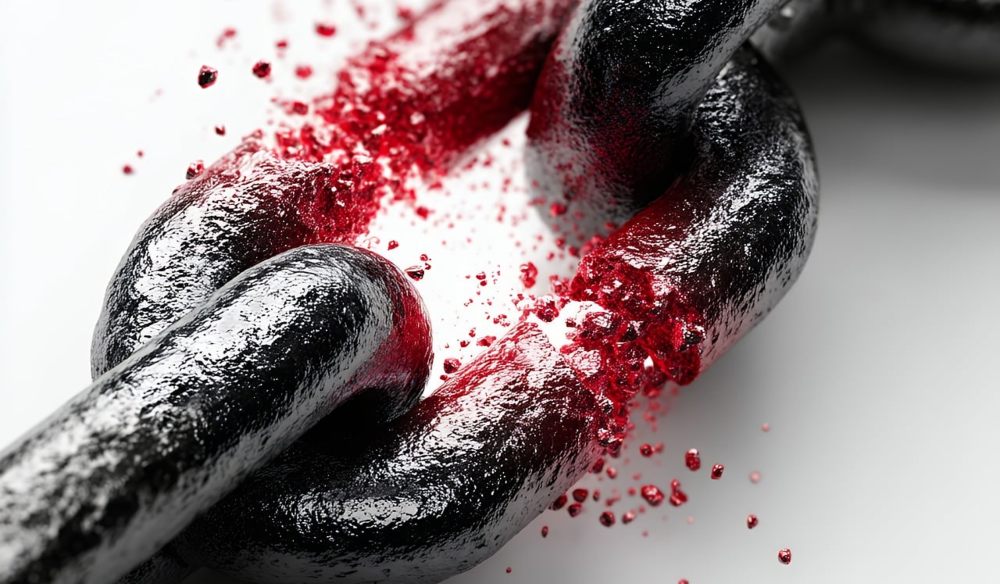

The psychiatrist Jonathan Shay and his colleagues introduced the term “moral injury” in the 1990’s to describe the effects on others when there is a “betrayal of ‘what’s right’ in a high-stakes situation by someone who holds power.” There are no bandages, casts or crutches to see, but the invisible wounding is very real.
Think of the soldier who witnesses a commanding officer slaughter innocent civilians, committing war crimes and violating rules of engagement. What happens to such a soldier? Or consider, as did some early studies of “moral distress,” the effects on nurses “when one knows the right thing to do, but institutional constraints make it nearly impossible to pursue the right course of action.” You aren’t doing what you know is right or you are witnessing what you know to be wrong without the ability to stop or interrupt it.
What are the effects of moral injury?
According to the International Centre for Moral Injury, moral injury “involves a profound sense of broken trust in ourselves, our leaders, governments and institutions to act in just and morally ‘good’ ways” and the experience of “sustained and enduring negative moral emotions – guilt, shame, contempt and anger – that results from the betrayal, violation or suppression of deeply held or shared moral values.” (emphasis added)
Americans now live — amid the Trump Presidency — in a perpetual and relentless state of “moral injury.” It’s neither a one-off nor an ambiguous case, but constant violation of the norms that define decency, civilized behavior and morality. It is day after day after day. The examples of Donald Trump, someone who holds power by virtue of his election to office, “betraying what is morally right in high-stakes situations” are mounting up as fast as the national debt, pegged just this week at forty trillion dollars.
Whether it’s pardoning those who violently attacked police, selling Presidential pardons, politicizing the justice system for personal vendettas, self-enriching crypto schemes, insider trading, extorting foreign governments and their officials, shaking down corporations, starting and waging an illegal war or simply the firehose of daily lies and insults . . . it never stops, never lets up but only keeps coming.
For those suffering moral injury the possible effects are many. Numbing is one. You stop feeling in order to protect yourself. You numb yourself by abusing the usual options, booze, drugs, food. Other effects include living with and in a constant state of guilt, shame and anxiety, emotions that cause people to withdraw and cut them off socially. Self-harm and suicide also result from moral injury. Theologians call it “soul anguish” or spiritual brokenness.
These effects not only happen, invisibly, on people’s insides, they manifest outwardly as well. They happen among us. They come to plague, and degrade, a society.
In her recent column at the Wall Street Journal on Trump’s unbridled corruption, “The Art of the Self-Deal,” Peggy Noonan writes of the effects of this corruption and deceit on America and Americans. “The larger threat of government corruption is that it hurts public morale, its [the public’s] sense of seeing itself as a moral actor to whom politicians have to answer.”
“Our entire system of government,” continues Noonan, “assumes a citizenry that polices its politicians, that says, ‘You can’t do that.’ ‘This office isn’t yours, your powers were lent to you for public purposes.’ If the public shrugs and looks the other . way, Americans will lose the habit of thinking of themselves as entitled to a clean government.
“Citizens have a certain dignity from believing that we enforce the rules. It reminds them of who’s in charge: them. You’re giving up a lot when you give up that.”
The effects of living with the steady stream of moral injury? Morale is degraded, losing a sense of yourself as a moral actor, the surrender of expectations of fairness and decency, the sacrifice of your own dignity as a human being created in the image of God. As Noonan says, “You’re giving up a lot when you give up that.”
Much has been said and written in recent years of “a loneliness epidemic,” of a “mental health crisis,” of a society in a “spiritual crisis,” of an America that has “lost its confidence.” All of this and more may have a lot to do with living day after day after day with moral injury, of living with a constant “betrayal of ‘what’s right’ in a high-stakes situation by someone who holds power.”
This degradation of our norms, of a basic sense of right and wrong, the denial of a moral order and of our sense of ourselves as moral people — this constant moral injury — is taking a toll, a very large toll on us all. You can see it in our eyes, hear it in our voices, feel it in your heart.


Thanks for this. You have put important words to the angst of knowing that things are wrong yet not knowing what to do next. Numbing and erasing are not the answer. One wants to act. But how? What? Where? and When? Something has to change. This situation is not sustainable.
Thank you so much. I feel this most acutely with the rulings that have come down from the Supreme Court, which acts in tandem with Trump’s corruption. Voting Rights Act? Gutted. Power to fire individuals who head agencies created by Congress? Sure – go ahead. All the brutal, militirized hunting out of undocumented immigrants and deporting them to third countries or kiling them? Wrong, wrong, wrong! The question is, how is this addressed?’
You said it, Tony: a “constant violation of the norms that define decency, civilized behavior and morality.” The constancy part–the no letup–is grueling. And it’s hard to know all the costs. Thanks for spelling it out.
Another casualty of moral injury are the friendships – especially among my fellow veteran friends – who voted for this dismissive, uncaring, cruel commander in chief as many as three times. Part of my injury derives from my inability to understand how these defenders of our Nation could (repeatedly) support somewhat so destructive of what we sacrificed for.
A powerful piece for these times.
Thank you, Anthony, for spelling out for all citizens what happens when we turn away from harsh realties, when we do not call out the crimes that are committed in our name by this morally bankrupt administration.
As you suggest, if we tire of the incessant injuries inflicted on our political morality, if we shrug and say, “There is nothing to be done,” we are ceding a part of our birthright — the liberties of citizenship guaranteed to us by the Constitution — and by so doing, allow the insurrectionists to say that we had no legitimate claim to them in the first place.
So we cannot relent in our opposition; we must stay focused on our goal — booting the criminals out of office, and when obedience to the rule of law has been firmly re-established, calling them to account for their misdeeds.
If there be such a thing as cosmic justice, Trump and his minions will be remembered by history only as thieves and vandals who desecrated American democracy.
It seems self-evident that a private citizen has no recourse when a US President (or any political office holder) morally injures them. Nor did they ever. The power differential is simply too big. It’s enough to break your heart, if you let it. But, it doesn’t have to lead to despair or apathy. Is it fair to say that some people were morally injured by Bill Clinton’s behavior, or Richard Nixon’s? I would think so. Living under DJT is not the same as witnessing a massacre. This too shall pass.
In corporate ethics training you’re told to report violations if you see someone doing something wrong, with the expectation that there will be consequences. Who or what is the HR department for the private citizen?
Isn’t it worse now because there is an implicit complicity where there used to be checks and balances, congressional oversight, reporters, watchdogs and whistleblowers, etc? Are these not the proxies we have depended on to see into the opaqueness and shed light? Abdication of that duty is now the norm, it seems.
If repeated moral injuries lead to spiritual brokenness, I would say that it can also be the case that individuals disengage and take refuge, in order NOT to become numb and give up. Rightly or wrongly, they are simply waiting it out.