
It is more likely that President Donald J. Trump was driven by his vanity rather than by the necessity of stopping Iran from attacking America when he bombed Iran and started a war.
After the initial wave of strikes against Iran, Trump cited an “imminent threat” to the US. His officials said we acted in response to potential preemptive attacks by Iran on forces in the region. However, Pentagon officials briefing Congress later contradicted these claims, saying that Iran was not planning to attack unless struck first.
Joe Kent was Trump’s director of the National Counterterrorism Center. Trump personally endorsed and backed Kent when Kent ran for Congress. Kent promoted the claim that Trump won the 2020 election and campaigned for Trump’s America First foreign policy agenda.
Nevertheless, he resigned as director on March 17, 2026, just over two weeks after Israel and the US bombed Iranian nuclear facilities, military sites, and government compounds. He believed he could no longer serve the nation faithfully and publicly refuted Trump’s initial rationale for starting the war, writing on X that “Iran posed no imminent threat to our nation.”
As a narcissist, Trump can never admit he made a mistake, so he doubled down. He repeatedly claimed that Iran, a theocratic autocracy for 47 years, had been terrorizing the US and the Middle East. He also said Iran had been funding armed Palestinian rebellions against Israel, killing innocent civilians in the process. Nevertheless, according to our top military and intelligence officials,
Iran was not capable of attacking America with conventional or nuclear weapons. Therefore, a full-scale bombardment, possibly followed by a military invasion of Iran, was unnecessary.
Vanity refers to excessive pride, an excessively high opinion of oneself, and an intense craving for admiration and recognition. In medical terms, if it is a compulsive behavior, it would be recognized as a narcissistic personality disorder (NPD).
This is a real mental health illness. The medical community believes that 5 percent of the population exhibit pervasive patterns of grandiosity. This can cause significant functional impairment and lead to impulsive decisions because they are incapable of seeing beyond their own false beliefs. This can lead to starting a needless war.
Trump’s vindictive narcissism centered on how a black man with an Arab-sounding name, i.e., Barack Obama, could be more powerful than he was. As the Republican presidential nominee in 2024, Trump dismissed Obama’s 2009 Nobel Peace Prize and later said the Nobel Committee “gave it to Obama for doing absolutely nothing but destroying our country.” One could also see Trump leaning into racism when he posted on his Truth Social platform a depiction of Obama and Michelle Obama as apes, a racist trope historically used to dehumanize Black people.
Given these intensely personal, ongoing attacks on Obama’s legacy, it’s easy to imagine that Trump believed bombing Iran, even if it started a war, would demonstrate that he was willing to eliminate Iran’s “Repressive, Militarist Theocracy,” whereas Obama didn’t have the ability to subdue them.
Trump wanted to produce proof that he was a greater leader than Obama, since Obama’s JCPOA left Iran’s regime intact, still holding some ballistic missiles and enriched uranium. However, both resources greatly expanded after Trump pulled out of Obama’s accord with Iran.
Trump’s desire to end Iran’s stream of threats and remove its leaders has been brewing since 2011. Then, as a private citizen, he said that President Barack Obama “will start a war with Iran because he has absolutely no ability to negotiate. He’s weak and he’s ineffective.” This was before Obama signed the 2015 nuclear accord, the Joint Comprehensive Plan of Action (JCPOA), with Iran, along with co-signers China, France, Germany, Russia, Britain, and the European Union.
Trump called it “defective at its core” and “one of the worst and dumbest deals ever made by the U.S.” He alone held that view; all the other signers asserted that the JCPOA was succeeding in its core objectives and that its implementation should not be jeopardized.
Nevertheless, in May 2018, Trump had his Administration cease implementing U.S. commitments under the 2015 multilateral Joint Comprehensive Plan of Action (JCPOA) with Iran.
He then reimposed all U.S. sanctions that had been in place before the JCPOA. President Trump said these sanctions would pressure Iran to renegotiate a better deal for America than the JCPOA. Eight years later, after failing to renegotiate a deal with Iran, Trump went to war.
Has Trump’s Vanity War provided a road to tangible benefits?
One way to assess whether this war was an imminent necessity or a vanity indulgence is to weigh what each country lost or gained in this conflict. What does the Iran-War balance sheet look like?
A few authors have addressed this question. Neil Abrams (The Detox on Substack), Edward Wong and Aruni Soni of the New York Times, and the Editorial Board of the New York Post have all provided useful information and perspectives that I have incorporated into the section below.
Military Costs
The U.S. military costs are still being tallied as a 60-day period for further negotiations begins. In April, two independent groups estimated the Pentagon’s war costs at between $28 billion and $35 billion, or just under $1 billion a day. That estimate did not include the cost of repairing about a dozen U.S. bases in the region damaged by Iranian attacks.
A large share stems from the use of sophisticated, excessively expensive high-tech military weaponry, which Iran countered with weapons of just a fraction of the US costs, using comparatively cheap drones and conventional weapons. For instance, each of the 1,200 Patriot interceptor missiles cost $4 million, compared with Iran’s drones costing 1 percent of that. Meanwhile, nearly half of the US stockpile of long-range stealth cruise missiles, built for a potential conflict with China, was used.
Iran has not disclosed what military resources it has lost, beyond acknowledging, as Trump said, that its navy lies at the bottom of the sea. However, Iran has managed to close the Strait of Hormuz using small boats, drones, mines, and onshore missiles, without needing a navy.
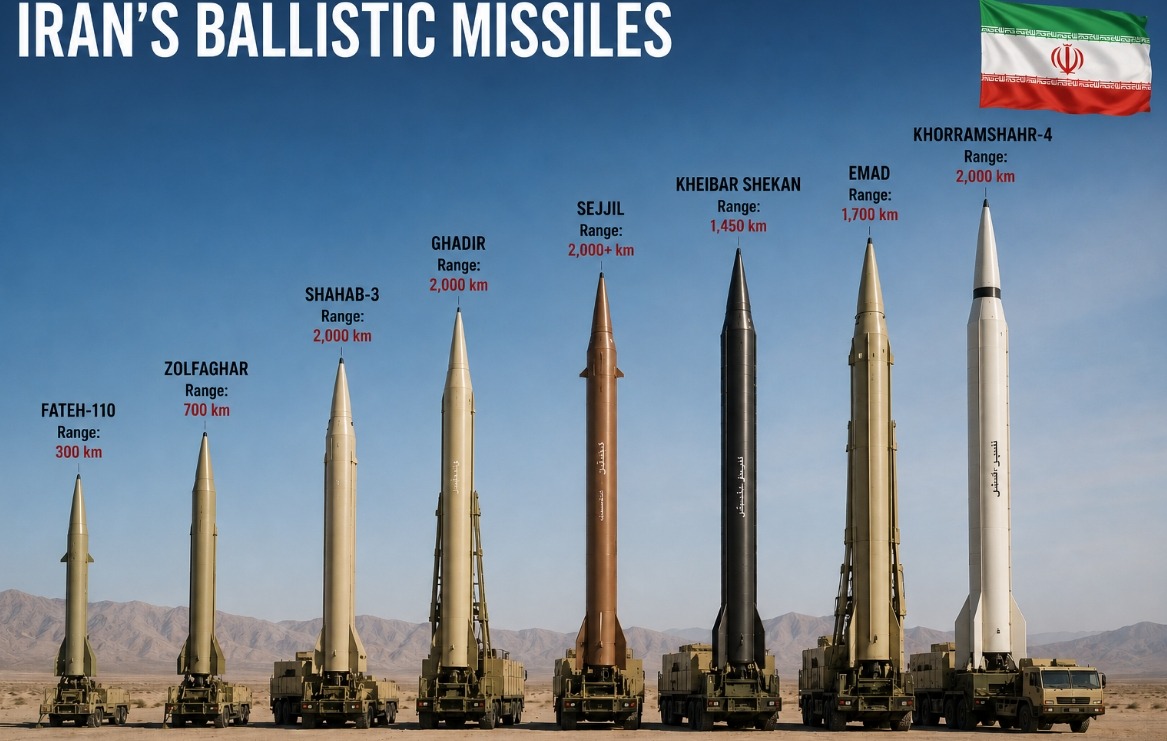
Iran’s nuclear and ballistic missile capabilities, though heavily damaged, were not eliminated. While Iran says its nuclear program will still be negotiated, it makes no mention of limiting its ballistic missiles. According to the International Atomic Energy Agency (IAEA), Iran began uranium metal production in early 2021, after Trump withdrew from Obama’s 2015 JCPOA accord with Iran, which had prohibited Iran from producing uranium metal for 15 years because the technology has significant weapons relevance.
Human Cost
According to the U.S., 13 US servicemen have been killed. Lebanon’s health ministry reported that 3,800 people have been killed there since Israel renewed its attacks on Lebanon on March 18.
About 3,500 Iranians have been killed in the war, according to the Iranian government. According to the Iranian Red Crescent Society, the longer-term punishment for their civilian population is that hundreds of schools and health care facilities were damaged or destroyed in the war.
Economic Impact: No winners
The war has affected the world’s economy: the US, Iran, and non-involved nations. It stems from Iran closing the Strait of Hormuz in retaliation against the US.
Cutting off about 20 percent of the world’s oil supply through the Strait was felt in the US, even though Trump argued we didn’t need that oil because we had enough of our own. However, Brown University’s Iran War Energy Cost Tracker found that energy costs, driven mostly by rising gasoline and diesel prices, rose by $60 billion, averaging an extra $460 per American household.
Moody’s Analytics estimated that the US cost of the war in Iran is at least $132 billion, taking into account military spending, rising energy and commodity prices, and interest rates.
Iran’s economy was already deeply troubled before the war, and it is now in free fall as food and other basic goods surge in price, according to The New York Times’s Neil MacFarquhar. With unemployment high and food supplies limited, Iran’s ruling regime is under internal pressure to reach a settlement to avoid a repeat of massive protests.
Other critical resources, such as bulk/wholesale agricultural commodity prices in the Middle East, have remained 75 to 108 percent above pre-conflict levels. The chief economist of the Food and Agriculture Organization said disruptions in the strait would “extend well beyond agriculture, threatening higher food prices, higher food inflation, reduced economic growth and increased hunger worldwide.”
The results to date do not constitute a victory for Trump’s war. He began the conflict, promising to set conditions for regime change in Iran, including greater freedom for its citizens and better security for US citizens against Iran’s aggression. The people of Iran will continue to be ruled by a theocratic, militarized oligarchy. Americans, as currently outlined in the MOU, will not see Iran’s nuclear threat reduced compared with the JCPOA, if not increased.
Aside from the military and human costs, the outlook for the US is not promising. The MOU contains numerous loopholes that, if left unaddressed, will allow Iran to gain more power than it has had since the Imams took control of a secular government 47 years ago.
Key elements of Trump’s MOU
Below are sections of Trump’s 14-point, 1.5-page Memorandum of Understanding (MOU) that was reached in a few weeks. It is an outline of what a treaty will include, to be reached at the end of 60 days. In comparison, Obama’s treaty took 20 months to reach and 160 pages to detail how to trim and regulate Iran’s nuclear material.
The future open use of the Strait of Hormuz is now in question. The MOU provided for an open Strait for only 60 days. Afterward, Trump presumably expected Iran to submit to whatever he wanted to keep it open. However, before the war, Iran had not tried to toll or block the strait. This war has now put that option on the table because Iran realizes it can close it or significantly disrupt shipping through it. This point was made clear when Iranian drones, in a one-way attack, hit 2 commercial vessels on June 25 and 26.
Iran is looking at a new cash flow that has been denied to it, since the US is now negotiating the details of how the US will “make fully available for use, the frozen or restricted funds and assets of the Islamic Republic.” No prior administration has released its funds without conditions on their use.
In a major concession to Iran, the U.S. will immediately lift all restrictions on Iran’s oil exports. The Islamic regime has not been able to export oil freely for most of its existence, except during the brief period under Obama’s accord, which included conditions Iran had to meet.
The MOU states that the U.S. will respect Iran’s sovereignty and territorial integrity and not interfere in its internal affairs. This directly repudiates Trump’s encouragement of Iran’s citizens to oust a regime he described as a “wicked, radical dictatorship.” So much for Trump telling Iranian citizens, “I say tonight that the hour of your freedom is at hand,” in a televised address on Feb. 28. Since U.S. military strikes began on February 28, more than 6,000 protesters, journalists, and lawyers have been arrested.
Conclusion
At this point and for the foreseeable future, the US faces a greater security risk than it did during Obama’s JCPOA.
Trump’s MOU with Iran describes its first stage as Terms of Immediate Capitulation, implying that Iran was defeated by the US and surrendered unconditionally. That is propaganda aimed at Trump’s MAGA base. However, reality might be better captured by the conservative New York Post’s editorial headline: Trump’s Iran deal is worse than Obama’s.Karim Haggag, director of the Stockholm International Peace Research Institute, said, “The reality is that the region in the aftermath of this conflict will be much more insecure.”
This all begs the question: Why did we fight this war if the current Iranian regime is the same one as before the war? After tallying the losses and gains, the only answer that makes sense is that President Trump stumbled into the war, believing that only he could secure a quick and complete victory, thus overshadowing President Obama’s prior accord.
As a result, Trump’s unchecked narcissism led this country into a needless war, and his Republican Party enabled him to do so. They did not challenge Trump to be accountable for protecting the country’s greater long-term interests. Republicans succumbed to Trump’s personal grandiose fantasies, which do not reflect real needs and require real work to achieve realistic results.
Discover more from Post Alley
Subscribe to get the latest posts sent to your email.


Thank you for spelling this out, in an easily comprehensible way. I forwarded it to a university student I know (who is trying to grasp what’s going on in Iran); and to a Boomer, who only gets his world news, by watching the evening news (thankfully not the one “owned” by djt).
Thanks for passing on this piece to others. It helps people understand how we ended up with a war that is not achieving the best results for the US or our allies.