
Since 1945, George Zabelka had carried a heavy burden deep within the depths of his soul. A priest during World War Two, Zabelka was the Catholic chaplain for the men of the 509th Composite Group of the US Army Air Corp. This was the outfit of the airmen who piloted the Enola Gay, the plane from which atomic bombs were dropped on the Japanese cities of Hiroshima and Nagasaki. Hundreds of thousands were killed and maimed. Before leaving on their two fateful missions, Father Zabelka blessed the men. He would welcome them back on their return.

A short time after the war’s end, the priest was standing in the midst of the horrific carnage of Nagasaki. He saw up close the widespread physical devastation wreaked by the colossal explosion. Much more wrenching, he witnessed the mutilation and sickness endured by the survivors—innocent civilians and little children burned and deformed by the blast. Zabelka confronted an unsettling reality. The prospect for radioactive hell on earth was now a grim fact in the aborning era of nuclear weapons.
Another priest, Jack Morris, a beloved Jesuit from Seattle, had long pondered the ominous threat nuclear proliferation posed for humanity and our collective future. He mused that a dramatic demonstration of religious faith might spread an urgent message of hope for peace and the abolition of such world-ending weaponry. Thus did the Bethlehem Peace Pilgrimage begin to take shape. On hearing about it, George Zabelka wanted in.
Another who took on the challenge of this proposed pelerin journey to the Holy Land was James Patrick Thomas, the author of “Atomic Pilgrim.” It is a moving and very personal chronicle of this sanguine trek. Over the course of 18 months starting in 1980, planning and organizing commenced. On Good Friday, April 9, 1982, the dedicated core of twenty activists–including Zabelka–began their irenic peregrination starting from the Trident Submarine Base on Puget Sound. Over 1,000 warheads are aboard the subs stationed there, “the largest concentration of deployed U.S. nuclear weapons.”
A young man at the time, Thomas writes an honest, loving, and at times amusing narrative. And he details his frustrations and doubts that inevitably arose in the daily journeying. It was at times arduous, yet an undeniably unique and transformative experience.
The determined travelers continued on through all kinds of weather. It took a toll on everyone in the group. And there were meetings. Internal conferences and discussions amongst the walkers themselves were a necessity. Many other meetings and gatherings with all kinds of people happened in myriad places and situations along the long road. Some interactions were casual. Others were more formal events during which the group shared their aspirations for peace and the exigent need for disarmament. Media coverage punctuated their course. Each morning brought a new day and more walking. Overnight accommodations varied drastically. Almost constant contact with one’s traveling companions could be trying. A yearning for a bit of privacy or solitude could not always be satisfied.
Once overseas they navigated different cultures, customs, and coped with languages not spoken by any one of the pilgrims. Thomas describes the physical and emotional strain of the ongoing quest. Sometimes tensions and anger bubbled up within the group. All the same, everyone strove to get along and stay focused despite exhaustion, personal distress, occasional doubts, and illnesses that befell some members. Internal community sessions required everybody’s participation and patience. This was especially the case when coming to an agreement on travel routes and what foreign countries to avoid.
Thomas relates the story of his encounter with a clerk at a post office in Yugoslavia, then under Communist rule. He gave the fellow a letter he had written, addressed to his parents in Spokane, Washington. The clerk proceeded to open the letter in front of the startled American. Thomas protested. The postal clerk responded perfunctorily, “This is not your country.” After determining that Thomas was not a spy, the letter was resealed and mailed. Amusing in retrospect, but not at the time.
At a point in the pilgrimage when Thomas was feeling particularly bereft, he had a quiet talk with Jack Morris. The elder priest voiced some sage wisdom that reinvigorated his spirit. Said Morris: “We walk because the world is on fire, and unless each of us joins in a great bucket brigade, the flames of a holocaust will engulf us. I walk for the children. I walk for their future. We must never give in to the darkness. The greatest way to peace is to believe in it and do something about it.”
Finally, on Christmas Eve 1984, the pilgrims arrived at their destination, Bethlehem. It is an occasion of joy, as well as relief.
The second part of the book details Thomas’s meticulous effort to expose the shadowy history at the vast Hanford Nuclear Reservation in Eastern Washington, the region where he grew up. Hanford is spread over an area about half the size of Rhode Island. It was here that the plutonium for the bomb unleashed on Nagasaki was processed. In the course of his diligent investigation, Thomas uncovered a legacy of deceit and duplicity that surrounds the toxic site. Thomas’s fastidious research involved a painstaking perusal of 19,000 pages of Hanford’s operational history. For many years, this information was deliberately sequestered by the federal government.
With thorough attention to detail, Thomas revealed the threat to numerous unwitting citizens who had the misfortune to reside “down wind” from Hanford. Many had been exposed to perilous levels of radioactivity and suffered profound health problems as a result. They had never been warned of the danger. Thomas realized that as children he and his sister had been exposed to radioactive fallout. His sister had suffered thyroid damage. Milk contaminated with iodine-131 was being consumed throughout Eastern Washington, Oregon and Idaho. But authorities, writes Thomas, “feared telling the public. The United States had the world’s most powerful nuclear arsenal, but it did not trust its own citizens with the truth.”
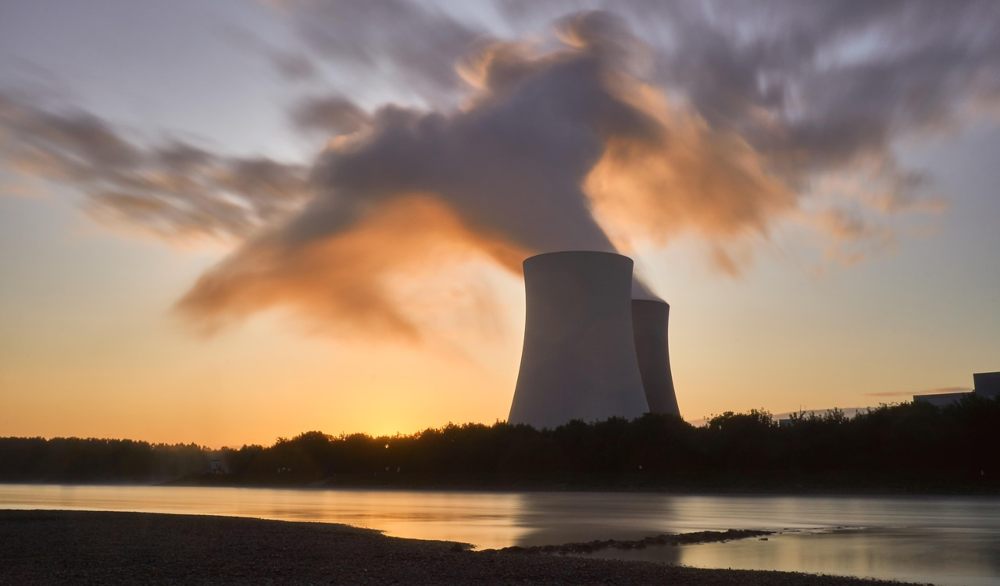
It is sobering to read this account given the resurgence of interest in nuclear power being promulgated by Bill Gates and others. Their rationale is that small nuclear or modular reactors can provide a safe means for the clean production of needed electricity, and will spur an “American Nuclear Renaissance.” However there remains the serious problem of 100,000 tons of radioactive waste already accumulated over the last eight decades. So far there is no long-term solution about how to deal with it.
The story of the long walk to Bethlehem remains a spiritual testimony to hope and optimism that a world free from the threat of global annihilation is possible. Sharing with his companions at journey’s end, Thomas said, “The pilgrimage has given me a visceral sense of the interconnectedness of all people and all creation.” Today he continues to speak out against injustice, militarism, and the ongoing threat posed by nuclear weaponry. As of January 2026, the Doomsday Clock overseen by the Bulletin of Atomic Scientists is set at 85 seconds to midnight. That’s closer to midnight than at any time since the clock was instituted in June of 1947.
May the seeds of peace and reconciliation planted along the road to Bethlehem spring eternal and one day bring to fruition a new world. A world without war. We must never give in to the darkness.
Discover more from Post Alley
Subscribe to get the latest posts sent to your email.


Thank you, Joe! I remember going on a trip to the Trident submarine base with Archbishop Hunthousen to protest nuclear weapons in the early 80’s. A never ending battle, it seems.
Thank you for this thoughtful story. I’m sorry to report that it isn’t just ‘ Bill Gates and others’ who like nuclear power.
In Washington state it is now legally branded as ‘clean energy’, and both Democrats and Republicans were pushing bills in Olympia last session, even though no safe disposal method is available.
Here is how Axios recently presented nuclear power: https://www.axios.com/local/seattle/2026/03/11/washington-nuclear-power-clean-energy-smrs-amazon-x-northwest-columbia
Nice and easy, no?
Thank you, Ruth, for the link to the Axios story. Seems that there is considerable determination to proceed with the innovative designs within the nuclear power industry. These new systems are touted as being much safer than the older and larger reactors. Still, much of the motivation to implement these smaller modular reactors is the proliferation of data centers required for Artificial Intelligence. Data centers demand a lot of energy, and take up huge amounts of land while consuming huge amounts of fresh water. Common citizens must be informed and have a say in this unfolding scenario.