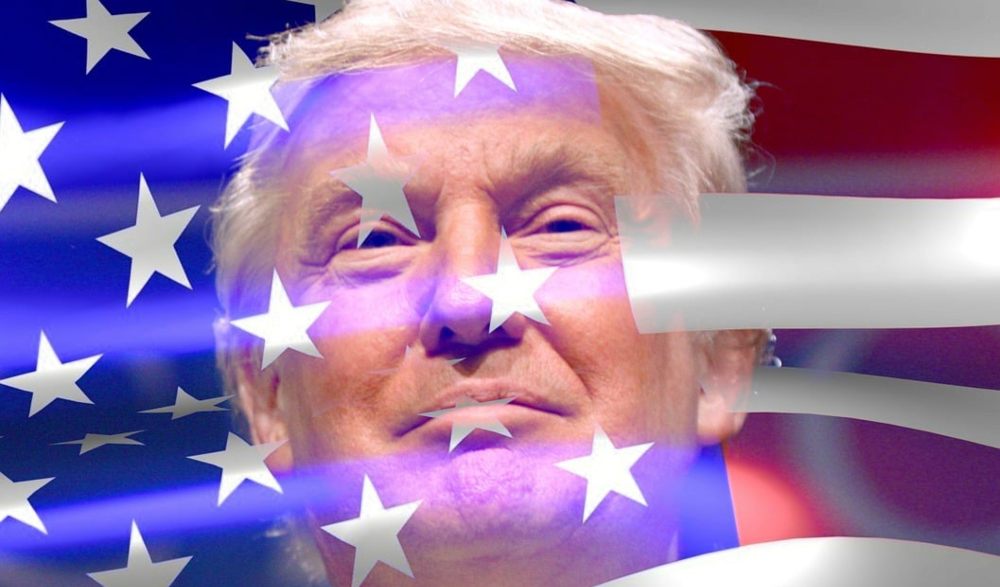

History is full of ironies, and the authors of “Regime Change,” claim there could be no greater irony than realizing that the nation’s success in removing Donald Trump from the White House in 2020 and vowing he would never return “has made him the most consequential and feared president of our lifetimes.”

New York Times reporters Maggie Haberman and Jonathan Swan have given readers a faithful chronicle of the president’s first year back in office. The book begins with Trump’s return as president and concludes with his War on Iran. It’s a detailed account of incredibly packed months.
The book reveals a leader obsessed with himself and his doctrine. Gone this second term are the generals who once told him “no” along with lawyers who have since learned to pick their battles. His administration has flouted court orders; he has claimed powers that Congress once checked, and added more than $2 billion to the family fortunes.
Events covered include the president’s decision to send ICE agents across the country, employ the National Guard and militarize U.S. cities. Some actions have been well documented, like Musk’s DOGE, the chaos of Trump’s tariffs and the vampiric return of Jeffrey Epstein. Others are only now being fully revealed. One example is pressure led by deputy chief of staff Stephen Miller, driver of Trump’s deportation campaign, to suspend Habeas Corpus.
Miller’s resolve to undo rights of those apprehended was the subject of yet another situation room discussion. The sycophantic coterie assembled there typically includes Chief of Staff Susie Wiles along with her deputy, James Blair, Vice President JD Vance, Secretary of State Marco Rubio, White House Counsel David Warrington, Press Secretary Karoline Leavitt and Communications Director Steven Cheung. They’re joined by other players — in this case, Attorney General Pam Bondi and deputy AG Todd Blanche.
Debate raged over proposed suspending of Habeas Corpus, the most fundamental principle of Anglo-American legal tradition, a right that’s enshrined in Article One of the Constitution. The Supreme Court has long affirmed that the protection belongs to anyone on U.S. soil or in government custody. Congress alone has the power to suspend Habeas, but only under the most extreme circumstances. White House Secretary Will Scharf expressed those concerns in writing.
Accounts of other situation room discussions alternate with reports on Trump’s impulsive actions. Once he insisted on calling up French President Emmanuel Macron to inquire whether there is a viewing deck on the Arc de Triomphe and, if so, is it dangerous. He asked, “What do you think, Emmanuel, do people jump off it?”
Like many of Trump’s projects, construction of a proposed 250-foot Triumphal Arch has taken on cinematic aspects, merging reality with fantasy. When looking into Trump’s background, it’s revealing to learn about his youthful desire to study filmmaking rather than economics. Today he takes a distorted cinematic approach to events in the White House.
After dressing down Ukrainian President Volodymyr Zelensky in the Oval Office in February, Trump concluded, “Great TV — better than ‘The Apprentice.’”
When selecting personnel, Trump often turns casting director, relying on an individual’s looks. Take his CIA director, John Ratcliffe. He speculated, “If you were going to cast a guy to play CIA director, that’s who you’d pick.”
Trump’s aides feed him streams of positive stories, often recycled into posts that he pumps out at night on his social media platform. During midnight activities Trump is joined by Natalie Harp, a 34-year-old aide who brings a printer and laptop to show Trump positive articles and acts as an instant enabler of his impulses. Harp has written cringy letters to the president, stating “you are all that matters to me.” Next morning, wastepaper baskets overflow with empty potato chip bags, Starburst wrappers and ice cream cartons.
Haberman and Swan relate the story of Israeli Prime Minister Netanyahu’s February trip the situation room where he made a hard sell to Trump about joining him in the assault on Iran. Secretary of State Rubio called the idea “bullshit.” CIA director Ratcliffe was skeptical, calling the plan “farcical.” The president responded saying, “Sounds good to me.”
Haberman, a fellow New Yorker, began following Trump’s political career back when he was a real estate guy battling to be included in newspaper columns. She reports he had only a handful of moves: “the quick lie,” “shifting of blame,” “outburst of rage,” “the raft of old grievances” and “refusal to share blame.” She and Swan have concluded that Trump’s motivation for a second term was for one reason only: staying out of prison.
The reporters tried for nearly two months to get Trump to agree to an interview responding to their reporting. When they finally met with him March 16, he had a printout of Maple trees on the Resolute Desk. He said, “I’m adding trees to the White House; I know how to buy good trees. Maples.”
The president then told the story of an historian who said he was more powerful than Genghis Khan, Alexander the Great, the Caesars and Joseph Stalin. As it turns out, the self-taught “historian” was serving as Gary Player’s golf caddy.
Trump ended the meeting telling the reporters, “I’m getting tired of winning and winning and getting bad press.” He added, “It’s about time you tell the truth, Okay?”
The two reporters have done just that: Told the truth. One added irony: Their book topped the charts, ranking Number One on American’s Independence Day.
Discover more from Post Alley
Subscribe to get the latest posts sent to your email.


Great review of an important book. Trump Redux is a sad commentary on the state of the U.S. A domestic as well as an international threat politically, economically, and environmentally. That there is such an intractable pro-Trump contingent in the wake of one outrage after another is a distressing barometer of the moral and ethical diminution that infects much of the country. Hopefully many citizens will read this book by Haberman and Swan. Thanks, Jean.