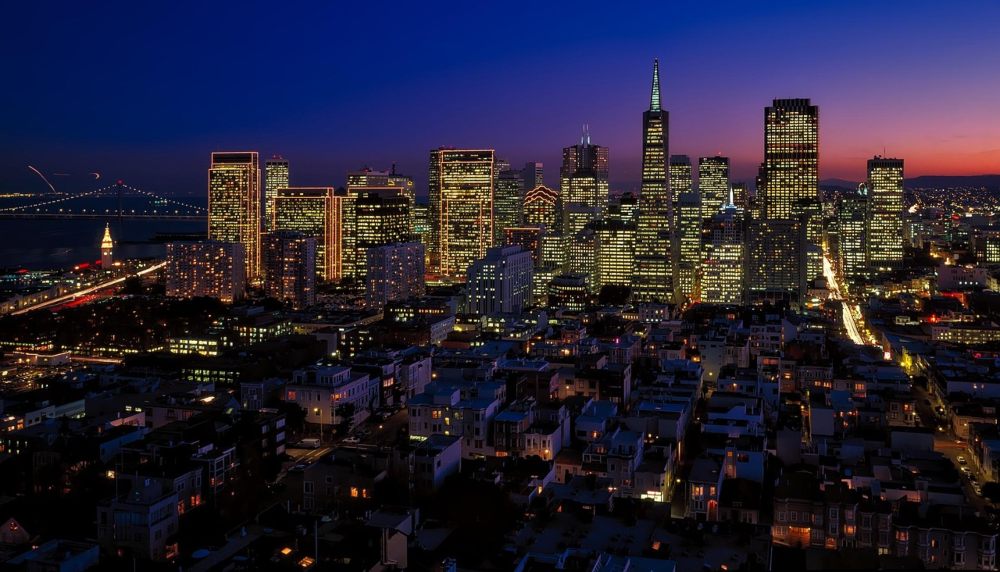

Jonathan Weber, a very experienced political and technology editor (Reuters, Industry Standard, The Los Angeles Times, Bay Citizen, The San Francisco Standard, Missoula’s New West), enjoyed a catbird’s seat for the rise of San Francisco as a tech Camelot. Weber has now just published a book that depicts the rise of the world’s dominant leader of technology, City on the Edge (Simon & Schuster). The book is a riveting, detailed, up-close, inside-scoopy, and critical look at the city and technology, including the underlying faults. In many ways the book echoes the rise and fall of Seattle. It also adds a bonus: the launch of some potent, toughened politicians (Nancy Pelosi, Willie Brown, Kamala Harris, and Gavin Newsom) that altered national politics.

San Francisco and the nearby Silicon Valley aspired to rival the big cities of the East with their arts, universities, national impact, preserved architecture, and wealth. They overthrew a stand-pat Irish and Italian ethnic regime, just as Seattle dismissed the musty worthies who ran the place into the 1960s. The Bay Area decided not to pursue the mining, port, and international finance paths open to it, instead tapping the counter-cultural migration (gays, libertarians, artists, hippies) that rushed into the tolerant, egalitarian, communitarian city — far more than Seattle was able and willing to do.
In doing so, the City transformed the alternative culture of the ’60s into the rise of early tech companies, more than the business-oriented Seattle companies like Microsoft and Amazon were able to. Three times San Francisco rose from economic meltdowns caused by the Tech bust of 2000; Covid; and housing shortages, tech-bro greediness, tech selfishness in philanthropy. Rebounding, the city went to the head of the class in the Dot-Com boom, Web 2.0, and now the AI boom. It shed its early idealism (combining far-Left ideals with conventional liberalism into “juice politics”) and became mostly about making money, which devoured the alternative culture that fueled the tech boom.
The City had advantages over Seattle, its near-echo. It found parts of the city that could be developed into rent-reduced technopolises, such as South Park and SOMA. It tapped the zany, idealistic, creative spirit of the early tech boom epitomized by Burning Man. The Bay city has had a sequence of effective mayors (Brown, Newsom, Ed Lee, and London Breed) who fertilized the tech boom. (Clinton and Obama also got the tech-centered economic development, though Biden did not.) As with Seattle, there are underlying problems with this formula that can detonate: housing costs, homelessness and crime, gentrification, affordability, the maximizing interest groups who crashed the party.
In the end, this volatile mixture Humpty-Dumptyed, and a reaction ensued resulting in the 2025 election of moderate mayor Daniel Lurie. Weber defines the combination that didn’t hold together as “libertarian-infused communitarianism,” and notes how the idealistic early era of personal liberation and egalitarian anti-corporatism failed to endure when the money got very big, recall fever raged, and San Francisco’s Tech Camelot fell apart. (Weber is enough of a journalist to be uncertain if the tech magic of the City has really passed.)
The book features some incisive portraits of the San Francisco politicians and tech leaders who emerged from this creative cauldron. The central figure is Willie Brown, once a mayor and the boyfriend of Kamala Harris who knew how to steer municipal ships in the stormy, chaotic waters of the oft-amended city regulations. Brown created the potent “City Family” that prevails in city hall and guided the rise of (labor-led) Nancy Pelosi and Gavin Newsom (“an idea factory” faulted by Weber for poor follow-through). Mayor Lurie took advantage of the rightward, Trumpy swing of the tech leaders and the Asian parents’ disillusionment with the local school board, who had closed schools too long under Covid, opposed selective-admission schools, and became a national laughing stock over renaming many schools including Abraham Lincoln High School. Lurie’s election marked “the biggest shift in city politics in 50 years,” Weber declares.
In the end, this incisive book may be a warning for tech-obsessed Seattle, where voters (unlike in Portland and San Francisco) chose leftward nostalgia in Mayor Katie Wilson after the disappointments of the please-everybody Mayor Bruce Harrell. Maybe so, though the tech revolution has got such a head start in the Bay Area and Seattle area that it now has tremendous momentum, particularly in the business community. Meanwhile, as this well-researched book observes, events have “shattered the national consensus on the benefits of technology.”
Discover more from Post Alley
Subscribe to get the latest posts sent to your email.


I am really looking forward to reading this, to excavate both the enormous tech fueled affluence and left progressive politics similarities and the really fascinating cultural and political differences between San Francisco and Seattle,
As to ‘events have “shattered the national consensus on the benefits of technology.” ‘
I wonder how many people who abhor “technology” and want to go back to… whatever their fantasy favors… are willing to stop offering their opinions online?
I don’t believe there is any such change. Unless you are referring to our naive understanding of the impact of the car in 1955. Yes we have changed about how cars impact cities.
But as to the rest, it makes a good story but it doesn’t fit reality.