
The USS George Washington has out-chopped from the Western Pacific, headed for the Middle East to relieve the exhausted crew of the USS Abraham Lincoln after a grueling nine months at sea.
The redeployment of the last aircraft carrier from the region leaves U.S. allies Japan, South Korea, the Philippines and Taiwan without an alliance power projection essential to deter China.
European member countries of NATO have beefed up their own defenses after President Donald Trump ordered U.S. troop reductions in Europe, held up missile and interceptor defenses purchased by the allies and repeatedly announced he will seize the Danish territory of Greenland and make Canada the 51st U.S. state.
Canadians, loyal members of the U.S.-Mexico-Canada trade alliance brokered by the first Trump administration, are now forced to retaliate against Trump’s self-inflicted economic disaster of a tariff war with the United States’ No. 2 trading partner.
In Iran, where Trump’s war against a defiant Islamic theocracy is now in its seventh month, so much of the costly U.S. missile and munitions arsenal has been expended that the Pentagon had to delay delivery of defensive materiel to Taiwan and South Korea.
From Tokyo and Taipei to Ottawa and Brussels, Trump has abandoned long-time U.S. allies in quixotic pursuit of economic or political domination of former partners.
Trump’s disparaging of NATO allies in Europe has stirred fears that Russian dictator Vladimir Putin will use the rift in the alliance to test U.S. commitment to defend its allies in the event of an attack on any one of the 32 member states.
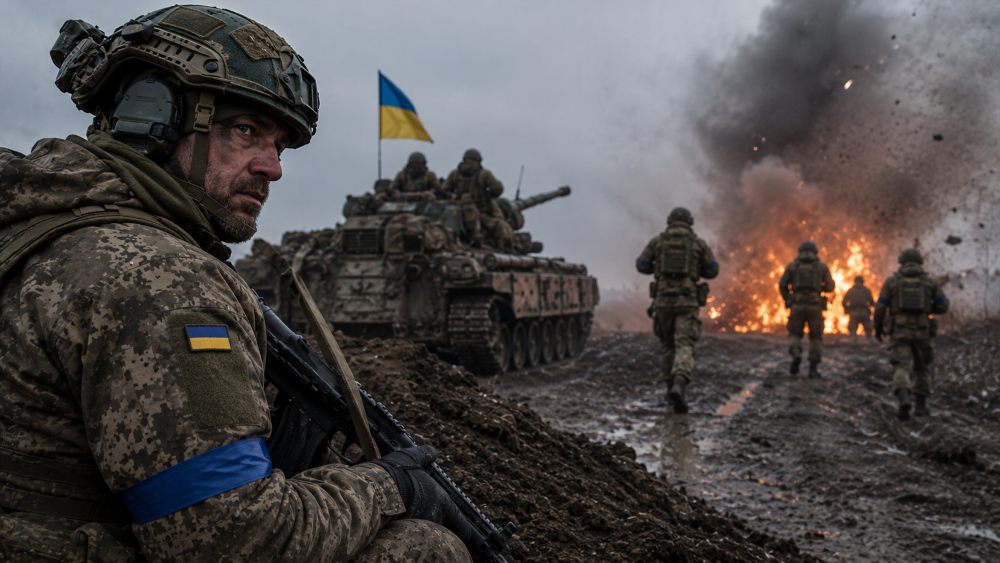
European member countries have been filling the gaps in support for embattled Ukraine since Trump returned to office and cut off weapons deliveries to the now-democratically governed former Soviet republic that has been independent since 1991. Putin’s ground forces have failed to take new territory for most of the past two years as Kyiv’s defenses have succeeded in striking Russian communities deep into the country. The attacks destroying critical oil industry infrastructure and hitting civilian apartments have brought the war home to Russians who were largely insulated from its consequences for the first years after Putin’s February 2022 full-scale invasion.
Amid Trump’s disparagement of NATO and European allies, intelligence officials had become concerned that Putin might attack a U.S. defense ally to test whether Trump would provide defensive assistance as required by the alliance’s Article 5 commitment that an attack on one member is an attack on all.
CIA director John Ratcliffe made a stealth visit to Moscow last week and met with his Russian counterpart, Aleksandr V. Bortnikov, head of the federal intelligence bureau. Reports on the subject of their discussion have been cryptic and attributed to unnamed sources. The Wall Street Journal reported that Ratcliffe visited the Kremlin to press Putin’s regime to refrain from attacking a NATO member state. It was not clear what consequences Ratcliffe might have threatened in the brief meeting that did not include the Russian president.
Other reports claimed Ratcliffe’s mission was intended to share U.S. intelligence on the shifting dynamics of Putin’s fifth year of war in Ukraine where Russian casualties have escalated amid Kyiv’ successful drone war strategy. Ratcliffe in a speech in June laid out the changed scenario of Russia’s staggering attempt to conquer Ukraine, noting rising popular concern about the protracted war now hitting Russia’s oil industry infrastructure and civilian housing with long-range drone-delivered munitions. Ratcliffe told intel officials that the life expectancy of a Russian soldier on the Ukrainian front lines was “less than 35 minutes.”
Trump dismissed the unannounced trip of the U.S. intelligence chief to the Kremlin, calling it “semi-routine” and shrugging off any significance. Ratcliffe reportedly consulted with Ukrainian officials prior to the military flight to Moscow, in part to urge a pause in Kyiv’s daily drone attacks on Russian cities while he was there.
Ratcliffe, a Russia hawk despite his political alignment with Trump, reportedly assured Ukrainian officials that he was not going to Moscow to negotiate anything behind Kyiv’s back, as has been occurring with Trump’s usual envoys to so-called Ukraine peace talks. Trump’s son-in-law Jared Kushner and fellow real estate magnate Steve Witkoff have been meeting with Kremlin officials and proposing Ukrainian territorial concessions in an effort to get Putin to end the war by whatever means necessary. Despite the Kremlin-friendly deals the Trump envoys have proposed, Putin has held out for even further concessions at Ukraine’s expense.
Trump’s trade war waged against Canada threatens economic injury to both sides as the United States imports critical components like aluminum and steel for automobile and furniture production. Canadians have rallied to the cry for defiance of Trump’s punitive tariffs by refraining from U.S. travel or purchasing nonessential goods.
Canadian Prime Minister Mark Carney has overseen tens of billions of investments in domestic defense production, from uniforms and parkas for the Canadian Arctic region to drones that can resupply forces deployed to defend the country’s climate-challenging northern frontiers. The domestic production focus is expected to create 125,000 new jobs. The defense ministry is also redirecting vehicle and munitions purchases from U.S. manufacturers to those in Sweden and Germany.
The upending of the post-World War II order has been coupled with dismantling of democratic institutions in the United States, from revocation of voting rights protections to weaponizing the Justice Department to prosecuting Trump’s enemies to unleashing a lawless army of immigration enforcers paying no heed to constitutional protections of habeas corpus and against unreasonable search and seizure.
The destruction of political and economic alliances that fostered a prosperous and peaceful Western world is shaking the foundations of democracy and exposing once-cohesive democratic allies to aggression from emboldened adversaries.
Prior to diverting the USS Washington from the Western Pacific, the Defense Department moved parts of its Terminal High Altitude Area Defense (THAAD) system from South Korea to the Middle East for use against Iran.
Since the elimination of U.S. power projection in Asia, Chinese naval forces have been patrolling beyond the First Island Chain, the Cold War-era defensive line running south of Japan along Taiwan’s eastern coast to the Philippines and around the South China Sea.
“It certainly is creating an impact on the overall effectiveness of the U.S.-led regional deterrence against China,” William Yang, senior analyst for Northeast Asia at the International Crisis Group, told Al Jazeera in an article last week detailing China’s more aggressive naval maneuvers in the Western Pacific.
“These maritime operations are aimed at Taipei, aimed at Manila, aimed at Tokyo,” Yang said. “Part of it is also testing the U.S. reaction to these operations and the U.S. capability to respond.” https://www.aljazeera.com/news/2026/8/21/us-allies-in-asia-wary-as-trump-moves-military-assets-for-iran-war
The current issue of Foreign Affairs features a slate of analytical musings on the turbulent present state of the United States’ alliances and the dire prospects for their survival. While Trump’s aggressive actions and threatening rhetoric have accelerated the unraveling of postwar partnerships, authors also trace their deterioration to structural failures that left smaller states dependent on U.S. military leadership and weapons production and stationing.
“The United States’ allies, in particular, simply do not understand yet that Washington has withdrawn its support from the old order and from them,” writes Mark Leonard, director of the European Council on Foreign Relations and author of Surviving Chaos: Geopolitics when the Rules Fail.
“NATO’s July 2026 summit offered one of the most surreal examples of cognitive dissonance, Leonard writes. “European leaders frenetically pledge tributes to U.S. President Donald Trump in the form of arbitrary defense spending increases—unrelated to their own defense analysts’ assessments—in the hope that he would not withdraw from the alliance.”
The drawdowns of U.S. defensive assets from Europe and the Western Pacific were partly heralded in the 2026 National Defense Strategy issued at the start of this year calling for increased “burden-sharing with allies” to counter threats from China, North Korea, Russia and Iran. The document forecast a focus on U.S. dominance of the Western Hemisphere, which it cited the Panama Canal, the Gulf of America and Greenland as of particular focus. Trump unilaterally renamed the Gulf of Mexico shortly after taking office in his second term. He also includes Greenland as a Western Hemisphere asset.
Discover more from Post Alley
Subscribe to get the latest posts sent to your email.


As my wife likes to say, Trump destroys everything he touches (literally and figuratively)…
Amen. This is what happens when The Manchurian Candidate is elected.