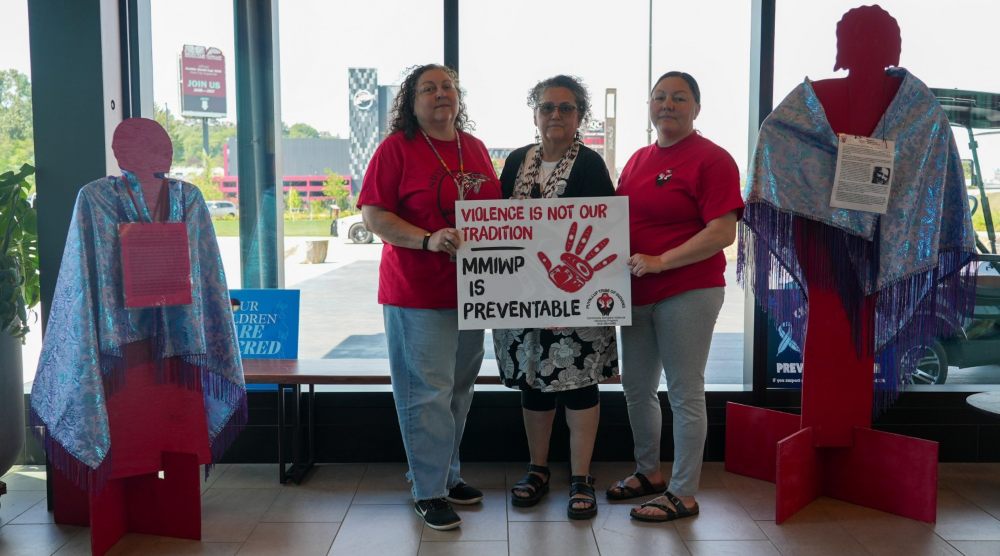

In addressing the crisis in missing and murdered Indigenous women in Washington state, more attention needs to be focused on sex trafficking, suggests a report by the Washington State Missing and Murdered Indigenous Women and People (MMIWP) Task Force, administered by the Attorney General’s office. The report recommends legal protections for trafficking victims who report their victimization to prevent arrest for other legal issues, and support for safe dating resources for Indigenous youth so they understand the warning signs for trafficking and exploitation.
The Task Force also wants to analyze the data on violence other than homicide that impacts Indigenous people, such as sexual assault and trafficking. More than four out of five American Indian and Alaska Native women have experienced violence in their lifetime, including 56 percent who have experienced sexual violence committed by an intimate partner, according to a 2016 study by the National Institute of Justice.
As Post Alley recently reported, the MMIW crisis has become part of a worldwide epidemic in sex trafficking, with Indigenous girls and women specifically targeted by traffickers.
There isn’t one solution to the MMIW issue, Rep. and Task Force member Debra Lekanoff says. “If we resolve sex trafficking, that will not resolve MMIW. The long-term historical trauma of ‘Kill the Indian, save the man’ has impacted so many Native American women.” But since the State Legislature has made the fight against human trafficking a priority, there is now an opportunity to combat the crisis on that level, she explains.
In the five years since the Task Force was established, it has achieved several goals, such as establishment of a Cold Case Unit in the Attorney General’s Office, which in 2025 secured a conviction in the 2016 murder of master carver George David from Neah Bay; a Missing Indigenous Persons Alert (MIPA) process leading to 203 recoveries, out of 220 alerts so far; and the passing of the Tribal Warrants Act aimed at strengthening the collaboration between tribal and state law enforcement agencies, so that people who commit crimes on tribal land cannot evade justice just by leaving those areas. The patchwork of jurisdictions on tribal land is a major obstacle.
That Washington state has established the MMIWP Task Force in the Attorney General’s office is a sign that the state is invested in the issue, Lekanoff says. This has made Washington a national leader.
In the next five years, the Task Force wants to expand its focus to address the social, economic, historic, institutional, and cultural risk factors for Indigenous people going missing and being murdered. Because Indigenous children are disproportionately represented in foster care (where they are vulnerable to sex traffickers), analysis of disparities in the foster care system is needed so outcomes can be improved, says the Task Force.
Other recommendations include paid leave and job protection for family members who deal with missing persons cases or conduct searches or seek medical or legal help, more stable housing, and state and local investment in language and cultural revitalization programs that support Indigenous youth. The Task Force will also review laws and policies that are related to MMIWP.
But, as the Task Force points out: the crisis is the result of deep-rooted traumas that require long-term investment to address them. In a proposal sent to the Washington state Legislature last June, the Task Force proposed establishing a more permanent state commission, and investing in MMIWP policies. This year, the Task Force will meet two more times to provide the Legislature with recommendations for the 2027 session. The tribes and the urban Native populations will help determine if this is the right approach, Lekanoff says.
A commission could potentially incorporate the work of the Truth and Healing Tribal Advisory Committee (TAC), which investigates far-reaching and damaging legaciesy of Indian boarding schools and how policies that continue to hurt Native communities can be corrected.
Since 2023, TAC has identified 28 facilities in Washington State that housed Indigenous children between 1850 and 1930, ranging from Neah Bay in the far Northwest of the state to White Swan near Yakima and Tonasket in the Northeast. According to its own 2026 Interim Report, TAC moved into the next phase this year: organizing listening sessions with surviving boarding school students to understand the full scope of the harm and what healing could encompass.
Due to funding limitations, these sessions will initially only take place in six Native communities: besides the Confederated Tribes and Bands of the Yakama Nation and the Quinault Indian Nation, where the sessions have already been held, the Spokane Tribe of Indians, the Puyallup Tribes of Indians, the Suquamish Tribe, and the Confederated Tribes of the Colville Reservation are included. If the Legislature decides to establish a permanent MMIWP commission, members of all 29 recognized tribes in Washington could be heard, the Task Force says.
Discover more from Post Alley
Subscribe to get the latest posts sent to your email.