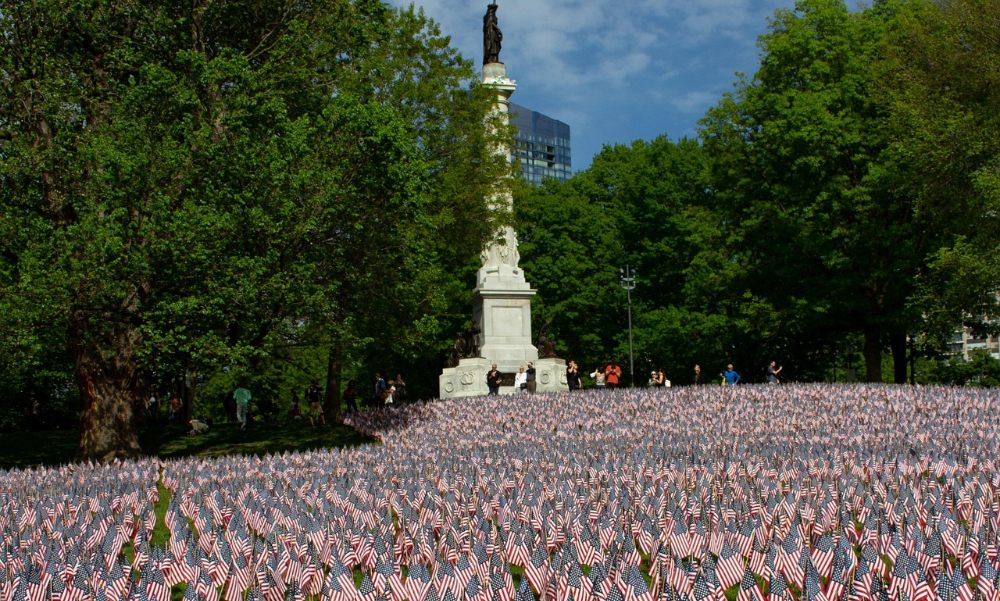

I grew up in a family where nearly every adult around me had served in World War II, Korea, Vietnam, or all three. I have never worn the uniform myself, outside of military school, but I was around a lot of people who did, men and women both, because they had to, and it was the norm.
They all had stories. It seemed to me, even as a kid, their stories helped them contain something they couldn’t or wouldn’t dare let loose. But there was this one guy whose story got away from him, and he could never get it back. When I was growing up, he was just part of the scenery, a family friend, the adult world. But he became an outcast and drifted away. People used certain words about him then that I will not repeat. Now we would call him an unhoused veteran with PTSD.
I ran into him over the years, and as I grew older, he told me more of his story. At first, what he said simply confirmed to my simple mind what others said about him. Now that I am in my sixties and have seen more of life than I’d like, I’m beginning to understand what he was saying.
He joined the Army as a kid because he needed a job. He volunteered for Vietnam right at the start. It was a big adventure, he said. One day, he was in a firefight, and something happened to him that he could not explain. He dropped his weapon, bent over to pick it up, and collapsed. He thought he’d been shot, but he hadn’t (at that time), or that a snake had bitten him, or that he’d swallowed some poison in the paddy they were fighting in. Whatever it was, he was paralyzed. From what I understood, it’s more likely he sustained a concussion from artillery, but that’s just my guess as a civilian who wasn’t there.
His buddies tried to help him, and some of them got shot for it. Helicopters showed up about half an hour later, he thought, and he was dragged aboard one and rescued. And then he stopped being paralyzed. He stayed in the Army for years before going into business. He was a normal guy, a good guy, my parents liked him, and so did I.
Then he stopped doing his job. There was nothing wrong with it, or him; he just stopped doing it. Same thing with his marriage and his kids, who were a bit younger than me. He didn’t do anything wrong, he never hurt anyone, he just stopped showing up.
Then he started sleeping outside. He told me about this years later, when I was an adult. One night, he couldn’t sleep. He thought someone was in the house. Of course, the house was full of people: his wife, his children. But that’s not what he meant. He thought they were in danger because of him. Not that he was going to hurt them, but because someone was going to hurt him, and they might get in the way. So, he slept in the yard.
His family started to sleep outside with him. It didn’t help. He would evade and escape, as he described it to me, and find other places where they could not follow. They tried everything, but he became homeless. He didn’t disappear, except from our conversations, and, I am ashamed to say, from our thoughts. He became a story, and we had him contained that way.
But he stayed in touch with his family. He never stopped loving them. He just couldn’t put them in danger, he thought, by being near them. He migrated to a warmer clime and lived in a park near a VA hospital, where he got all the treatment he wanted. It was around this time, years ago now, that I arranged to talk with him through one of his children.
I didn’t recognize him, but he knew me immediately, greeted me warmly, and was generous with his time and his thoughts. I asked him some stupid questions, you can just imagine, which he politely brushed aside. But he told me something that made no sense to my thirty-something mind at the time. He said he knew it was crazy, but that it had happened.
He didn’t sleep much when he first started living outside and would often get up to patrol his perimeter. One night, he said, he saw the ghost of his childhood dog, some overgrown shepherd type thing, sniffing about. And, since it was a ghost, he knew he could talk to it, so he asked what it was doing there. The dog looked at him and said, “Protecting you.”
He died in his sleep on a bench in that park.
Discover more from Post Alley
Subscribe to get the latest posts sent to your email.


I just went silent, not breathing, reading the last few paragraphs of your story.
In just a few years from now, all of us who lived in the times of the Vietnam war — and The Draft — will have gone (or be so far gone in that other sense of the word, that our own words don’t make sense to anyone else who hadn’t lived at that time).
“Unhoused” is not an apt term for what happened to people like your unnamed vet. “Lost” maybe, or “adrift”, but not prissy-sounding “unhoused” (say I, one of the many “housed”, and damned glad of it).
Better the Brits’ “sleeping rough”. Using bureaucratese to describe this character would be a breach of trust. He deserves better.
“Unhoused” … what a prissy word. I could not agree more, R.
He was a soul lost to the predations of war and a society that’s never been truly capable of figuring out how to help, e.g. constant VA attention, which is less available now. I am quite sure his story is not uncommon in the history of humankind.
Many thanks.
Hello Sir,
You nailed it.
Peace and love,
Ted
Ted, I always hesitate to reply with a personal anecdote — I don’t want to distract from the emotional power of your family friend’s history. However — my uncle was a navigator on one of the Boeing-built Flying Fortresses. After 10 missions, he went deaf. There was no physical cause, he simply woke up on one morning to silence. Unlike your gallant family friend, though, he regained his hearing, and his prewar life. My dad also served, but never spoke of it. How many men and women were silenced by the horrors they endured and became the Silent Generation! Thank you for sharing your family friend’s life, so beautifully. He deserves to be remembered.
Thank you. Peace and love to you.