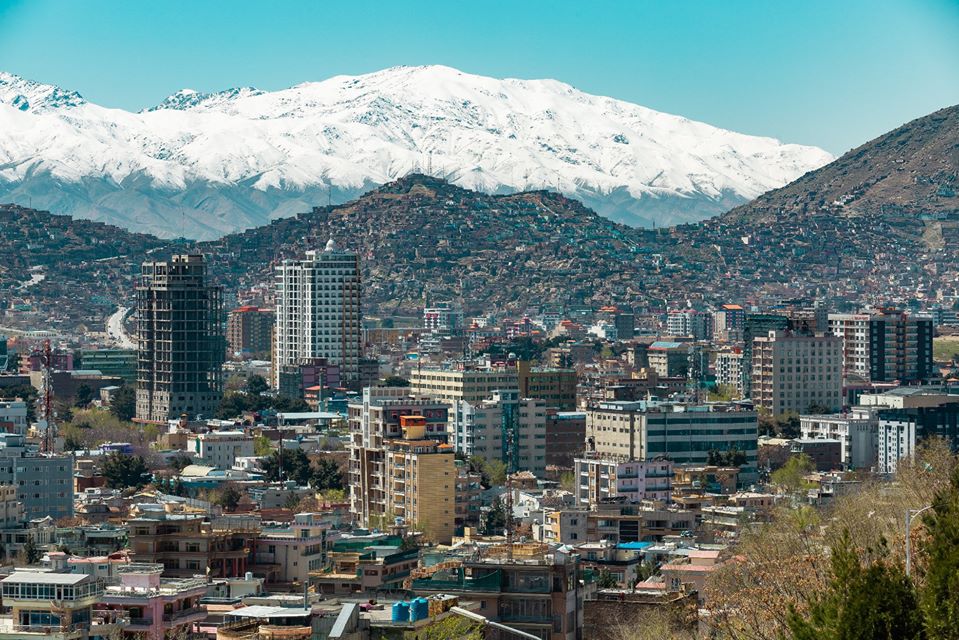

When American media reminded us recently that this nation’s long, frustrating war in Afghanistan had started exactly 25 years ago, I recalled the time –- back in the 60s when Lyndon Johnson was in the White House and the United States was bogged down in Vietnam — that my wife Barbara and I entered Kabul in the dark of a winter night. We descended into the Afghan capital, which sits at nearly 6000 feet, in an old, unheated American school bus on which we had ridden through the mountains for the past 8 hours.
Just a year before, after meeting in Seattle, we had moved to Manhattan, where we got married, worked at great jobs, and hung out with good friends. But in early Fall, we left those jobs and friends, boarded a Greek freighter on the Brooklyn waterfront, and took off for a long trip. How long? We didn’t know.
We disembarked at Piraeus, spent a few days in Greece, flew to Istanbul, traveled through Turkey, took a bus from the eastern Turkish city of Erzerum to Tehran.
After Thanksgiving, we boarded an Iran Air 727 for what we expected to be a non-stop flight to Kabul. Our takeoff was smooth as silk, so we sat back in our seats and watched dawn light up the northern mountains. As we started our descent, the pilot announced that the weather in Kabul was too bad for planes to land. It had been that way for days. No one had told us until right then, as we were heading down to . . . Kandahar.
Where the airport experience was surreal. We found a gleaming new 1960s-modern terminal but no other planes. Inside, we passed ticket counters, all unstaffed, and spaces for shops, all unfilled. What was going on? The Cold War. The Soviet Union had built a new airport at Kabul. Not to be upstaged, the U.S. had built another at Kandahar – even though no one flew to or from there.
After a cursory customs check, we waited for the bus that was going to take us the rest of the way. The old yellow school bus arrived. Some passengers bound for Tehran got off. Our fellow passengers who had expected to stay on the plane until Karachi, weren’t dressed for traveling through the mountains in winter on an unheated bus. At least there were blankets on all the seats. Before we boarded, though, someone took the blankets away.
We spent much of our ride in the dark. It was Ramadan. The driver hadn’t eaten since dawn. Close to Kabul, our bus veered onto the unpaved shoulder, tipped up on two wheels, before the driver got it under control, and we rolled gratefully down into Kabul.
When we explored in the daylight, we found that scents of pine smoke and hashish drifted over the streets, people wrapped themselves in old tablecloths and bedspreads to keep warm, the traffic included heavy wooden carts piled high with cauliflower or oranges and pulled not by draft animals but by short, turbaned Hazaras from the central mountains. Brightly painted old wood-sided trucks and black embassy cars with little flags on their fenders were most of the other visible vehicles.
Most people on the streets were men. Women were always veiled. The king had proclaimed years before that woman no longer had to cover their heads but, we were told, when some women tried it in conservative Kandahar, mullahs threw acid in their faces.
We spent time with an Afghan doctor and his European wife, who had met at a university in America. Her parents were friends of old family friends of mine, who had let us know how to get in touch with her. After we had left the country, we heard that while the doctor was out of the country for an extended time, she had decided to leave Afghanistan. But under Afghan law, she couldn’t leave the country without her husband’s permission. And he wasn’t around. So friends at the U.S embassy – who had a car with diplomatic license plates (which wouldn’t be searched at the border) loaded her into the trunk and drove her down through the Khyber Pass into Pakistan.
On what may have been our very first night there, Barbara passed out a table in the Khyber Cafeteria. (It was right across the street from our hotel. We ate there just about every night. We virtually always wound up with some dish of lamb and cauliflower.) On what may have been our second, someone stole our passports and half our traveler’s checks. We’d be able to replace the checks once we reached India or Sri Lanka, where we planned to stay a month with my aunt and uncle. The passports could be replaced right there in Kabul at the embassy.
But of course, the new passports hadn’t been stamped when we arrived in Kandahar. And that was a problem. We couldn’t leave the country without exit visas. And we couldn’t get exit visas unless we could prove we had flown in, rather than driving in and selling our car without paying the government’s exorbitant tax. Normally, that wouldn’t have been a problem; the Kabul airport would have had records. The Kandahar airport did not. We would have to get a passenger list from the Iranian national airline. Which was headquartered in Tehran. We finally managed to get the list.
Then, we had to get the visas. Which wasn’t easy. We went here and there and finally made our way through a warren of chilly offices to the door of a small room in which a young air force officer in dark glasses sat reading a French movie magazine. He told us we’d have to go elsewhere.
We decided to try pulling some strings. We had met the American ambassador at an embassy cocktail party in Tehran, so I called and described our problem. Someone in his office came up with explicit directions for where we should go. We followed them to the letter. And wound up at the same doorway beyond which sat the same young officer. Obviously, there was no quick way out. But we finally got what we needed.
We spent New Year’s Eve on our hotel room balcony, drinking Iranian vodka – yes, that was a thing – mixed with the juice of Pakistani oranges, looking out at the lights of Kabul.
And on a cold January morning, we left Kabul on an old English Bedford bus with wooden window trim and a functioning heater through an ice fog that coated all the tree branches in crystal. Before long, we’d be traveling on serpentine mountain roads with steep drop-offs and husks of wrecked trucks far below. The men we passed carried old rifles slung over their shoulders – so old that we wondered if they were left over from Britain’s brief Third Afghan War of 1919.
Our bus rolled through steep, winding gorges that seemed tailor-made for ambushes – of, say, a 21st-century American convoy or a 19th century British army in retreat from Kabul. (At the beginning of 1842, the British army that had been occupying Kabul in Britain’s First Afghan War left the city, retreating toward India. The army’s first destination was Jalalabad, down on the plains. There were some 16,000 people, up to five thousand of them soldiers, the rest civilian camp followers. They were ambushed. Only one man survived to reach Jalalabad more or less on schedule. A handful of others may have straggled in later. Afghanistan hasn’t been a great place for invading armies. Ask a Soviet veteran.)
At Pakistani customs, I saw someone leading a daisy chain of ragged men through a crowded room. Each man was handcuffed to the person ahead and/or behind, so they walked single-file, as if they were playing some childhood game. I must have stared, because a man standing beside me explained what was going on. These men had taken their animals down from the Afghan mountains to the warmer plains for the winter. As people had always done. But the plains lay in Pakistan, and now, the Pakistanis were sending the herders back. Whenever I’ve read about people slipping across Afghanistan’s porous eastern border to avoid Americans or blow something up or whatever, I’ve remembered that line of men.
But I’ve also remembered that our ride through the ice-covered trees was very beautiful. It made a nice final image of the place.
Before we were free to leave the country, we weren’t just trying to navigate the bureaucracy. We walked a lot. At a hole-in-the-wall jewelry shop, I bought Barbara a very old pin with a verse from the Koran incised beautifully in lapis lazuli. We spent some time just hanging out in our hotel. A British Air crew was hanging out at the hotel, too. The flyers were in Kabul, as I recall, on a contract to haul cargo for a month or so. But the same bad weather that had forced us to Kandahar had grounded them. It seemed that nothing was flying in or out of the city except some Afghan planes. Another hotel guest suggested that the Afghans just didn’t care about safety. “Maybe,” the British captain said. “Or maybe they’re just really good pilots.”
We also hung out with the doctor and his European wife. One day, in their car, we drove to a restaurant outside the city for lunch. When the man in the black leather jacket and sunglasses walked out, the doctor said, “that’s the prince.” The king was out of the country at the time. This guy was it.
Later, in the car, I asked about the king. The doctor told us that the king liked planting trees. Clearly, we weren’t going to talk politics. I changed the subject.
The doctor had been very hospitable. He was pleasant company. But his conversation was pretty bland.
Nevertheless, we gladly accepted an invitation to a dinner party at his house. One of the other guests was a cousin, also a doctor, who had recently returned from cardiology training abroad. The government had promptly drafted him into the army – not to practice medicine but to carry a rifle. He wasn’t happy about it.
After the other guests left, we were alone with our hosts and the cousin. He piously repeated an old saying: “The king is the shadow of God.”
Then looking up at the heavens, he said, “God, your shadow stinks! We don’t need shadows. Send us light!”
After that, the conversation got real. The doctor wasn’t chattering about the king’s fondness for trees. He was telling us how his ethnic group had been persecuted, treated as second-class citizens. He was passionate. This was a man we hadn’t. seen before. We liked this version of him.
When we were ready to leave, he walked us to the door. Standing close to us, speaking in a low voice, he said, “Please. Don’t let anybody know.” Over the years, I’ve thought of that conversation many times.
So much has changed since then: the fall of the monarchy there and in neighboring Iran; the replacement of kings with conservative religious zealots; the Soviet invasion; the rise of the Taliban; the American invasion; the Taliban’s return. I assume a lot of people in that unfortunate country are still – or again – waiting for the light. I hope they find it.
Discover more from Post Alley
Subscribe to get the latest posts sent to your email.