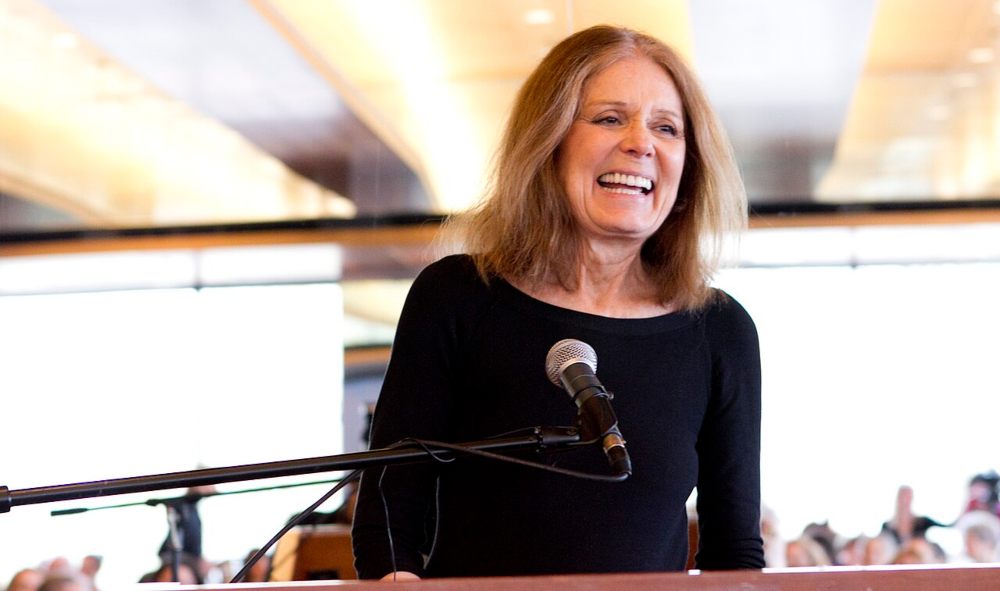

By the time Gloria Steinem died last week at the age of 92, she had done more than anyone could have imagined. She’d lit a torch and kept it lifted, inspiring millions of women and girls to work for control over their lives.
Today we enjoy some freedoms our grandmothers lacked, but we also have fewer rights than we did just a few years ago. We live in an era not just of abortion bans, but of overt misogynists in positions of power, anti-feminists of the MAGA right who espouse a politics of “your body, my choice,” a president accused of sexual misconduct and some men in his orbit who endorse the idea women shouldn’t have the right to vote.
Steinem’s story is instructive. She was born of a fragile mother and a father not long on the scene in Toledo, Ohio. It was 1934 when doing what you wanted with your life was not foreseen. Newly out of college at 22 and en route to a fellowship in India, she found herself pregnant and sought an abortion. It was 1957 and elective abortion was illegal.
She found a doctor in England who agreed to help her on two conditions. He told her, “First you must never reveal my name, and second you will do what you want with your life.”
After her two years in India, Steinem returned to work in journalism, but struggled to find serious jobs. Working for Showboat magazine, she went undercover as a Playboy bunny. The result was a two-part expose on the exhausting labor, disgraceful conditions and sexual demands. Gloria said the bunny costumes fitted so tightly they’d even give a man cleavage.
Steinem went on to help found New York magazine and become one of its political correspondents. A year later as part of her job she attended an abortion speak-out in Greenwich Village. The women talked about their illegal abortions and demanded the right to choose what they did with their bodies.
A story about that watershed event appeared in the 1971 preview issue of Ms. Magazine, a landmark effort co-founded by Steinem and Dorothy Pitman Hughes. Names of 53 women appeared in the article (“We Have Had Abortions”), including standouts like Nora Ephron, Billie Jean King, Lillian Hellman, Anais Nin, Letty Cottin Pogrebin and Gloria Steinem. Their goal was to spare other women socially imposed guilt.
Gloria Steinem was happiest when writing. She once said that “writing is the only thing that when I do it, I don’t feel I should be doing anything else.” She wrote extensively about others who’d found their way, among them Singer Dolly Parton. She concluded, “if feminism means each of us finding our unique power and helping others do the same, Dolly Parton certainly has done both.”
What does it mean to “do what you want with your life” as the doctor told Steinem all those years ago? What does it mean when our country’s most powerful people are working to ensure that women can’t even do what they need, let alone what they want?
It helps to review what rights that we have today and did not have years ago. Thanks to those who – in the name of feminism — worked to achieve victories, women today have gained much workforce and legal access, considerable political and economic parity. Today women are no longer denied entry to law and medical schools. Today there has been a cultural shift from patriarchal expectations to the right to choose one’s own path.
Thanks for those improvements goes directly to trailblazers like Gloria Steinem. Her death last week drew an outpouring of tributes. Former First Lady Jill Biden said it best: “Gloria Steinem understood that women’s equality begins with the freedom to make decisions about our bodies, health and future. For decades she fought to make that freedom real for generations of women and girls.”
Steinem’s self-assigned work travelling the country as a feminist organizer (she joked she was “in more hotel rooms than a Gideon Bible”) was fully encompassing. She made sure to include Black Women, labor organizers, indigenous women, lesbians, civil rights leaders and activists whose work too often is erased. She spent time organizing, rallying, fundraising, educating, campaigning and introducing millions of girls and women to the feminist cause.
In one of her many books, “The Truth Will Set You Free, But First It Will Piss You Off,” Steinem argued for the greatest weapons of all: ridicule (“it’s what men fear most from women”) and laughter (“an orgasm of the mind”) and for echoing on-street mantras: Obama’s “Yes We Can,” “Women’s Rights are Human Rights,”
“Black Live Matter” and “Bans off My Body.”
But she also cautions us, saying to “Beware of any motto that glorifies the past. It’s code for restoring hierarchy, back to the bad old days.” For example, ‘Make American Great Again.’”
Gloria Steinem’s journey is now over. But so long as women believe that we should be able to do what we want with our lives, her spirit and feminism will endure and live on.
Discover more from Post Alley
Subscribe to get the latest posts sent to your email.


Yes, Gloria lit the torch but it’s up to us to be sure that the flame doesn’t go out,
Wonderful reflection, Jean, on a woman who inspired the next generation to take the torch and run with it. Still much work to do to defeat the rekindled misogyny but we will succeed. We just need to use our superpower – voting.