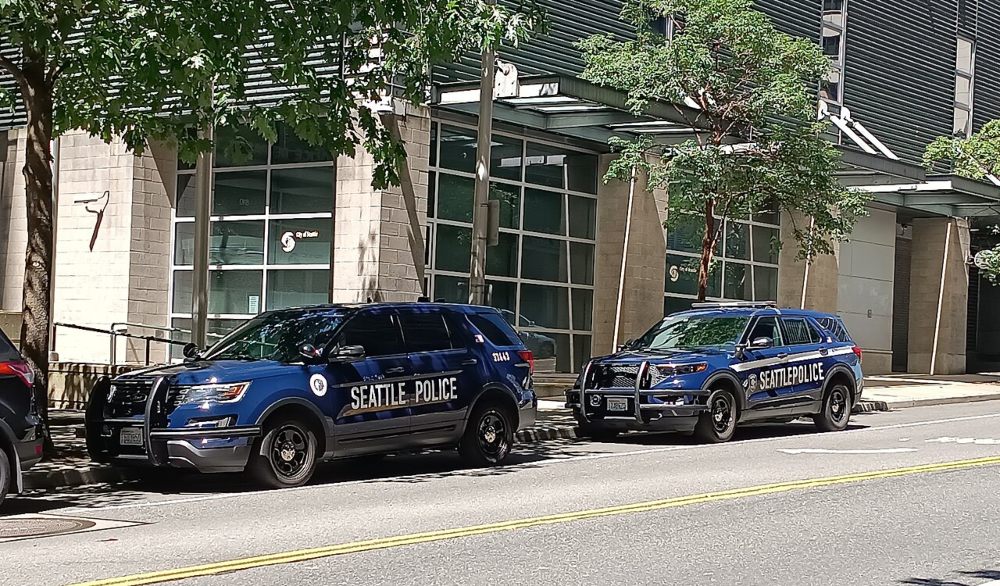

Last week, Mayor Katie Wilson sought and accepted the resignation of Seattle Police Chief Shon Barnes. The chief serves “at will,” so the decision was hers to make. It was also controversial, particularly within the Black community and among City Council members.
I won’t weigh in on whether she was right; I don’t have all the facts. But the timing, days after a mass shooting at Seattle Center, was not ideal. Either way, the decision is made. What the mayor does next will define her stewardship of public safety.
She needs a new chief, and fast. Someone who can build confidence inside the department, win the backing of officers and professional staff, and earn the trust of the people of Seattle, especially those communities that rely most on good policing yet understandably have a conflicted history with the police. The longer this drags on, the more confusion and turmoil. Seattle has had four chiefs in less than three years. Instability at the top is itself a public safety problem.
Here are a few thoughts on the new chief’s job description, informed by my experience as an officer and detective many years ago, my time on the City Council, my 71 days as interim mayor, and my work as deputy mayor to Bruce Harrell:
- First, the mayor owes us a transparent process. She should say now who will be at the table helping with the selection: the Community Police Commission, the Office of Inspector General, the Office of Police Accountability, the officers themselves, residents of the neighborhoods hit hardest by violence, the business community, policing experts, to name a few. And she should commit to a target date for naming a permanent chief. An interim leader can steady a department. Only a permanent chief can change it.
- Second, and most important, the next chief should have done this work, not just read about it. Plenty of police executives can talk fluently about the science of policing. Far fewer have run a focused deterrence call-in, sat across from a grieving family, wrestled with what seems like an intractable crime problem, or held precinct commanders accountable when community trust is violated. Seattle doesn’t need a scholar; we need an experienced practitioner who’s been on the street when things go bad and when they go well. Ask the candidates for proof of deep and effective experience.
This is crucial because the science of policing is well documented but poorly practiced. Take focused deterrence. It means identifying the people causing the most harm, crime’s version of the 80-20 rule, then building a specific plan for each one to get them to stop. Seattle did this in August 2009 along 23rd Avenue in the Central District. The open-air drug market that thrived there for years was shut down and hasn’t come back. David Kennedy of John Jay College in New York helped design it. He is one of the country’s most influential practitioners of focused deterrence, through the National Network for Safe Communities. I wrote about that 2009 strategy here. The new chief should embrace focused deterrence.
Another proven practice is problem-oriented policing. Police and community members identify a specific problem, usually tied to a specific place, then work side by side on the fix. When I joined the Harrell administration in 2022, I inherited a big problem: City Hall Park, just south of the King County Courthouse. Crime, drug use, robberies, encampments, trash, disorder. It got so bad the city fenced the park off and closed it. We pulled together staff from multiple city departments, courthouse employees including Superior Court judges, neighborhood business owners, and social service providers. We added lighting, improved the landscaping, fenced off the broken Prefontaine Fountain across the street where dealers worked, scheduled activation events, and increased police and private security patrols. It worked. The park reopened and has stayed open. The new chief should embrace problem-oriented policing.
Two places need this now: 12th and Jackson in Little Saigon, and Aurora Avenue North. Both have been plagued by gun violence, human trafficking, and persistent felony crime for years, despite well-intentioned efforts to stop it. Make no mistake, offenders concentrate at these places because they believe they can get away with it. Their customers concentrate there because that’s where the drugs and stolen property are. The new chief should understand the law of crime concentration and distinguish between those causing the most harm, who should be arrested, and those who need social services, mental health care, or addiction treatment.
Doing any of this right takes planning, data analysis, integrated information systems, measurable outcomes, close community partnerships, and the understanding that some people need to be arrested. It takes officers and professional staff who know the science and stay focused on results. And it takes a leader who embraces a diversified response system, including the city’s CARE Crisis Response Teams made up of mental health specialists. But none of it happens without enough officers, because priority 911 calls always come first. Seattle is still several hundred officers short.
Technology has made policing far more effective, and we’ve seen it here through the modernized Real Time Crime Center and the limited use of public-space cameras where gun violence, human trafficking, and felony crime concentrate. I wrote about these tools last month. Officers do better when police databases, 911 call details, and camera feeds are integrated and pushed to them in the field. Since the upgraded center opened in April 2025, hundreds of cases have been strengthened to hold offenders accountable. State and city laws tightly regulate how all of it is used. The new chief should embrace technology wisely.
Last year, Seattle reached the end of its federal consent decree. Federal Judge James Robart terminated the case on September 3, 2025, ruling that the department had achieved and sustained full and effective compliance. It took 13 years. The changes to the police department were real: better management, stronger accountability, improved data systems, and far less use of force than before the case began in 2012. The new chief should embrace these changes and seek even greater achievements.
Judge Robart closed the final consent decree hearing by tasking the mayor and the chief to be mindful that “it’s not the end, but it could be the beginning of the end.” That task now belongs to Mayor Wilson and the next chief. Let’s watch carefully what they do.
Discover more from Post Alley
Subscribe to get the latest posts sent to your email.


Excellent, Tim, thank you for your informed and continuing concern for our city.
Tim, this is a solid piece of advice. Some folks may dispute specifics, but overall, I think you offer a logical way to approach the difficult task of balancing community security with transparency in a process that can assure citizens that civil rights are not ignored. This is an opportunity for the council and the mayor’s administration to work together.
Great advice, will it be taken?
Probably not.
Tim, I’m sure you’re not seeking this per se, but I hope Mayor Wilson includes you in this process. You’ve got a depth of experience and knowledge that fits the situation very well.
I hope we get a police chief that understands their constituency and the immediate and long-term problems the city faces, and just as important, has experience successfully dealing with the like.
I appreciated what Mayor Wilson said about the qualities she is looking for in a new chief: Not only a leader who can command respect from rank-and-file officers, but also one who can change the department’s culture. While SPD is no longer under a federal consent decree, it continues to embody an often reactionary culture. Just consider how SPOG reacted to the brand new mayor’s (accurate) statement that Seattle spends twice as much, per officer, on its police budget than Boston. The union issued an inflammatory video decrying the “RISE OF SOCIALISM,” complete with eery music, fear-mongering about immigrants and crime, and statements from Trump describing Seattle as communist. It was mostly incoherent, attacking any new taxes on corporations while also declaring that the public safety budget is sacrosanct. But it set a reactionary tone. Also, the union last year was able to negotiate a new contract with the previous mayor that dramatically restricted deployment of civilian CARE responders to, for example, mental health crises. Harrell should never have approved this, and Barnes should have advised against it. We can do much better.
Thanks for your well-informed overview, Tim. Only hoping that the mayor will take your suggestions and work to find a good candidate. Such an important task.
A good piece, but startling in its lack of attention to a significant piece of the crime situation in Seattle that remains unaddressed. When you have restaurants and small businesses who have been broken into up to 300 times (and yes, I know that business owner), when you have businesses leaving monthly because of the ongoing property crime, and when you have police chief after police chief, and mayor after mayor, and an entire city council dismissing the damages and importance of property crime you cannot recover as a city.
The most effective thing the city could do to improve our public safety in the moment, aside from getting a new police chief, would be to conduct current and retrospective exit interviews with every small business and large business that has left the city. “Broken windows” policing is not just a panicked overreaction to property crime from “pearl clutchers” —it is a serious and effective policing strategy. As a city we have normalized that businesses should be regularly looted and their front doors and windows smashed in with trucks, to the point of creating a fund to cover 1% of the cost. This is tragic mismanagement. I want a police chief who doesn’t tell a shop owner that his perception of crime is “simply perception“ “because statistics” but who listens respectfully and takes action to protect the shop owner and punish the looters.
Indeed, SPOG serves as one index of the health of the SPD force, and it has been looking pretty desperate for years. Maybe it’s the dark side of how the consent decree reforms have worked out – under the veneer. What can the chief do, to balance against that for new recruits, and avoid the perpetuation of that dysfunction?
Really?
Harrell and Burgess ran a closed process for the appointment of Chief Barnes.
Now Burgess says Mayor Wilson “owes us a transparent process.”
Why her but not you?
Well stated Mr. Burgess. But, as you stated, there have been 4 Chiefs in 3 years! At this point in time, what national candidate would want the job? It might be best to make interim Chief Andre Sayles permanent. He has been here almost a year and presumably knows the lay of the land, essentially and politically. Public safety and public infrastructure should not be held hostage to the grandstanding of political cults. I think the citizens of Seattle should consider a Manager/Council form of government. The constant upheaval is eroding the public square.