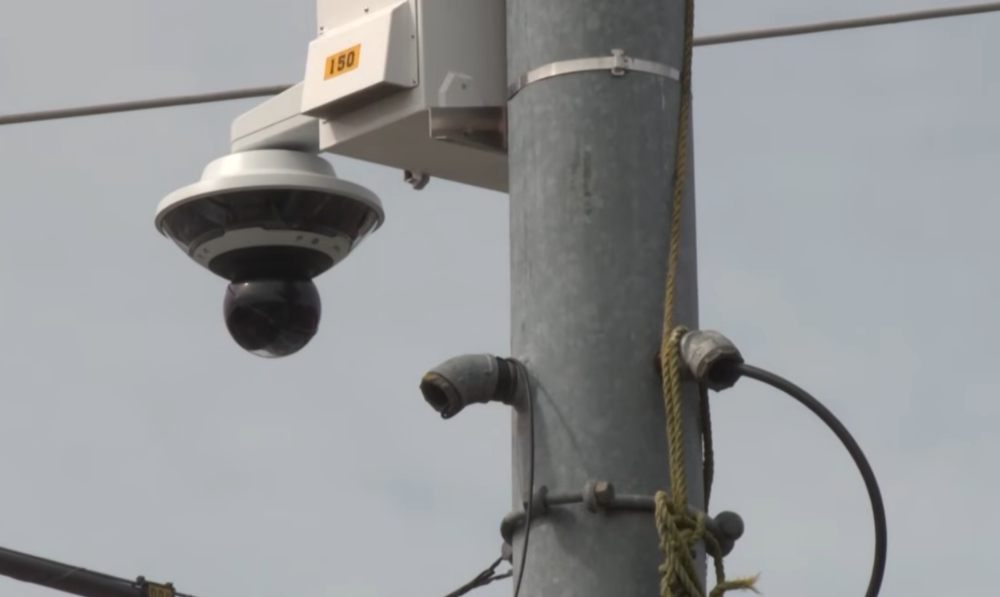

This summer, the world watched Seattle, and national media named us one of the best soccer cities in the country. The World Cup passed without major issues, thanks in part, organizers said, to the public-space CCTV cameras in the Stadium District and Pioneer Square.
And then Mayor Katie Wilson turned off the cameras, pending a further privacy audit. She also continues to block the council-approved expansion of cameras to the Capitol Hill nightlife district and the streets near Garfield High School in the Central District.
I understand the mayor’s initial reservations about this technology. That’s why when I helped design this anti-crime program, we built safeguards in from day one. But the mayor’s pause has hardened into paralysis, and the neighborhoods that can least afford it are paying the price.
The mayor has already shown she trusts this technology when the stakes are high — she wisely activated the Stadium District/Pioneer Square cameras during the World Cup. But the stakes are high every night along Aurora Avenue, in the Chinatown/International District, Little Saigon, Pioneer Square, and in the Capitol Hill nightlife district. The threat to a teenager near Garfield is as real as any that justified activating the World Cup cameras.
In 2024, I proposed to then-Mayor Bruce Harrell a major upgrade to our real-time crime center (RTCC) and limited use of public-space cameras to target specific crimes — gun violence, human trafficking, and persistent felony crime — where they are concentrated. My case was blunt: Seattle police lagged far behind their major-city peers in the effective use of anti-crime technology.
New York established the first real-time crime center in 2005; more than 300 U.S. police agencies now use them. RTCC analysts integrate video, 911 information, and multiple police databases, then push what matters most to officers in the field. By fully staffing the RTCC around the clock and adding public-space cameras, Seattle is finally catching up — two decades late, and with stronger safeguards than the cities that went first.
In 2024 and again in 2025, then-Mayor Harrell and the City Council fully embraced modernization of the police RTCC and the addition of electronic “eyes on the street” where the targeted crimes concentrate. Data analysis pointed to the Aurora Avenue North corridor, the Chinatown-International District, and Third Avenue downtown. Those communities deserve prevention, faster police response, and cases strong enough to hold offenders accountable.
Frankly, these crimes fall heaviest on communities that have long faced marginalization: nearly 60% of Seattle’s identified gun violence victims are people of color. For a city that holds equity and social justice among its highest values, that is unacceptable, and we should use every effective tool to change that reality.
Seattle’s RTCC opened in April 2025 with 62 public-space camera clusters across the three pilot areas. The results: police data indicate that when the RTCC supports a 911 response, the odds of an arrest nearly triple because of better integration of information streams, more accurate offender descriptions, and more eyes on the street.
The King County prosecutor has charged multiple offenders with felony human trafficking, rape, and aggravated assault — cases made possible by the technology. In its first 11 months, the RTCC directly aided investigations into 21 homicides, 558 aggravated assaults, 25 rapes, and 249 robberies. Used wisely, this police technology works.
On this record, last September, the City Council approved expanding camera placements to the Capitol Hill nightlife district, the Garfield High School area, and the Stadium District/Pioneer Square. Even with these additions, only about 1% of Seattle’s 84 square miles will have public-space cameras — yet these areas account for nearly 27% of the city’s reported violent crime.
Mayor Wilson’s concerns — privacy, data governance, the risk of misuse — are valid. We anticipated every one of them, and the safeguards are already in place.
The cameras monitor only public spaces where these serious crimes are concentrated — never private property, homes, or businesses. Facial recognition software is prohibited. Video footage is deleted after five days unless it documents a crime, in which case it is transferred to the police evidence system.
City ordinance and state law bar SPD from cooperating in the enforcement of civil immigration laws or laws targeting reproductive or gender-affirming health care.
RTCC access is restricted to a small number of personnel; every use is logged, and Seattle’s Inspector General can audit those logs and RTCC operations at any time. University of Pennsylvania experts, retained by the Inspector General, are independently evaluating the RTCC and cameras, with results to be published on a public dashboard.
The program was approved under Seattle’s surveillance law, which the ACLU of Washington called, at the time of its adoption, the strongest municipal surveillance law in the country.
Mayor Wilson selected New York University’s Policing Project to perform the additional audit, the same group that published the framework we measured our program against. That framework warns against debating policing technology as simply “for” or “against.” The right tests, it says, are real benefits, minimized harms, and democratic legitimacy. Seattle’s program passes all three.
If audits find gaps, close them. A gap is a reason to legislate further — not to abandon effective, needed crime-fighting technology.
Nor should anyone accept the false choice offered by the program’s loudest opponents: cameras or early root-cause investment. Seattle spends more than $100 million a year on non-police prevention — early childhood programs, violence interruption, victim services, diversion, and re-entry. But the people being shot in Pioneer Square or violently trafficked on Aurora Avenue cannot wait for root-cause investments to take hold. A holistic strategy does both: prevention for the long run, accountability for the crimes causing serious harm tonight.
The most affected communities understand this better than the activists who claim to speak for them. Over 1,000 Chinatown-International District residents and workers signed a petition supporting the cameras. Downtown residents, businesses, and tourism groups have asked Mayor Wilson to turn the cameras back on and complete the installations. These are not surveillance enthusiasts. They are neighbors who live with the violence and want it stopped.
The cameras are approved and budgeted. The safeguards written into city law are unmatched by any police camera program I know of in America — and ready to be strengthened if needed.
Let’s finish the job. Install the cameras in the Capitol Hill nightlife district and near Garfield High School. Turn the Stadium District/Pioneer Square cameras back on. Protect the people of Seattle in the areas where violent crime is concentrated.
Discover more from Post Alley
Subscribe to get the latest posts sent to your email.


An outstanding defense of the program, Tim; I heartily concur. Kudos to you and those involved in putting the program together.
I’d be interested in reading a contrary expert opinion, as there seems to be no reason to object save politics (notwithstanding legitimate governmental overreach/privacy concerns…which you addressed).
I’m going to embarrass myself at least two ways here:
1. I’m not an expert in surveillance technology.
2. I’m not an expert in criminal justice.
My concerns about the cameras lie in the fact that Flock is a for-profit entity, accountable not to the people of Seattle, but to its shareholders and maximizing their returns. Since Flock is unlikely to agree to a contract that disallows them from monetizing what the cameras scoop up, we’ll be selling some selection of public moments enjoyed by Seattle residents.
Cameras catch bad guys. Maybe the city should own them so there’s no profit-pressure to put a kibosh on our privacy.
Seattle doesn’t use any Flock product. None. Seattle also owns all of the CCTV cameras and owns and controls any video footage that is recorded.
People’s concerns about privacy or misuse are legitimate and that’s why very robust safeguards have been built into the program. In fact, they are the strongest of any similar program in the United States that I’m aware of.
Wonderfully informative, thanks for your work on this, including the careful attention to preventing abuses of the system. Can you comment on one of the concerns of activists, which I believe is the potential for use by federal agents, e.g., ICE?
It’s really important to understand the facts surrounding federal agencies and their access to any police data. Unfortunately, almost all of the rhetoric on this topic is based on hypotheticals.
The data federal agencies obtained from Washington police departments (but not Seattle) or the state was shared voluntarily. And this is true across the United States. Some police agencies granted federal access to their data. Seattle does not do that and city ordinances prohibit sharing such data with ICE for civil immigration enforcement.
Thank you so much for your reply. I’ve just written to Mayor Wilson urging her to change course on this important issue, and to read your excellent article plus additional comments. Time for a groundswell of Seattle residents.
B/C the idiot Seattle homeowners voted a communist/socials and incompetent Mayor!! Shame on those idiots!
Nope, not the Seattle homeowners. The young Seattle renters. That’s who voted for her.
Well said Mr. Burgess! It may be time for the citizens of Seattle to consider a City Manager/Council form of government.
Public safety and public infrastructure should not be held hostage to the endless grandstanding of political cults!
Has Mayor Wilson provided an equally detailed opinion on why the cameras are turned off ?
Excellent article. In the aftermath of this horrific shooting spree at the Seattle Center, leaving 3 dead and multiple injured, including a toddler, I hope the mayor of this beleaguered city will rethink her nonsense about security cameras. I am very afraid of the damage Ms. Wilson is doing to this city.
Thanks Tim,
Appreciate the thoughtful analysis. And congrats on building such a robust system that meets all the data standards+: “People’s concerns about privacy or misuse are legitimate and that’s why very robust safeguards have been built into the program. In fact, they are the strongest of any similar program in the United States that I’m aware of.”
In light of Sunday evening’s tragedy, Seattle Center needs to be added to the list of critical camera surveillance. There has been a pattern over the years of gun violence there and now Sunday.
We need this technology put to work immediately and expanded ASAP.