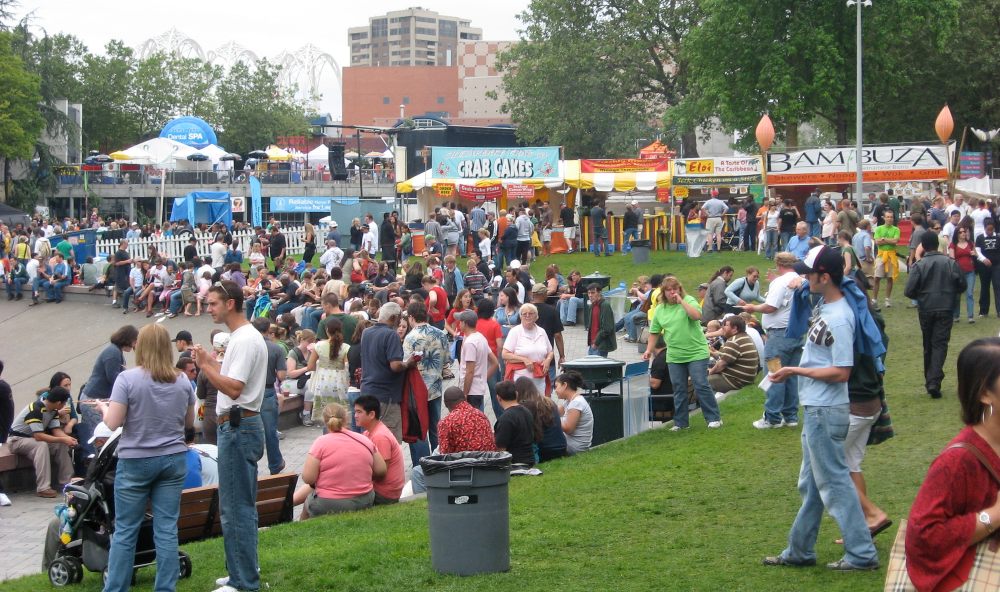

All Seattle seems to have an opinion in the aftermath of the Bite of Seattle tragedy that took three lives and left four injured, including a two-year-old. Opinions have centered on the shooting and on the mayor’s subsequent firing of the Seattle Police Chief Shon Barnes, a hasty and possibly ill-considered action.
What’s been less of a focus is whether the city should continue to host the Bite of Seattle food festival into the future.
The Bite has been celebrated annually since 1982 with the exception of a hiatus during the two pandemic years. But the festival is no longer a locally-produced event. Seattle’s Bite was purchased in 2024 by FoodieLand, a California-based company. FoodieLand’s website boasts that it is the country’s “largest network of independent food and merchandise vendors.” The company’s website reports producing events in more than 21 cities, attracting 1.6 million annual attendees who patronize 2,500 vendors.
The Bite of Seattle originated more than 40 years ago as a day-long event held at Green Lake Park. But it soon outgrew the venue and has since been held during a long weekend on the Seattle Center grounds. The festival allows free, unsupervised entry, unlike festivals such as Folklife ($20 suggested donation) and Bumbershoot ($70.50 per day).
The Bite’s continued presence on the calendar ought now to come under scrutiny. What’s unknown is whether FoodieLand has contractual arrangements with the Center to continue into the future. The question to be further explored is the festival’s value to the larger Seattle community.
In its first years, the Bite served to introduce Seattleites to local eateries and diverse tasting experiences. The festival has grown and in addition now offers live entertainment, stage performances and retail pop-ups. Along with a dedicated Beer Garden, the festival features craft beers and wine and cider tastings. Merchandise at festival booths highlights hand-made T-Shirts and anime pins.
Since the July 26 shooting tragedy, there have been multiple complaints over FoodieLand’s slow response: waiting more than a full business day before communicating instructions to impacted vendors. The Seattle Times was able to talk to only a few individuals about FoodieLand’s management. To apply, vendors had been required to sign an agreement banning “any criticizing or defamatory remarks about FoodieLand or the Bite of Seattle.”
Some, speaking anonymously, complained about financial arrangements – the festival’s steep participation fee and increased share of receipts. A number said they believed local vendors had been passed over for prime locations on the Seattle Center grounds. They alleged choice spots had instead gone to out-of-town vendors.
One former vendor was frank in telling me that the reason for participating in the Bite of Seattle had not been to make a profit. In fact, the contrary was true: they felt lucky if they able to break even. The goal was to gain name familiarity for a restaurant, an innovative young chef, or for a special dish.
Today, Seattle is no longer a stranger to diverse culinary experiences, unlike limited tastes that prevailed back in 1982. The Seattle of yesteryear dined out on culinary sameness, menus that included nothing more exotic than an item like chicken piccata, probably made using canned cream of mushroom soup.
That’s no longer the state of this city’s culinary art. The most recent New York Times pick of Seattle’s 25 best restaurants boasted a sophisticated diversity of ethnic cuisines; among them: Vietnamese, Korean, Japanese, Filipino, Caribbean, Lao, Mexican, Italian, Jamaican and something described as “continental.”
Today with food trucks and the global cuisine, Seattleites may not benefit from the food festival experience. The value of prolonging such a festival, one with inadequate security and insufficient crisis communication, is something that merits serious re-examination.


Thanks Jean, for sharing your understanding of the Seattle Center’s current challenges, garnered from a “front row seat” in the evolution of our city’s 21st century urban form.
Now’s the time for today’s city to re-assess what our historic “Civic Center” should be. It certainly was never created to be a sub-rent mob scene disaster.
Once upon a time back in the 1950s, Seattle voted a bond issue to make the Center happen, in the face of local conservative high profile opponents (their affluent descendants know who they are).
Then its 1962 World’s Fair’s overlay made it possible for America’s classiest, most transformative mid-Century Modern architects to be hired. The structures and exhibits they designed for the Fair put Seattle on the world’s map as a place all about the future – a well-ordered space of civic joy, artistic expression, cultural inspiration and education.
But for too long, electeds have postponed the need to re-think the public management of this unique space, bringing 21st Century Seattleites along with them.