
You may have heard that the FIFA World Cup, a men’s soccer global tournament held every four years that celebrates itself and rapacious capitalism, is bearing down upon Seattle and 10 other U.S. cities, as well as three in Mexico and two in Canada. In these places, fans, political leaders, cops, bartenders, hotel owners and unaffiliated drivers looking for a parking space are wondering what to make of a World Cup in a world gone wayward.
I claim no global soccer expertise. But having had career assignments at nine Olympics and other major national/global sports extravaganzas, I have some thoughts on how such giant festivals tend to play out for the hosts.
My most important learning is that promoters exaggerate the forecast of a local economic boom, while skeptics dismiss hosting’s virtues as trifles unworthy of civic treasure and effort. Somewhere between these inevitabilities is potentially a spot where grins gain an edge over grimaces, and nobody gets injured.
Ahead of the June 11 opener, grimacing is, unfortunately, ahead. Three complications have vexed the run-up.
Security
Never has the tournament been this large (48 teams, up from 32 in 2022) and so spread out (three North American nations), resulting in a whopping 106 games, six of which are in Seattle. Especially in the U.S., each site has a unique set of logistical, security and traffic concerns that require quick solutions from a rapidly devolving federal government.
The most disturbing development surfaced Tuesday in Washington, D.C., when the new Secretary of Homeland Security, Markwayne Mullin, told a House Homeland Security Committee hearing that the $250 million the federal government distributed to host cities to protect against drone attacks is likely insufficient.
“On the counter-drone measures, everybody’s a little behind,” he said, stunningly, of a program underway since December. “Drones are my biggest concern.”
When FEMA announced the plan, it distributed the money to 11 states. According to a report by Front Office Sports, Washington received $19.5 million, as one of four states classified as Tier 2 risks. California led Tier 1 risk states with $34.6 million. Judged least at risk was Kansas at $5.3 million.
Nervous soccer fans can at least take solace that money spent on the Reflecting Pool in the nation’s capital made it look a bit better.
Prices
The second complication is a FIFA-inspired ticket price gouge scaled for the House of Windsor, not for the House of Waffles. This includes an opaque shuffling of tickets between the FIFA online sites and the secondary market of resellers that has left many purchasers bewildered and resentful, according to the Seattle Times.
Not that you needed permission, but if you witness FIFA President Gianni Infantino at an event, feel free to empty both lungs in his general direction. The suspicion is that the seventh-degree black-belt griftmaster has given tutorials at the White House.
Politics
The third issue is American politics. In the minds of many international soccer travelers, the U.S. has rolled out an unwelcome mat.
Maybe it was the globally distributed videos of Americans shooting innocent Americans on the icy streets of Minneapolis. Or the Trump administration’s outright ban on fans entering from four countries: Iran, Haiti, Ivory Coast and Senegal. For citizens from another 50 countries, the government attempted to impose a $15,000 bond, returnable upon exit. The plan was later waived for ticket holders, but not for fans traveling without tickets. Given the collective chaos from so many stiff-arms, it is not hard to imagine an international visitor’s dread approaching airport passport control and wondering if the U.S. entry rules had changed without warning mid-flight.
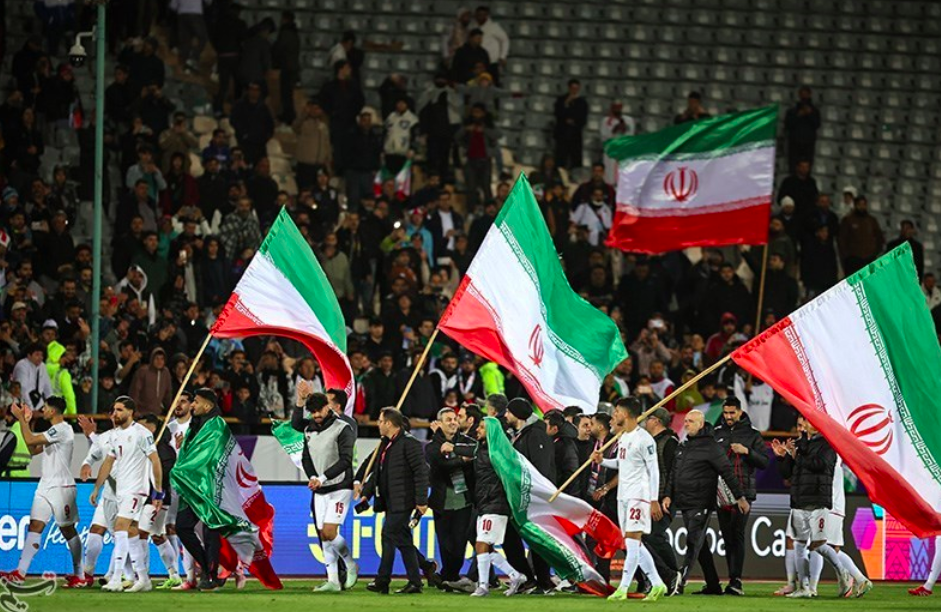
Then there is the wrinkle of one host nation being at war with an invited nation, whose team is 21st in the FIFA power rankings. In Iran, the national team is a serious point of pride. Players and coaches are eager to play, and FIFA insists they do. However, political and security tensions are high enough that last week, despite months of planning, the team moved its pre-Cup training ground from Tucson across the Mexican border to Tijuana.
Iran plays its first two group-stage games in Los Angeles in front of a rabid Iranian diaspora — a part of LA is nicknamed “Tehrangeles” — then moves to Seattle for a match against Egypt at 8 p.m. Friday, June 26. As luck of the Cup draw would have it, it’s pride weekend in Seattle. That layers on some industrial-strength irony because the two Muslim countries have laws against homosexuality. The teams demanded no protests or displays inside the stadium. Fortunately for the Seattle police, the annual parade on Fourth Avenue, which draws thousands of spectators and participants, isn’t until Sunday, June 28. Until then, the street advice to pridesters is to holster your boas.
Here’s the consequence of all the uncertainty: According to a report released last month by the American Lodging and Hotel Association, bookings in all host cities are far below the expectations created by FIFA and local promoters. In Boston, Philadelphia, San Francisco and Seattle, nearly 80 percent of respondents report booking pace below expectations and behind a typical summer, with many describing the tournament as a “non-event” due to FIFA room releases and weak international fan travel.
But enough of suspicion and dread. Let’s discuss enjoyable things, such as where Seattle ranks at or near the top in something: Siting.
Locals tend to take for granted the cozy distance between Seattle Stadium — the FIFA-mandated name because it controls all ad revenue, although I’d be happy if it stayed that way — and Seattle Center. But compared to locations such as Boston and New York, where stadiums are 30 miles from downtown, Seattle’s walkable mile and a half is pickled with hotels, restaurants, bars and parks, much of it along the spiffy new waterfront development. The space also includes the four official Fan Fest sites, where ticketless fans traditionally hang out for free to drink, party and watch games on giant screens from around the tournament.
The only flaw in the Seattle plan is that three of the four Fan Fest sites — the Center (in the Armory), Pacific Place mall and Victory Hall, west of the Mariners’ park, are indoors. At most World Cups, the parties sprawl outdoors. Only the Pier 62 site — including a screen on a floating barge — offers visitors the experience of Seattle in all its glorious June-uary weather.
Another virtue in Seattle’s successful bid to host was that no new facilities required construction. All the U.S. matches are in existing NFL stadiums, where grass fields were installed if needed. In the only other Seattle-hosted international sports festival, the 1990 Goodwill Games, an aquatics center was built in Federal Way, which turned into a permanent community success story. In contrast, Qatar, the host of the 2022 World Cup, built seven new stadiums (all seating 44,000 or more) in addition to one existing stadium. A Persian Gulf nation the size of Connecticut with a population equivalent of Arkansas, Qatar employed a huge number of migrant guest workers. The Human Rights Watch organization claimed that more than 6,500 guest workers died between 2010 and 2020. The Qatari government disagreed, claiming fewer than 500.
Regarding the matches themselves, don’t expect much from the Yanks. The latest FIFA rankings place the U.S. at 16th. The top four are defending champion Argentina, Spain, France and England. The best American showing was in 1930 in Uruguay — the first World Cup—where they finished third in the 13-team field. Haven’t had a sniff since. They didn’t even make the field from 1950 to 1990. It’s still not our game, not with so many other professional sports inhaling young athletic talent. Still, Seattle was fortunate to draw the U.S. team for its June 19 match against Australia, ranked 27th. Knowing how well the Aussie fans travel and drink, the result will likely be secondary to the weekend-long party.
The game’s local highlight will be if/when midfielder Cristian Roldan takes the field. The Sounders team captain, from Pico Rivera, CA, and graduate of the University of Washington, made the 26-man roster again, following his 2022 selection, during which he did not play in a match. He has made more than 400 appearances for the Sounders over his 12-year Seattle career. If he enters play, it will be a capstone moment in the history of Seattle sports. He is one of a Cup-record 44 MLS players representing 21 clubs and 17 nations. Sounders teammate Obed Vargas will play for Mexico.
Even if you are not a futbol adherent, please do yourself a favor and engage the world when it comes to town. If you have no emotional allegiance to a team other than the USA, pick one. Or three or four. Learn the best player’s name and the nation’s World Cup history, if any. Alert to long frustrated Mariners fans: Four teams are making their WC debuts — Cape Verde, Curacao, Jordan and Uzbekistan. Just sayin’.
What international fans will best remember from a first visit to Seattle is not the walkability, the views, or Pike Place Market. They will remember that you bought them drinks, gave them rides, told them a grimy story about Seattle, directed them to a pub or eatery where they found no other tourists but themselves.
They will teach you a national drinking song, chant, or gesture. Do it, then quickly search AI to see if it’s a misdemeanor, felony or something the kids can snicker about when re-telling their friends.
Discover more from Post Alley
Subscribe to get the latest posts sent to your email.


Thanks for the brilliant insight and heads up. I’ll make sure to have new batteries in my Safety Patrol helmet for the week.
Orange vest and K-rations too.
Obed Vargas is Cristian Roldan’s ex-teammate. He has been with Atlético Madrid since February.
Fine save.
For some reason, many USMNT fans outside of Seattle absolutely HATE Roldan. I don’t get it, but he gets blamed for any goal against, even if he’s not on the field.
Excellent analysis, Art! and thanks for reminding me that international fans will remember most their encounters with Seattleites. I’m looking forward to (hopefully) reading more from you as the games get away
Just don’t ask me to explain how teams advance from stage.
Just watch out for this, Art. If the group stage goes a certain way, the first knockout round will feature a game between … Iran and the United States.
In 1994, I was eagerly awaiting the World Cup coming here, and that was a success (it’s still the best-attended Cup in FIFA history). This time, I was feeling unhappy, because of our current political atmosphere and Infantino’s newfound greed toward a typically affordable event. Then I remembered that FIFA has a knack for awarding the Cup to nasty regimes: Mussolini’s Italy in 1934, Argentina’s junta in 1978, post-Crimea Russia in 2018, slave-labor Qatar last time. Add Saudi Arabia’s turn in 2034, and Trump’s America doesn’t seem so bad. I wish I were kidding.
I hope the soccer turns out well, the American people treat the visitors well, and Infantino’s dynamic-pricing on the tickets blows up in his face.
On a positive level, USA ’94 changed sports irrevocably here and worldwide, via TV and attire.
Here, it became the first sporting event to feature the score bug. ESPN/ABC needed a way to get sponsors air time in a sport without commercials. They chose to put the score and the elapsed time in the corner of the screen and place a sponsor’s logo (Snickers, Budweiser, etc.) next to it that changed every X minutes. After the tourney, Fox Sports developed a score bug for their NFL games (down and distance, possession, line of scrimmage), the other networks and sports got their own score bugs, and now every sportscast has a score bug.
Worldwide, it introduced names and permanent numbers on soccer players’ jerseys. Before, players not only didn’t have their last names on their jerseys, they didn’t necessarily wear the same number in consecutive games. The starting goalie got 1, the starting defensive players 2 to 6, the starting offensive players 7 to 11, and the substitutes got 12 on up. For USA ’94, the players on all teams got their names on their shirts and the same number throughout the tournament, like the other American sports. Teams suddenly realized they could make bank by selling personalized replica jerseys of their players. When the foreign leagues resumed, the players trotted out with names and assigned numbers, the fans snapped up the replicas, and now Messi number 10 shirts appear in the most remote corners of the planet.