
The United States is in the midst of two infrastructure buildouts at least as large as our previous national buildouts of railways, highways, electricity, air conditioning, cellphones, and the Internet. We do this a lot!
Each previous build-out has roiled our economy, society and polity in both expected and unexpected ways, with the general result being greater benefits than costs, but plenty of turmoil over the disruptions incurred, and the redistribution of benefits and costs across the economy and the population. Every such disruption changes the rules, creates new winners and losers, and generates new efforts to ameliorate downsides as citizens stagger forward, unequally blessed and cursed by so much progress.
Our current buildouts are intimately interconnected, and each is in some ways a rebuild of an earlier version of itself. The first might be called Electricity 2.0, still fumbling through its early stages. The second might be termed Cloud 2.0, which is happening at warp speed right now.
Electricity 2.0 is driven by a rapid increase in demand for electrical energy which is likely to continue for the rest of the century, after a period of relatively flat demand. The increase is coming in part from Cloud 2.0, which in turn is responding to demand driven by AI, and from a broader project to save the planet by electrifying energy uses and making all electrical generation renewable.
Electric cars are an example of electrifying what was once a user of fossil fuels, and meeting that demand falls to automakers, battery makers, and the entities—public and private—which are building charging stations. Meeting soaring demand is stressing the deeply cautious institutions which have traditionally stewarded creation and distribution of electricity: utilities, grid providers, and hybrid agencies such as the Bonneville Power Administration and the Tennessee Valley Authority.
Attempts to meet demand include expansion of solar and wind generation, geothermal fracking, nuclear technologies, hydrogen, deployment of batteries, a smarter, more efficient grid, efforts to capture CO2 from fossil fuel plants, along with wave capture and tidal energy. Energy conservation by businesses and consumers is also important, but efficiency is already higher than a generation ago, so there’s limited (though important) benefit left to be gained by further conservation efforts.
The rest of this story will focus on Cloud 2.0, since it’s the biggest driver of Electricity 2.0 and a huge story in itself. Cloud 1.0 was built for the Internet; it allows individuals and businesses to put both data and applications on servers accessible from anywhere. It’s why you can pick up where you left off as you switch between devices and places. Cloud 2.0 is being built to accommodate the inclusion of AI in everything, and the highest-profile components of Cloud 2.0 are hyperscale datacenters.
AI has a ravenous appetite which is most efficiently satisfied in large facilities. Sating AI’s appetite is generating unprecedented demand for electricity, as well as some increased demand for cooling capacity (cool water, dry air) and cheap, flat land.
The AI ramp-up (an average five-fold annual increase in data compute since 2020) is inflating and agitating the stock market, tying politicians in knots, and marinating employees and employers in anxiety about the impact of AI on jobs. AI is hyped as a disruptive force in the future of nations, work, democracy, capitalism, war, and humanity itself.
Needless to say, the creators of AI have, if nothing else, put themselves in the hype cycle hall of fame by positioning their product as capable of having such apocalyptic consequences. Investors, as ever, are eager to own the opportunity to benefit from the emergence of the mother of all disruptions, so valuations are astronomical for the biggest AI firms. It’s worth noting that many of our previous buildouts, such as railroads and the Internet, also proceeded through multiple hype cycles and consequent booms and busts.
There’s also a strong counter-argument that AI, although powerful, is not a quasi-supernatural threat to humanity; it is still a normal technology unlikely to become as smart and reliable as humans any time soon. Its potential benefits will take longer than many people imagine.
In this view, some people will get really rich, some will get really screwed, and many will get used to a certain amount of change. There will be evolution in the nature of working, playing, learning, and most other human activities, but the buildout of AI-enabling infrastructure will lurch forward, and one day we’ll be living in a new normal world, with AI integrated into our economy, society, and polity.
As a result of epic hype, many feel some dread about AI; it appears in nightmares as some kind of alien from the Marvel Cinematic Universe. Accordingly, there’s broad public support for any strategy which might slow AI down or even stop it altogether. Such strategies require finding chinks in AI’s armored surface.
There are four main strategies:
- Attacking the reputations of the (somewhat) human faces of AI: the founders and leaders of OpenAI, SpaceX, DeepMind, ByteDance, Nvidia, Palantir, Google, Microsoft, Anthropic, Amazon, and Apple. For some, these avatars of extreme capitalism should be opposed for their capitalistmaxxing alone. For many more, their ostentation, their spineless obeisance to Donald Trump, and their habit of making self-aggrandizing apocalyptic pronouncements makes it easy to position them as villains. The more hated they become as billionaires taking advantage of the rest of us, the more vulnerable they will be.
- The second is to seek government action to control AI. The US, EU, China and other polities recognize AI’s potential to help or harm their various projects, and also recognize AI’s political impact in the present. At the moment, candidates for office at every level are falling all over themselves to support limits on AI, although they struggle to define the right policies, and many of them already depend on AI in their campaign operations. Some additionally fear unilateral AI disarmament in a multipolar world; AI is a technology in which the US maintains a lead measured in months, at a time when leadership in some other important technologies has moved elsewhere, most often China. If China perceived itself to have achieved superiority to the US in AI, would it be tempted to seek dominion over its neighbors, many of whom are democracies allied with the United States? AI is turning into a wedge issue in both parties, as factions have formed in favor of either shutting it down or managing it more gently.
- The third strategy is much more specific: a burgeoning campaign to stop the spread of self-driving cars, which would not exist without AI. Industry leader Waymo’s self-driving cars have been popular where they’ve been deployed, and have the potential to offer safe local mobility which reduces the climate impact of transportation, and which may become quite cheap. Self-driving cars could someday become a boon to people of limited means and possibly a supportive adjunct to hard-pressed mass transit systems. They could also, of course, compete with mass transit and drive ridership down. At the very least, they are a feasibility proof that could eventually enable a large market for individually-owned self-driving cars; Tesla’s dream. In city after city, however, backlash from the taxi and ride-hailing service drivers who would lose their jobs has channeled a gut-level fear of AI into a potent political force, leading local political leaders to side with the forces arrayed against self-driving cars, stalling Waymo’s growth into more cities despite the company’s deep pockets. Waymo is a sibling to AI giant Google in the Alphabet collection of companies, BTW.
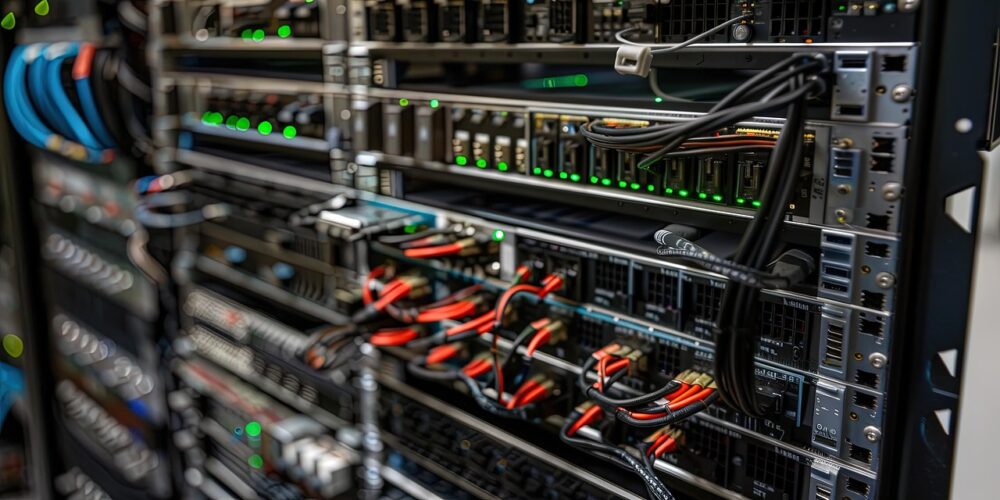
- The fourth strategy, and the topic of our sermon today, is to oppose the construction of datacenters. Datacenters are where the cloud lives: huge concentrations of servers holding processors and memory, optimized for speed, requiring staggering amounts of electricity. All those processors require cooling, and cooling systems make noise. Hyperscale datacenters also eat up square miles of land. Opposition to datacenters focuses on electricity use, cooling, land use, noise, and an unquiet fury at the tech overlords whose dreams demand them.
These four strategies share a common substrate, which might be called disruption exhaustion. Silicon Valley has become a disruption engine with few, if any, historical parallels. The basic business model is to fund a startup which seems to have invented a way to use some flavor of new technology to deliver some kind of new benefit to some group of customers, thereby disrupting and replacing the businesses which were previously meeting those customers’ needs less well.
There’s nothing wrong with this concept, and it has been a huge part of the story of the rise of the United States and the modern world. A significant portion of the world, however, is now somewhat exhausted by the regularity with which advances in technology disrupt their lives in so many ways. Entire career categories come and go, smart phones become mandatory, customer service becomes enshittified, and so forth.
Some disruptions are clearly beneficial, but there’s still stress at having to change our behaviors to adapt to them. Induction stovetops are great to cook on and good for the planet, but not all of your old pots and pans work on them. Meanwhile, some disruptions appear to purely benefit businesses at the expense of customers.
Datacenters are not new; the first was built in 1945 (at UPenn, for the US Army), and the first semi-modern datacenter was launched in 1960 to support a radical new instant airline reservation system, SABRE. The first thoroughly modern “hyperscale” datacenter to support cloud computing was built by Google in The Dalles, Oregon in 2006. Today there are approximately 3,000 large standalone datacenters in the US with half again as many under construction or planned.
A mere 107 are located in Washington State, less than half as many as in Loudoun County, Virginia. Just four states—Virginia, Texas, California, and Illinois—host more than half of all data centers. Just three US companies—Microsoft, Amazon, and Google—own the majority of capacity. Note that two of those three are Seattle-area companies, and the third has a major presence here. Microsoft’s budget for datacenter development for the next year alone is $190 billion.
An outfit called Fermi America is proposing to build an “AI Campus” in Texas covering nearly 5,800 acres (about 7 times the size of the University of Washington Campus in Seattle), with 18 million square feet of datacenter space (Microsoft’s Redmond Campus comprises 8 million square feet of office space), and with electricity entirely generated on site.
Its only connection to the grid will be to provide, not take, power. Its electrical generation plan includes gas turbines, nuclear reactors (four big ones!), solar panel arrays, and batteries. Hypergrid, as they’ve named it, exemplifies a trend: self-powered datacenters, designed to avoid dependency on the grid. In fact, as Fermi America describes it, Hypergrid is best understood as an electrical power generation campus with a datacenter attached. When complete, Hypergrid will have a generation capacity of 11 Gigawatts, nearly double the output of the nation’s current largest generation facility, Washington’s own Grand Coulee Dam. The scale is mind-boggling.
Opposition to datacenters was nonexistent until quite recently. Many datacenters were simply collections of servers on a floor or two of a corporate office building, to which IT staff had the only keys. There are countless such small datacenters and they attracted no opposition. Today, soaring fear of AI and the sheer size of hyperscale datacenters has resulted in exploding opposition to the construction of large free-standing datacenters.
Big datacenters need certain real-world accommodations: land, electricity, internet connection, and cooling capacity, along with tolerance for substantial construction impact and noise pollution. Meeting those needs requires getting permits, lots of permits. The need for permits gives jurisdictions at different levels of government some degree of control, gives activists an avenue to pressure governments, provides purchase for lawsuits intended to slow or stop datacenter development, and gives lawmakers ways to exercise control.
Permit requirements also motivate datacenter developers to seek locations with as few of them as possible. Elon Musk’s Grok (now SpaceX), for example, recently built a datacenter in Tennessee on unincorporated land not far from Memphis. It’s powered by gas turbines brought in ready-to-connect on trucks. The exhaust has measurably degraded air quality in Memphis. The city had no way to defend itself because Grok didn’t need no stinking permits from the city. It’s no accident that Hypergrid is being built in extremely rural Texas, as opposed to, say, Western Washington. Fermi America has also cleverly allied itself with Texas Tech University and given an equity stake in the project to former Texas Governor and eyeglass model Rick Perry.
More often than not, local jurisdictions from Loudoun County, Virginia to Grant County, Washington are in line to see major benefits from datacenters, including tax revenues and local employment, and they have tended to recruit and approve datacenters.
Citizens have become quickly hostile to the datacenter building boom, which is predicted to triple the number in just the next four years. Locally, the Seattle City Council just passed a moratorium preventing Seattle City Light from agreeing to provide power to datacenters above a certain size. On June 24th, the Snohomish County Council followed suit. Spokane’s city government is currently debating a moratorium as well. These are local examples of what is happening nationally, where more than 300 moratoria have been put into effect, the vast majority in the past year. Polls show, in many cases, large bipartisan majorities disapproving of datacenter construction. One recent report estimated that more than $100 billion in planned datacenter construction was held up by opposition last year alone.
Having political discussions about the impact of datacenters is much simpler and more concrete than trying to have discussions about the impact of AI, and moratoriums seem to be a popular political response right now.
In Seattle, where political leaders quickly responded to the surge in opposition to data centers, there’s an odd disconnect: the three dominant datacenter firms, Microsoft, Amazon, and Google, between them employ about 155,000 in Washington State, the vast majority in greater Seattle. In an earlier time, Seattle’s moratorium would have been like voting against air travel despite Boeing’s dominant presence as a local employer.
In Michigan, there’s another interesting disconnect; activists working to halt datacenters are also working to halt wind and solar generation projects. One might imagine that if the case against datacenters is that they’ll suck up a lot of electricity, making it harder to save the planet from climate change, there would be a complementary case in favor of maximum buildout of renewable generation infrastructure, but apparently not.
The surge in popular opposition even in AI’s Seattle heartland will certainly give governments leverage in dealing with tech giants eager to build datacenters. I’ll argue here that they should use this leverage to shape the Cloud 2.0 buildout rather than stop it: to gain maximum public good by letting datacenters get built, subject to conditions which benefit the public.
This may not be a politically viable position at the moment, but it can come to be, especially in places such as Washington, Oregon and California, where so many jobs are in the industries which depend on rapidly increasing access to datacenters, as well as other metro areas and states where such jobs, or the promise of such jobs, is a factor.
What should governments ask for? Here are three suggestions:
- Communities in the immediate vicinity of datacenters deserve to be robustly protected from water shortages and rising prices for water, from electricity shortages and rising electrical rates, from declining air quality, from noise pollution, and from other consequences of datacenter construction and operation.
- These communities should be rewarded with community-building resources as well: hire locally for construction and operation, pay to upgrade the local grid, subsidize local electrical rates, build parks and schools, and so forth. Microsoft has done a lot of this in Quincy, WA, and it has done wonders for the company’s reputation in Grant County. Loudoun County, Virginia, where the world’s largest concentration of datacenters can now be found, pays a good portion of the total cost of government operations out of revenues from the datacenters, pleasing local property taxpayers no end.
- For the rest of us, datacenter developers should pay for renewable electrical generation and major upgrades to the grid. Utilities everywhere are caught between their mandate to offer users lowest possible rates and the need to undertake major infrastructure projects to upgrade the grid and increase generation. The need to increase generation is also driven by climate concerns, for which a large part of the solution will come from replacing fossil fuel energy with electrical energy across the entire economy, and generating that electricity without carbon emissions. Requiring datacenter developers to contribute substantially to this project will benefit ratepayers and the planet. Their deep pockets and hunger for electricity make them ideal candidates for infrastructure investments that would otherwise fall on ratepayers or not happen at all. Currently, datacenter developers are frequently installing gas-fired generators because it’s the fastest way to get the power they need without overwhelming local utilities. The climate impact of this, of course, is negative, though it protects local rate-payers to some extent. Perhaps the permitting that allows gas-powered turbines should include large contributions to the development of renewable alternatives in the area.
There’s a limit to what state and local governments can ask for, since datacenter developers are able to shop for locations that will ask for less, and since they are capable of choosing not to take power from the grid and instead generate it themselves, a la Microsoft and Fermi America in Texas. Texas, in fact, is welcoming a flood of giant self-powered datacenter developments and happily selling them natural gas, a major climate negative. Fortunately, datacenters derive some benefit from being closer to their users, so they have some incentive to play nice with jurisdictions near metro areas, rather than locating everything in the booniest of boonies.
Part II of this story will consider the actual impact of datacenters on communities and the environment, and consider the interplay between how people feel about AI and how they feel about datacenters.
Discover more from Post Alley
Subscribe to get the latest posts sent to your email.


Thank you for this insightful discussion.
As a retired enterprise software architect who designed, developed, and managed service management products like help desk and change management systems for a company that once called itself the plumber for enterprise IT management, the most interesting aspect of generative AI and data-centers is that they turn the return on investment in software products on its head.
Typically, software services require enormous upfront costs in designing, coding, testing, and remediation, but the incremental cost of supplying a new customer is very low. Thus, the charge for the service can also be low. Hence, services like Google search can be supported by ad revenue and appear to be free to consumers.
Generative AI seems more like auto manufacturing where upfront costs for design and establishing production lines are substantial, but the cost of manufacturing an auto is also large and contributes to the price of the product.
I eagerly await seeing how this all works out.
Thank you Marvin. You’ve identified perhaps the largest vulnerability of the companies providing AI services–the costs scale at the same rate as the revenue, or maybe worse for the frontier models. Unless radically more efficient designs for chips and the models that run in them are invented, the whole industry is fragile. Since AI is propping up the stock market and the whole economy, we’re all exposed.
I have an observation that is more likely optimism than insight, but gen AI reminds me of cryptocurrency and blockchain.
In early days, the value of a crypto-coin was tied to the compute cycles expended in creating the coin. This was, as economists can tell you, an illusion. The value of the coin came from the faith of its users in its fungibility, not a server farm cranking away in West Virginia. Eventually, the market recognized the irrelevance of the compute cycles and cryptocurrency became computationally reasonable.
I will not try to junior engineer the AI industry, but I wonder if the need for massive multiple datacenters is not tainted with the same snake oil that early crypto bathed in.
Which leads to me ask whether gen AI could be implemented more efficiently.
I was immediately excited about this when I misread the title as ‘Decanters Over America – Enormous Bets On Needs Unmet’ – thinking that you were attempting to address the problems of the wine industry by promoting the use of decanters. Alas, I was wrong. Nonetheless an interesting read, and I look forward to Part 2. For a sidebar – check out my piece on AI replacing wine critics, which went up this morning on my Substack.