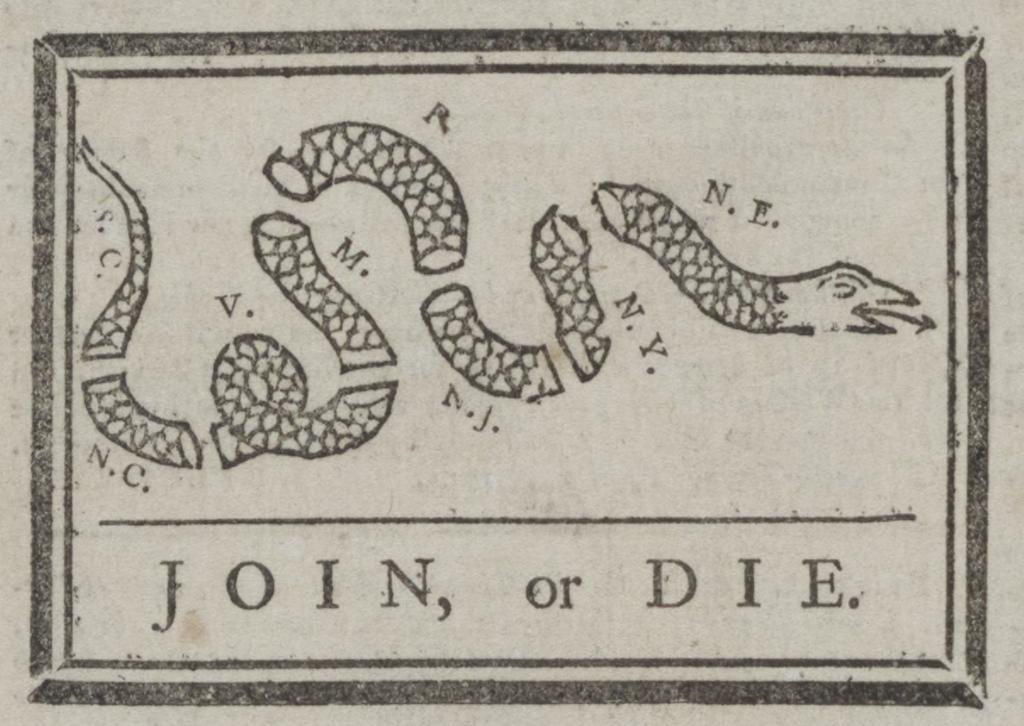

There were fireworks on the 4th from Aberdeen to Spokane and, of course, here at Lake Union. Lurking behind the spectacle was one of American history’s best stories. But did you celebrate it? Blue city liberals can be conflicted.
At a July 4 picnic I like to talk about that story. As you might imagine, people avoid me for this, preferring levity to gravity. But the story is rich, and there are always a few who are eager to jump in. It’s an origin story, a war story, a short introduction to political philosophy, and a story of values: freedom, equality, rights, justice, honor. There’s drama, too: If the war were lost, the signers of the Declaration would be hanged for high treason by King George.
It’s also a story of what words can do. The Declaration created a nation and announced its ideals. Its second sentence let a genie out of the bottle, putting forces in circulation that would resound forever.
We hold these truths to be self-evident, that all men are created equal, that they are endowed by their Creator with certain unalienable Rights, that among these are Life, Liberty and the pursuit of Happiness.
As the late, great historian Gordon Wood wrote, the American Revolution was “the most radical and far-reaching event in American history.” (Wood, you might recall, is quoted by Matt Damon’s character in “Good Will Hunting.”) Similarly, Barak Obama at his recent Chicago presidential center opening marveled “how radical the whole idea of self-government really was back in 1776.”
Clearly, it’s not a simple story. Let me share a tactic I learned in a college lit course and carried over to my history classes, helping me appear a little less clueless to my profs. The source is E. M. Forster’s Aspects of the Novel.
Novels are fiction and history is not. But the two share several of Forster’s “aspects” of good writing. A story centers on the question “What happens next?” This gives a story its drive. So the spine of a story (whether fiction or not) is its timeline, and timeline works in sync with another aspect — plot. Plot gives us the why: the cause and effect.
Now we can talk. Britain won the French and Indian War in 1763, gaining lots of territory in North America. Then it taxed its American colonies to settle the war’s debt. This caused a heap of resentment, which led to the Boston Tea Party (1773), and then Patrick Henry’s plea “Give me liberty or give me death” (1775). There followed “the shot heard round the world,” and then the Declaration of Independence (1776), which did just what its title says. Then we had full-on war between colonists and colonizer. It was long and awful but, finally, the Americans were victorious at Yorktown in 1781. General Washington was elected president of an independent nation.
Speaking of Washington, characters are a third aspect of Forster’s keys. Forster, author of masterworks like A Passage to India and Howard’s End, famously distinguished “flat” and “round” characters. Flats help tell the story but only as stick figures. Paul Revere (The British are coming!) and King George (so bad) fit the mold perfectly. These characters are important to the story but don’t evolve or add complexity.
That’s what rounds do. Take Thomas Jefferson. He was an author of the Declaration and champion of “life, liberty and the pursuit of happiness.” And he was a Virginia plantation master who enslaved hundreds of people and fathered six children with one them. Yet, he was equality’s megaphone and tyranny’s most articulate enemy.
Or Thomas Paine, author of the cry for revolutionary action, Common Sense. He is notorious for broadsides against anyone who didn’t support the cause. He fought the redcoats arm in arm with farmers and artisans, and he raised money to get shoes and blankets to freezing soldiers at Valley Forge. He cursed “the summer soldier and the sunshine patriot.” And he goes from revolutionary hero to despised beggar. Paine was an abolitionist and an accused atheist at a time when either could get you killed. He was not “flat.”
But a fourth aspect is July 4th’s secret sauce is prophecy. Forster invokes it to distinguish a great story from one that is merely good.
To him prophecy isn’t foretelling the future; instead, it’s a sobering force that shapes the plot. A prophetic story inspires and frightens. It embraces universal concerns like freedom and constraint, status and equality, justice and vengeance, integrity and betrayal. A prophetic story summons humility and makes us sit up and listen. To hear it we must drop wishful thinking.
The 4th’s story is prophetic in droves. Prophecy is in the Declaration’s world-shifting call for freedom and equality, the war’s great pile of heroism and misery, and its mandate to create a government worthy of the Declaration’s ideals.
There’s the rub. The Declaration describes a world (tyranny), omits a world (slavery, genocide), and imagines a new world. The progress that follows July 4—not only independence but the gradual expansion of freedom and equality—is indebted to its ideals. At the time, only propertied White men could vote, but in the name of “inalienable rights” the ballot was extended, eventually, to White men without property. Next, in fits and starts, slavery was abolished, and then Black men were enfranchised. Then women were enfranchised, child labor was banned, and Native Americans won citizenship. And then we fought Jim Crow, legalized gay marriage, and so on down the crooked path set by “all men are created equal.”
There have been depressing losses and wrenching setbacks all along, and now, too. As Lincoln said at Gettysburg, the American Revolution is unfinished, and its ideals are our fuel.
July 4th is the ultimate No Kings Day. A blue city liberal like me can celebrate it for the ideals it birthed and the inspiration it provides to forge ahead. Neither outrage over current injustice nor despair at the current president’s vulgar debasement of our nation’s character should throw us off track. That would be a prophetic error.
Discover more from Post Alley
Subscribe to get the latest posts sent to your email.


I would have enjoyed your discourse at our bbq. (Beautifully written, by the way.)
When my friends in France say, “Vive la France!” I like to respond with, “And long live the United States!”
Thank you, Terry. And, yes indeed.
“July 4th is the ultimate No Kings Day!” we should all get T-shirts that say this for next year. Such an excellent closing to an excellent piece, as always. Thank you, Walter, for the good work you do in support of the civic consciousness of our city!
Peter,
This is a fabulous story, well thought-out, well-reasoned and well-told. I am presently involved in rewriting an account of the Denny landing at Alki in 1851, not to traduce them or deny them their due, but to demonstrate how their reconnection with the national market they had enjoyed in Illinois and established by selling 270 piles to San Francisco give birth to a new world, the American urban society on Puget Sound and quickly led to the death of the ancient native Duwamish world in the Duwamish River watershed.
Your essay illuminates the lessons. that I, like you, had to learn to make sense of our modern, American travails. My email is david.m.buerge45@gmail.com. If you could email me your address I will send you a copy of the essay when I finish it–soon–and, perhaps, we could share notes face to face at some time in the not too distant future. Thanks, David M. Buerge