
A new thorough and wide-ranging work of history sheds light on the tenebrous corridors of a turbulent decade in America. In “Martyrs to the Unspeakable” (Orbis Books, 20225) author James W. Douglass revisits the case of John F. Kennedy’s assassination and delves deeply into the violent deaths of Malcolm X, Martin Luther King, and Robert Kennedy. Each possessed charisma, erudition, and compassion for their fellow human beings. Each envisioned a more just and peaceful order at home and throughout the world. Collectively they posed a serious threat to the lords of war and conquest at the Pentagon, CIA, NSA, and FBI. An adamantine Cold War ideology bolstered by a lucrative arms industry and weapons of mass destruction could not abide dreams for a pacific and cooperative future for humanity.

What is the unspeakable? It is a term derived by Douglass from the Catholic monk and poet Thomas Merton. It is a void that vitiates and distorts much of our language today. It makes words, wrote Merton, “ring dead with the hollowness of the abyss. It is the void out of which Eichmann drew the punctilious exactitude of his obedience.” It is a fog of absurdity, duplicity, and deception.
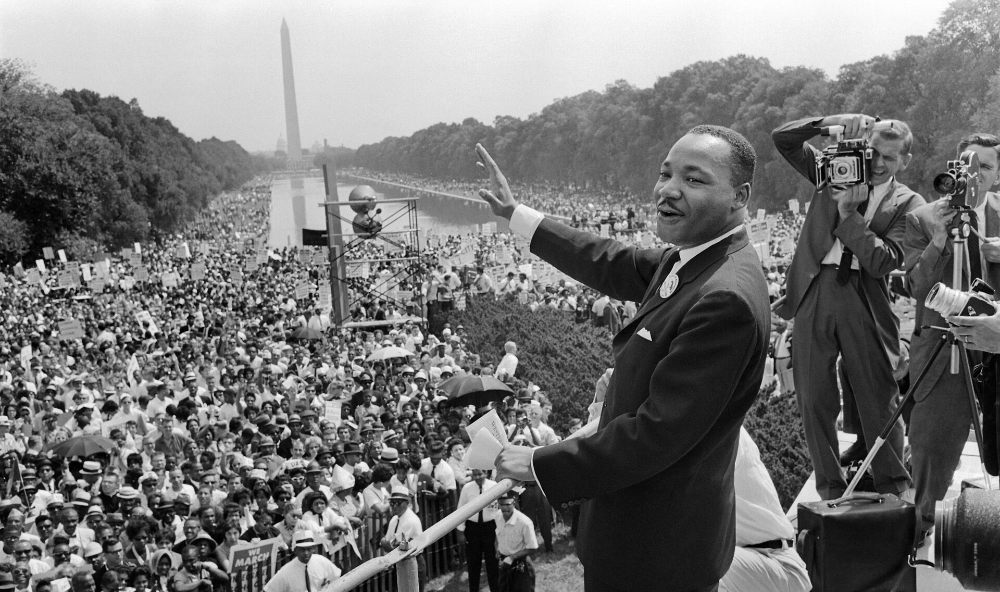
Consider the travail of Martin Luther King. He could no longer remain silent. After reading a gripping essay about Vietnamese children caught in the jaws of war, he made a momentous decision to speak out against the relentless onslaught being waged by the United States in Vietnam. A Nobel Peace Prize recipient, he felt compelled to condemn this war. Thus, on April 4, 1967, at Riverside Church in New York City, MLK made public his opposition. The U.S. government had become “the greatest purveyor of violence in the world today.” Those closest to him in the Civil Rights movement feared repercussions. Exactly one year to the day of his anti-war pronouncement, he was assassinated in Memphis.
MLK had been set up. There were many in the southern city of Memphis–including those in local law enforcement–who would applaud his murder. King was well aware of this and of the animosity of J. Edgar Hoover and the FBI. It was known he was coming to support striking sanitation workers. His original accommodation in the Lorraine Motel had been moved. An “advance man” urged the proprietor to reserve a space in the back on an upper floor with a balcony. No one from King’s trusted entourage had been given such an assignment. About one minute after 6pm, King stepped out onto the balcony. A shot rang out. The bullet found its mark, and the great prophet of nonviolence died instantly. An expert gunman had fired at an upward angle from the bushes across the street. Next day, without explanation, shrubbery in that area was completely cleared out.
Two months later, alleged killer James Earl Ray was arrested at Heathrow Airport in London. It was a curious international journey for a person whose life personified a man of little education, a two-bit jail bird of no distinction. Mysteriously, Ray had the money and stealth to crisscross countries. Most peculiar, he had access to the names of three Canadian men, each of whom bore a remarkable resemblance to Ray. He was using one of those aliases when he was apprehended. It is hard to believe he acted alone. Clearly he was a pawn in a serpentine plot that ended the life of MLK. Up until his death, Ray denied vehemently that he was the assassin. He never got a trial.
In his earlier work “JFK and the Unspeakable” (2008), Douglass produced a riveting analysis of the assassination of the 35th president. Early in JFK’s tenure, CIA Director Allen Dulles had encouraged him to green-light a plan already in place to invade Cuba. The brigade of armed Cuban exiles would be greeted as liberators and Fidel Castro’s communist regime would crumble. Kennedy acquiesced but was adamant that if the invaders failed there would be no U.S. military intervention.
At the Bay of Pigs, the invasion was met with strong resistance. It bogged down on the beach. Knowing full well this was likely to happen, Dulles and his cohorts assumed the young president would be forced to intervene. True to his word, Kennedy did not send Marines to the rescue, thereby infuriating the intelligence community. Soon, JFK dismissed Dulles and two top deputies. Never again could he trust the shady machinations of the intelligence labyrinth. To the masters of Cold War ideology, it was JFK’s first traitorous act.
The Cuban Missile Crisis came close to nuclear Armageddon. By way of secretive communiques with Soviet Premier Nikita Khrushchev, JFK defused a situation that could have ended civilization. This negotiated resolution angered the Joint Chiefs who had advocated military action. With nuclear war averted by a hair’s breadth, Kennedy and his Soviet rival were shaken. Eventually they agreed on the historic Limited Test Ban Treaty, the first such in the Cold War. Kennedy was determined to prevent further proliferation of such destructive weapons. Douglass details the cat and mouse interplay between JFK and David Ben-Gurion over Israel’s efforts to build a nuclear bomb and Kennedy’s effort to stop it. Before he could do so, Kennedy was dead.
His decision to withdraw American troops present in Vietnam intensified a collision course with the National Security State. JFK’s challenge to the military/industrial/intelligence complex came to a bloody end on the streets of Dallas. The commission which presumably investigated JFK’s assassination was commandeered not by Chief Justice Earl Warren but by Allen Dulles, Kennedy’s nemesis. The infamous Warren Commission Report that resulted was a macaronic stew of obfuscation.
Malcolm X was an obvious target for Hoover’s FBI. That agency’s strategy to nurture malice between Malcolm and MLK got nowhere. The threat Malcolm posed became more exigent as he turned away from the Nation of Islam. After his transformative sojourn to Mecca, he embraced a more universal interpretation of the Koran. Malcolm remained highly conscious of the dangerous elements surrounding him. Even in Cairo, Egypt while attending a conference, he nearly died after consuming food that was poisoned. The man who served him the tainted meal disappeared immediately. Malcolm was certain he had seen that man before. He continued to evolve and pursue his work until February 21, 1965 when he was gunned down in New York City.
The last to be silenced was Robert Kennedy. His decision to run for president in 1968 shook the pillars of the deep state. He knew this and was prepared to take the risk. If elected, RFK would end America’s war in South East Asia and pursue a domestic program of economic justice. And he would likely reopen an investigation into his brother’s death. He was entering perilous waters. The assassination of MLK sparked rioting throughout the country. The Sunday after King’s execution, Kennedy walked with Rev. Walter Fauntroy of Washington, D.C. whose church was in the middle of the riot zone. RFK observed the damage in the Capitol. Quietly discussing his presidential prospects, the candidate said that “there are guns between me and the White House.” Those guns blazed two months later in Los Angeles. The bullet that killed RFK came from close range from behind. Alleged assassin Sirhan Sirhan was three feet in front of RFK. Again, a nebulous veil enshrouded the death of another American visionary.
These four extraordinary lives of courage comprise a story told four times over. In meticulous detail, Douglass reveals the nexus of this monstrous web to be “the CIA with its FBI, military intelligence, and police allies.” It is a nefarious system of shadows dedicated to global hegemony enforced not by humane and democratic laws but by arrogance, surveillance, subterfuge, and brute force. The Kennedys, Malcolm X, and MLK understood this and saw clearly the horrific injustice of it all. We are left to pick up their righteous banner and go forward, to find in ourselves the same courage and conviction that animated the life affirming vision of the valiant Martyrs to the Unspeakable.
Discover more from Post Alley
Subscribe to get the latest posts sent to your email.


Who were the conspirators?
For the book to be credible it has to name specific individuals who planned and implemented the conspiracy.
Where are the names?
If there really was a conspiracy — with real named individuals beyond alphabet organizations of the US government — then they should be mentioned in this article.
Otherwise the book is not worth reading.
Douglass’s book places the four assassinations within the historical and political context of the Cold War. All four posed a threat to the bellicose designs of the military/industrial/intelligence complex. The loss of these men was a tremendous loss to our nation and the world. Their assassinations reverberate in our own time, a chaotic time of numerous wars, conflicts, violence, and social inequities on a global scale. The hands of the Doomsday Clock have never been closer to midnight.
These cases were never given a thorough and unobstructed criminal investigation. A very good book illustrating this shocking reality is by Robert Tanenbaum, a revered prosecuting attorney who died earlier this year, titled “That Day in Dallas.” As part of the House Select Committee on Assassinations in the 1970s, he and fellow investigator Richard A. Sprague were determined to proceed with a genuine homicide investigation in the matter of JFK’s death. When it became known that they had uncovered clear evidence of government involvement in Kennedy’s death, they were told to desist. Flabbergasted, Tanenbaum asked, “Then what we’re we hired for?” He was told bluntly, that it was never expected that they would uncover so much dastardly evidence so quickly. Both he and Sprague resigned in disgust.
Joe Martin.
Your comment is non-responsive.
Thank you for proving my point.
It’s an unrealistic expectation. According to the account above, the investigation reached “government involvement”, which likely already implicated one or more of those “alphabet organizations”.
People’s names, we would know only if the investigation pursued that further, but apparently it stopped there – after the conspiracy had already been established. Assassinating the president isn’t a normal function that agencies may carry out under the terms of their regular duties, it has to involve a conspiracy.
Brilliant book; I will be getting it. I read your 2008 book on JFK, and that’s one of the best on the subject.
In reply to Nameless…I would say that the elimination of these four leaders was the result of a successful conspiracy. Goal achieved, and we’ll probably never know the names of those who were pulling the strings.
Have you read the book?
Frushour,
The reason I ask (if you have read the book) is because when I googled,
the conspirators in the book are in fact named explicitly.
(No I haven’t and won’t waste my time reading the title but go ahead — the names are unsurprising.)
So much for your opinion.