
Until now, only eight individuals have served as U.S. senator from Alaska. As everyone knows, Alaska’s newest U.S. senator, Mary Peltola, finally proclaimed the winner in the last ripple of the Blue Wave, will be the first Alaska Native to hold the post. Alaska’s first two U.S. senators shared a different distinction: they were the only U.S. senators ever elected by popular vote before their state had actually become one.
Ernest Gruening and Bob Bartlett, both Democrats like Peltola, won election on November 25, 1958, weeks before President Eisenhower signed the proclamation admitting Alaska to the Union on January 3, 1959 (Hawaiʻi followed in August and elected its senators later).
Neither Gruening nor Bartlett lasted long. Gruening lost his August 1968 primary, and in December of that year, Bartlett died after surgery, despite having requested his surgeon in writing not to let him do so, because Wally Hickel, Alaska’s new GOP governor, would surely appoint a Republican. Which Hickel promptly did: Ted Stevens was sworn in on Christmas Eve.
At the time, I was working in the Senate as a 20-year old legislative assistant to Warren G. Magnuson, the senior senator from Washington. During Magnuson’s 1968 campaign, I’d handled a variety of tasks, including what’s now called “opposition research.” After Magnuson won his fifth term that November, I’d joined his staff in Washington, D.C.
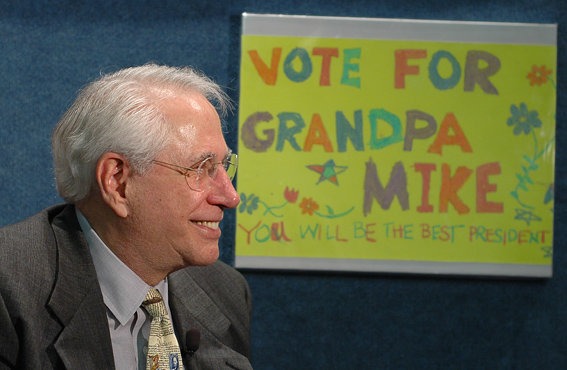
There was no lame-duck session that year, but there was activity on Capitol Hill preparing for the new Congress and president-elect Richard Nixon. One December evening, just as I was leaving the office, I paused to look through the day’s mail in the reception area when in walked a young man who introduced himself as Mike Gravel, the new senator-elect from Alaska. It was Gravel who’d defeated Ernest Gruening in the Democratic primary and the Republican nominee in the November 1968 general election.
Gravel told me he hoped to meet with Senator Magnuson. He explained that he wanted to win seats on the Commerce Committee, which Magnuson chaired, and the Interior Committee, chaired by Henry M. (“Scoop”) Jackson, Washington’s junior senator. At the time, the Senate had sixteen standing committees. Southerners chaired thirteen of them. Partly because of their chairmanships, Magnuson and Jackson were both members of the Senate’s small inner circle, known as “The Club.”
I invited Gravel to follow me, and led him back into Magnuson’s private office, where the Senator sat at his desk (expropriated twelve years later, after Magnuson’s 1980 defeat, by Ted Stevens, who passed it along after his own 2008 defeat to Patty Murray).
I wasn’t sure how Magnuson would react. How did Magnuson feel about Gravel having defeated Gruening? I knew Magnuson had adored the warm and folksy Bob Bartlett, so recently deceased. I had no idea how he felt about the grouchy, aloof, and abrasive Gruening.
Gravel had beaten Gruening in part by attacking Gruening’s opposition to the war in Vietnam – which, by this point, Magnuson also opposed. How would Magnuson feel about that? There was just so much history and complexity in the whole Washington state – Alaska relationship. I couldn’t hope to know or understand it all yet.
“Senator,” I began, as I introduced the newcomer to Magnuson. “This is Mike Gravel. He’s the new senator-elect from Alaska. He wants to talk with you about getting a seat on the Commerce Committee.”
Magnuson shook hands with Gravel but didn’t rise from his chair. That wasn’t like him. Maybe he really does resent Gravel defeating Gruening, I thought.
“Sit down,” Magnuson said to Gravel. I began to leave, but Magnuson added, “You sit down, too, Ric. You’re our Alaska guy.” This was a wry Magnuson-style joke. I was his “Alaska guy” only because a few weeks earlier Magnuson had assigned me the task of getting War on Poverty funds for snowmobiles and a snowmobile maintenance center in Kotzebue, something the later-legendary Alaska Native politician Willy Hensley had visited Magnuson to request.
Gravel explained his committee assignment request politely. Magnuson listened politely, too. Then Magnuson said, seemingly apropos of nothing, “You are free to vote to change the two-thirds requirement for cloture, you know. We expect you to vote with us on this. The commitment not to vote to reduce the cloture requirement was personal to Gruening and Bartlett. It doesn’t bind any later Alaska senator. It doesn’t bind you.”
Gravel obviously had no idea what Magnuson was talking about. Neither did I. Before Gravel could say anything, Magnuson picked up his telephone. In a minute he had Senator Jackson on the line.
“Scoop,” he said. “Come down to my office, will you? I’ve got Mike Gravel here. He’s the new senator from Alaska. I’ve been telling him that the commitment not to vote to reduce the cloture requirement doesn’t apply to him – that it was personal to Gruening and Bartlett.”
Jackson’s office was only a few doors away. He was in our office in a trice, moving fast. He barely shook Gravel’s hand before sitting down in a chair beside him, leaning toward Gravel with an elbow on Magnuson’s desk, and beginning to speak while punctuating every point by jabbing his index finger toward the senator-elect.
(Why was I still in the room? If I had not already been in the room when Jackson arrived, I surely would not have been invited – “Alaska guy” or not.)
Jackson explained to Gravel that he (Jackson) had been the floor manager of the Alaska Statehood Act a decade earlier. At the time, Gruening had been Territorial Governor of Alaska and Bartlett had been Alaska’s non-voting delegate to Congress – and Hawaiʻi statehood was also being discussed.
The Southern Democrats who controlled the Senate knew that senators from racially diverse Hawaiʻi would always vote for civil rights legislation, Jackson said. This meant Hawaiʻi’s senators would join Northerners in trying to end any civil rights filibuster by voting to invoke cloture.
At the time, the Senate required a two-thirds vote for cloture. Any effort to change that requirement – say to today’s sixty (60) votes – would also require a vote that could itself be blocked by a filibuster. So, the Northerners needed not just to end filibusters against civil rights legislation. They also needed a two-thirds vote to end Southern filibusters aimed at blocking any change that would reduce the votes required for cloture.
(Nowadays the filibuster is used to block votes on all sorts of legislation. Back then, it was used almost exclusively to block civil rights legislation – hence the filibuster’s odious reputation at the time.)
Scoop explained to Gravel that in the 1950s, the Southerners had enjoyed enough power in the Senate to block Alaska statehood. The Southerners had not, of course, stated their opposition in terms of civil rights legislation. That would have been too openly “prejudiced,” the euphemism for racism that people used at the time. Instead, their ostensible reason for opposing Alaska statehood was that Alaska could not support itself and would become a huge financial drain on the Federal government. (Because Eisenhower believed this, he had been very reluctant to agree to Alaska statehood.)
At first, Scoop said, Statehood advocates believed they could turn that argument against the Southerners. Given Alaska’s massive territory and its anticipated mineral wealth, the federal government could endow Alaska with significant financial resources of its own. This led to the grant by the U.S. in the Statehood Act of enormous tracts of land and mineral rights to the future state. The U.S. also promised the state a share of revenues from future oil and gas leases on federal land in Alaska.
Apparently outfoxed, the Southerners still wouldn’t concede, Jackson continued. In response to the plan to provide Alaska with its own substantial trousseau, the Southerners quietly just let their Senate colleagues know that they would not accept Alaska (or Hawaiʻi) statehood – period.
“We knew the Southerners wouldn’t agree to admit Alaska or Hawaiʻi,” Scoop said, “unless we could find a way to offset the two votes from Hawaii with two new senators from Alaska who would not vote to reduce the cloture requirement. So that’s when Maggie and I came up with the idea of the personal commitment by Gruening and Bartlett.”
(It was interesting to me that Jackson shared credit for this idea with Magnuson. Like many junior senators, he often had difficulty doing that sort of thing, and Scoop was, after all, the primary author of Alaska statehood.)
At this point, Magnuson picked up the tale. “Scoop took Ernest around to all the Southerners,” Magnuson said. “I took Bob. We sat there as witnesses and vouched for them personally. We were like their sponsors. We made them solemnly promise the Southerners that if they became Alaska’s first senators, then neither of them, so long as they served, would ever vote to reduce the requirement for cloture. They hated having to promise that. They did it for Statehood.”
There followed an account by Scoop of how the Southerners were eventually persuaded that Gruening and Bartlett would also both be re-elected (which they were), so that their personal promises would be good for at least a decade – the decade that had now elapsed.
“The Southerners were just buying a little time.” Magnuson said. “This wasn’t supposed to last forever. Those commitments were purely personal. They applied only to Gruening and Bartlett. No one made promises about whoever came after them. And now here you are. You’re the first. So, Scoop and I want you to know, right now, that you’re expected to vote with us on cloture matters – always.”
I wish I could recall precisely how Gravel responded – or rather, what words he used. I’m sure he was suitably deferential. On the other hand, he didn’t give the senators any sort of hearty, unequivocal commitment – I remember that.
To me, hearing Magnuson’s and Jackson’s tale for the first time, it seemed entirely reasonable for Gravel to temporize or equivocate. He’d been caught completely off-guard. He needed more time to learn about an issue he’d obviously never even heard about before, much less considered.
I don’t know that Scoop and Maggie were necessarily disappointed at Gravel’s inability to answer them on the spot. I believe he didn’t let them down on cloture or civil rights votes, at least initially. But they didn’t warm to him, then or later. He did get on Jackson’s committee but not Magnuson’s. And a few years later, Jackson booted Gravel off his committee for having voted with the Southerners in a civil rights matter!
On that particular evening in Magnuson’s office, however, Gravel was dismissed without further ceremony, as if he were a little boy being sent away to contemplate some particularly important admonition.
“Ric,” Magnuson said, getting to his feet and thus signaling that the meeting was over. “Why don’t you take Mike here out to dinner tonight?’
So, I did. I felt awfully sorry for Gravel, a senator-elect being fobbed off on a 20-year-old legislative aide for dinner. It was an awkward evening for us both. “What happened in there?” he kept asking me, obviously baffled. I had to tell him: I don’t know. I felt terribly insignificant, not being worldly enough to offer him an explanation.
Today, however, I realize I was privileged to learn some history that day, and to witness some as well. One has to admire the legislative ingenuity of Jackson and Magnuson, and the personal sacrifices Gruening and Bartlett made, in gaining Alaska statehood – and, effectively, statehood for Hawaiʻi too.
Now, of course, times have so utterly changed as to make that 1968 meeting almost unimaginable. Washington’s senators greeting Mary Peltola will discuss – what? Trump, for sure. Chuck Schumer or Chris Van Hollen for majority leader, certainly. Salmon and factory trawlers, possibly. Committee assignments? No doubt. But civil rights legislation? Racist Southern Democrats? Statehood? Not a chance.
Senator Jackson died in 1983, fifteen years after that meeting, at age seventy-one, and Magnuson six years after Scoop, at eighty-four. Mike Gravel made it to ninety-one before dying in California in 2021. Unlike Magnuson and Jackson, however, Gravel never amounted to much in the U.S. Senate. He did launch a quixotic run for president once.
Let’s hope that Mary Peltola, holding the affable and effective Bob Bartlett’s former seat rather than Gravel’s, will have a long Senate career and amount to a great deal. And that Patty Murray and Maria Cantwell will treat her well. And that some young aide will get to sit in on their initial meeting.
Discover more from Post Alley
Subscribe to get the latest posts sent to your email.