
My recollections of early betting are few. “I’ll betcha a buck the Yankees win the pennant.” Pitching pennies away from teachers’ eyes. And, the bingo games that were put on by the Catholics as I recall—and of course we Lutherans voiced a mild complaint about this. Because gambling in the Southern California 1950s was officially illegal and culturally immoral.
There were card games in basement rooms with a couple of bowling lanes in Oceanside. But bowling at the time was moving uptown with well-lit ground floor multi-lane facilities and men’s and women’s leagues, and even a Saturday morning league for kids.
I don’t know what kind of card games were legal—or were played in those basement spaces. Or in the Elks Club, where Uncle John one night won big and telephoned his wife to get ready for a late-night trip to Las Vegas while he was on such a winning streak. Elks had some legal or shady relationship with the law—like the Catholics and their bingo.
I do remember Las Vegas, where gambling WAS legal. When we were traveling east to visit Minnesota relatives or west to get home, Dad would unpack a few rolls of quarters and a pocketful of silver dollars he had scraped from the till at his gas station. He would wander from slot machine to slot machine in one of the smaller casinos, watching for a slot that someone had put a lot of money into and might be ripe for his silver coins (dimes and quarters were 90 percent sliver until 1965, when they were reduced to nickel and copper). Dad did all right on those gambling den rambles as we watched from the café where kids were allowed. Sometimes we gave him a few saved nickels or dimes to play for us.
Las Vegas was like a pressure valve for the folks who had the urge to gamble but were basically law and culture abiding citizens. The other pressure valve for gambling aficionados was horse racing. Dad went a couple of times a year, and when I was 13 or 14 and working at the gas station, I went with him once a season to the racetrack “Where the Turf Meets the Surf at Old Del Mar.” There were nine races, and I would bring nine dollars. Dad would match my dollars with his and place two-dollar bets on the horses that I picked off the racing forms, the tote board, or by the name of the horse or jockey. (I sometimes followed jockeys Willie Shoemaker and Johnny Longden on the sport pages as I followed Bob Feller and Jim Hegan in baseball.)
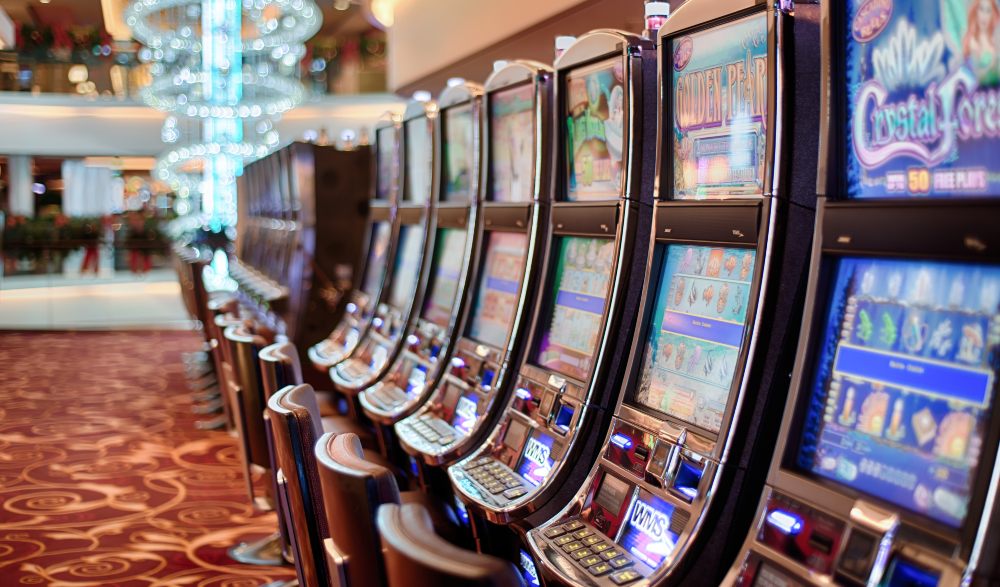
Over the last fifty years, lotteries and sports-betting have grown like topsy. Along with Indian casinos. I love going to Wildhorse on the Umatilla Reservation and watching old grayheads pumping money—well, now you buy some kind of script to put in the machine and it keeps track of your diminishing cash as you push electronic buttons. Gone are the days when you “pulled” the handle on a slot machine in a casino in Vegas or a gas station in McDermitt.
The biggest new thing in gambling—which they refuse to call gambling—is “prediction markets.” You can bet on anything, not just a ball game, but on the next pitch. Or on an election outcome, the coming consumer price index, or the price of oil next week. A military guy who was involved with our recent operation in Venezuela apparently won $400,000 wagering on the fact and time of Maduro’s capture. In yesterday’s news, a Google employee won over a million placing bets on Google’s “most-searched person” for 2025. He too got caught, but how many insider deals like this are not caught?
It seems to me that it is all about our instant world. Get rich quick! Athletes don’t work their way through a college career to professional careers; they enter “portals” to skip from school to school as the stars sell their “name, image, and likeness.” Some become millionaires before donning a pro uniform. High school stars are now cleared to sell their NILs!
Tech startups, gig deals, real estate adventurism, everything announced on “Instagram”! That’s the current age, and it is hard to see it winding down. Next year will mark 75 since our family of six piled our belongings and bodies into a 1951 Ford pulling a very small luggage trailer and arrived in Oceanside on Halloween in 1952. There were about 15,000 people in Oceanside in 1951, and the mostly two-lane Highway 101 went right through town.
The freeway soon bypassed the downtown, and things have been speeding up ever since. The population is now 174,000, and Highway 101 has been replaced by Interstate 5, which, according to Google AI, ranges from “6 to 26 lanes” in Southern California!
I’d wager it will be 184,000 and 8 to 28 lanes by 2032. But that’s way into the future. What’s the bet on whether “Polymarket” or “Kalshi” will be around next June?
Discover more from Post Alley
Subscribe to get the latest posts sent to your email.

