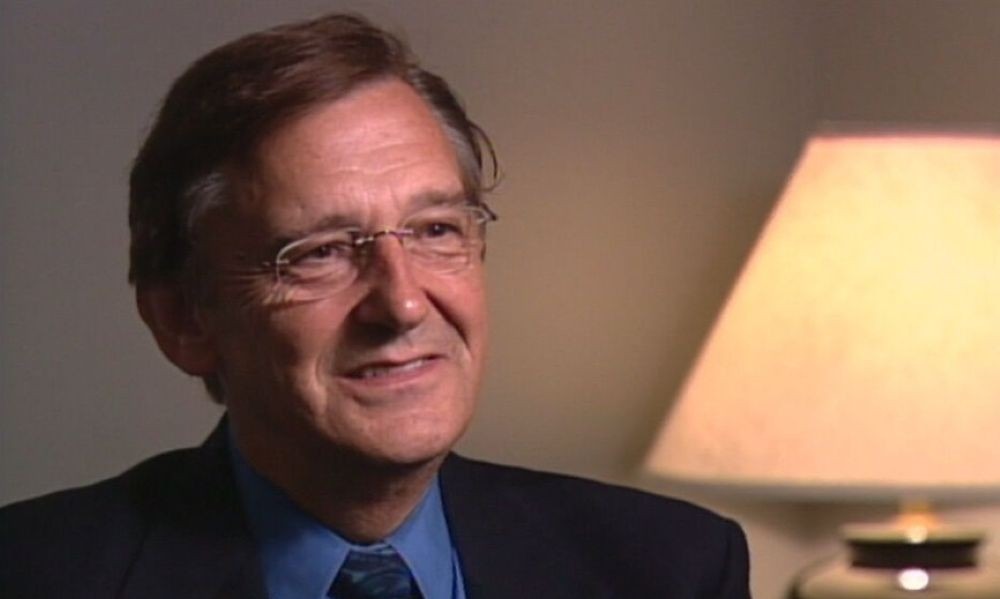

Police corruption, anti-Vietnam war demonstrations, and Black Power were just some of Seattle’s public conflicts in the early 1970s. Also, there was the “Boeing Bust” when
jobless people fled the city and region. That’s when the most respected individual broadcast “newscaster” around was Bryan Johnson, who died recently and who used KOMO-AM’s 50,000 watts to tell everyone every weekday morning what they wanted and needed to know.
In radio, “morning drive” was, for some, prime time, and Bryan dominated it. For several years he was my boss who championed my return to full-time work as his station’s first female to write and deliver news broadcasts.
Bryan had a commanding voice that equaled that of Edward R. Murrow in his transmissions from Britain during the darkest hour of WW II in Britain, where Johnson was born on the eve of Nazi Germany’s attacks on Western Europe and London. Bryan’s origin story was his to tell, and sometimes he did. He was born in Bristol, his father was lost in the British merchant marine, then Bryan came as a teen to America with his mother and sister. He somehow got a job at a small Southwest Washington radio station doing mattress commercials and “spinning the discs.”
By his early 30s, the deprivations of his war-time British childhood had taken most of his upper teeth. He made a joke about having once rushed off to an early news event
having forgotten his false upper teeth. Bryan took coaching on how to “speak American.” His voice opened the door for him at KOMO, which went on the air long before the region’s other TV stations as radio KMO.
Its managers greatly valued on-air sound over the Ivy-League educations so prized by its 1960s local competitor, KING-5. By the early 1970s, Bryan was the news director of KOMO-AM. In those days, radio stations usually just programmed a bit of news, ripped and read by an announcer from wire services. That was just enough to retain their Federal Communications Commission licenses to broadcast in the “public interest.”
Bryan offered listeners his commanding vocal cords, his intelligence, and eventually on-the-scene reporting. Bryan’s KOMO was Seattle’s dominant radio station when the region’s largest employer, Boeing, “went bust.”
At that moment, I was looking to return to my full-time career as a broadcast journalist. My then-husband whose entire career was at King Broadcasting warned me, “You resigned from KING – you’ll never get another job in broadcasting in this market.” He had good reason to think that, as it was still very much uphill in that era for any woman in broadcast news. One popular Seattle radio station news director quickly offered me a job — only to soon tell me his station manager refused to let him hire a woman to “do news” on the air.
That news director was mad and embarrassed, so he told me he was going to call his competitor Bryan Johnson to tell him to hire me. Seattle’s bigtime radio news was a boys’ club then, even though TV stations were very slowly adding female faces and voices to news staffs.
Bryan somehow got the green light on me, paying AFTRA union rates and protections. Bryan didn’t care, and was no fool, and he opened the door for me in tough economic times. Thanks to Bryan Johnson’s example (the ratings did not go down when my female voice delivered newscasts and covered stories in the field), more talented women steadily entered radio broadcast news in our market.
On top of his quality reporting, Bryan was a smarty-pants quipster (when he lived in Bothell, he always called it “Brothell”). He also was a heavy smoker (amazing he lived to
89!), with a complicated personal life. He had a much bigger plus side. He could take a complex news story and tell it succinctly and understandably. I knew him as an
honorable, compassionate boss, churchgoer, and friend. As the news business was changing, KOMO edged Bryan into TV reporting, where he soon set a high standard for broadcast news.
Discover more from Post Alley
Subscribe to get the latest posts sent to your email.


Great to see your story about Bryan, Bobbie, and to remember his help to women broadcasters. I, too, recall the barriers we faced and the debt we owed to giants like Bryan.
I met Bryan a few times. A nice guy and a great newsman. You’ve written an appropriate and heartfelt homage to a good man.