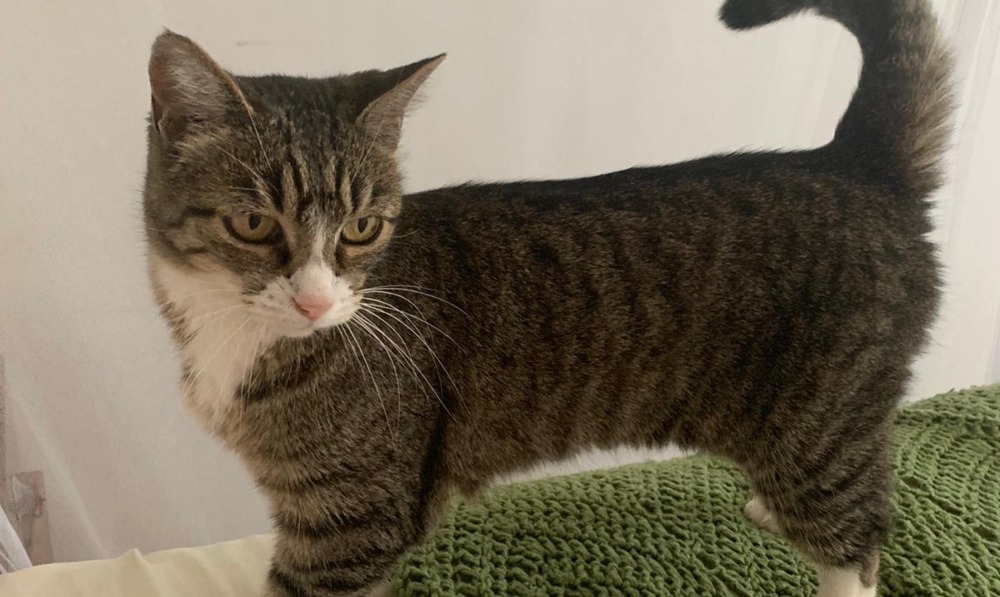

This month marks ten years since we moved to Italy and seven years I have written for Post Alley from our village in Italy. It been quite the ride, chronicling the many people, places, and situations we have encountered. Unfortunately, it now holds another significance for me that is less salubrious.
When we moved to Italy, we brought our ten-year-old cat whom I called Kismet. My wife, who had rescued her from a shelter referred to her as Her Majesty. She was a small cat, almost perpetually appearing young and full of energy. When she laid on me, she was feather light; sometimes while sleeping, I did not realize she was there. She was a sweet and affectionate companion who followed me everywhere in the house and insisted upon curling up on my chest as soon as I sat down.
Kismet adjusted to the new life here, just as we did. She explored every nook and corner of the house, settling on favorite spots, some of which she kept secret from us. We bought a series of beds until one suited her just right. She seemed to relish showing off her airborne skills by frequently jumping two meters from my shoulder to the top of a cabinet.
She enjoyed the foliage of our small garden, which we coaxed back to life from its barren condition when we moved in. And she spent many an hour mesmerized by the flocks of Swifts circling overhead, just out of reach. Only once did she actually catch one, bringing it inside, unharmed in her mouth. Our frantically expressed horror dissuaded her from attempting that gift-giving again. For almost two decades, she was free of health issues that can affect felines. The only time she was ever sick was after she ingested a parasite that robbed her of nutrition, an affliction that was quickly solved by a medication. Other than that period, she was a lively and happy cat.
She almost made it to her twentieth birthday when we decided to have her put down. For a cat that is a long life. Over much of the month before, she rapidly went downhill, losing her front teeth, dropping hunks of fur, not eating consistently — clearly struggling with an advanced age. My wife thought she had also acquired some form of dementia as she would often stand in the middle of a room, emitting a puzzled and plaintive howl. We knew she was nearling the end.
For almost two decades she lived well in two different countries, in safe and healthy surroundings. As I write this, I am still feeling the loss every day; her absence is noticed by the sheer silence in the house — a missing friend, a msssing member of the family. I often find myself randomly and suddenly crying while noticing some object that recalls a memory.
But life does go on and unexpected surprises sometimes appear out of nowhere. A number of months back, as we were beginning to notice Kismet’s gradual decline, a big cat walked into the house, brazenly using the swinging cat door. She walked around the house, apparently concluded that it was a good place, and immediately moved in. Kismet was not pleased with the bold intruder. I had to break up many altercations involving hissing, bottle-brush tails, and arched backs.
We thought the new cat was a feral “street cat” until we saw how domesticated she was. Obviously well-fed and fearless, we think someone elderly had her for years and then passed away. Perhaps the cat escaped or the relatives put it out on its own. Whatever, despite posting signs and notices on the community website, no one the village came forward with any information.
Like people, cats have widely varying personalities. This newcomer is completely different in demeanor from Kismet. She basically stays to herself and finds those niches, boxes, and hiding places that felines are fond of. She is as big as some dogs and pretty much fends for herself, perhaps having picked up some survival skills while footloose. My wife remarks that the cat is “built like a small tank.”
We also live with another cat. This one is a working cat. She is the “shop cat” for my wife’s business. Her bed and food are there and she keeps the rodent population in check. A tough little beast, she defends that space with ferocity. Being Italian, she also likes to hang out in the piazza with the locals that congregate there.
Many years ago, Italy adopted a legal measures that ensure the protection and care of cats, a tradition of valuing these creatures that originated in ancient Rome. National Law 281 makes it illegal to abuse, harm or relocate strays and feral cats. It recognizes free-roaming cats and preserves their right to live where they wish. Cat colonies have special volunteer caretakers known a gattare, who feed and look after their health. Within the center of Rome, Torre Argentina — a sunken ruins — is a shelter for more than 100 cats who live among the stone pillars and walls of ancient structures. It is a daytime destination for visitors.
Despite the recent loss of Kismet aka Her Majesty, we are fortunate to have the benefit of living with cats.
Discover more from Post Alley
Subscribe to get the latest posts sent to your email.