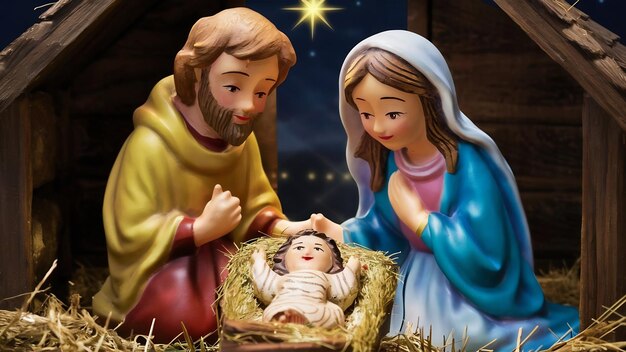

When Linus tires of hearing Charlie Brown say, “I just don’t get it,” i.e. what Christmas is all about, Linus takes center stage and reels off the Christmas story from the Gospel of Luke. Not an accident: Linus, or Charles Shulz, goes with Luke as it is the best known and most beautiful of the Christmas stories.
In Luke we have the journey to Bethlehem, the manger (no room at the inn!), the shepherds keeping watch over their flocks, and the angelic choir singing, “Glory to God and peace on earth.”
This is all found in Luke chapter 2: verses 1 – 20. But there’s more, a lot more. As in Matthew there is a run-up to the birth of Jesus, which connects it to what has gone before. However, instead of Matthew’s genealogy, Luke has a much more elaborate, and again beautiful, prologue that goes for all of his long first chapter.
It includes the annunciation of John the Baptist’s birth to his dumbfounded (literally) father Zechariah, then the parallel angelic annunciation/announcement to Mary of Jesus’ coming birth. After that Mary visits her cousin, Elizabeth, John’s mother-to-be. Then Mary breaks into a song of triumphant praise, “the Magnificat.” All that and more in just the first chapter of Luke setting the birth of Jesus in the context of the larger Biblical story.
When Luke does get us to Mary and Joseph in Bethlehem, he is careful to locate the story in its contemporary historical context. “In those days a decree went out from Emperor Augustus (a.k.a. Caesar) “that all the world should be registered.” Adding, this was “while Quirinius was governor of Syria.” These citations to history and rulers tell the reader that this happened not off in far-off fantasy land, but in the midst of life on earth, in the midst of human history. So, at one level, he answers the question the theologian Karl Barth said is the one we all really have, “Is it true?”
There is another reason for these elaborate references to history and powers-that-be. Luke is telling us that the imperial power of Rome and its emperor are subordinate to the plan and purpose of the true God. Caesar and Rome, so great and powerful, are instruments, albeit unwitting, of God’s purposes, making sure via the imperial census that the Messiah (Jesus of Nazareth) is born, as foretold, in Bethlehem of Judah.
This relativizes the power of the great and mighty of this world and of their claim that their empires are eternal. Worth remembering when one or another worldly power or ruler claims complete power and pre-eminence!
In Mary’s song of praise, the Magnificat, she sings this earth-shaking claim. “For God has brought down the powerful from their thrones, and lifted up the lowly.” (1: 52)

Now that we’ve gotten the first part of Mary’s assertion, i.e. the mighty (emperors, kings and governors) brought down and put in their place as unwitting instruments of the true God and God’s redemptive purposes working their way, we get the second part, the lifting up of the lowly.
Joseph and Mary come to Bethlehem where there is famously “no room at the inn.” They shelter in a cattle shed, making a crib for their baby of a feeding trough. In every age, the poor and abandoned of the world have been able to identify with this scene. This, I would add, “lifting up the lowly” is not limited to economic condition. It is for all who know what it is to be dismayed and desperate, which includes all of us at one time or another.
These themes are further underscored in the next scene. It was customary at the birth of a new king to announce, with great fanfare, peace and prosperity in capitols and cities, plazas, and palaces. Where is peace proclaimed and announced here and to whom does the announcement come? To lowly shepherds in fields on the night shift.
To such as these the angelic chorus appears singing “Glory to God in the Highest and on earth peace.” The angels come, you might say, not to a gilded East Wing Ballroom, but to a wire-enclosed ICE detention facility. They come not to the cocktail party where people go to see and be seen, but to the AA/NA meeting where people come in anonymity.
Despite the romantic images of Christmas cards, shepherds were on the low rung in terms of economic and social status, even regarded as unclean because the work kept them from fulfilling their religious obligations. It is to these, to the poor, the unclean, and forgotten that the angels sing grace and peace.
If Matthew takes us to the limits of the Law and human achievement as the instrument or path of salvation in his birth story, Luke shows us God’s grace coming to the unlikely, the lost and desperate, to those who are objects of scorn and shame. Grace, God’s grace, comes as it always does, as a surprise, turning the world’s standards and ways, upside down. No matter how dark your night may be, God comes to find you and to claim you as his own.
So for both Matthew and Luke their Christmas stories foreshadow and announce central themes of the gospel story, the story of Jesus, that is to follow.
Discover more from Post Alley
Subscribe to get the latest posts sent to your email.