
In retirement, I determined it was time for me to give back and make the world a better place. I decided to devote my considerable talents to rectifying mispronunciations.
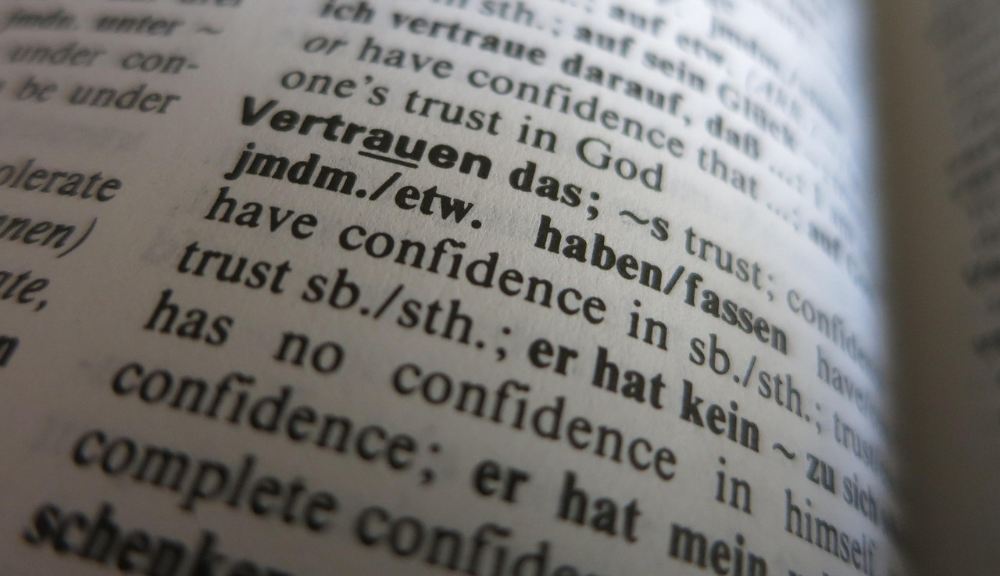
The French word “forte” means “strength.” It is pronounced “fort,” the word from which it derived. The Italian word “forte” (pronounced like the number forty) means “strong.” The beastly non-word, “for-tay,” was introduced by pretentious arrivistes, hoping to pass as cultured and erudite.
I advised that saying, “This is my strong,” while mispronouncing “strong” did not mark them as cultivated. But, if I pronounced “forte” correctly, I would soon be corrected. A courteous person would say “So, that is your for-tay,” charitably seeking to educate without embarrassing me.
I realized that rectifying pronunciations was not my for-tay. Instead, I decided to enrich American discourse by introducing needed words that the English language lacks.
The German word “schadenfreude” literally means “damage joy,” the pleasure one takes from the misfortunes of others. It’s what one feels when an unpleasant neighbor totals his $350,000 Ferrari without harming anyone.
Though rare in Seattle, schadenfreude is a common human emotion. The average New Yorker experiences it twenty-three times a week.
At least the Big Apple needs a word for this sentiment. I am considering the words “paybackel,” “goodygoody,” and “earned-it.”
There is no English equivalent of the French word “élan.” This may reflect the typical Ameriucan deficiency in vigor, style, elegance, confidence, and grace. However, we exceptional few would appreciate a one-word label. I think that “Cliffordesque” is the most fitting English word for “élan.”
English has no word for the awkward kluge “and/or.” The Latin word for ”and/or” is “vel.” If “vel” was good enough for the Romans and/or the Byzantines, it’s good enough for us.
The German word “gemütlich”’ comprises, in a single adjective, feelings of comfort, coziness, good cheer, and belonging. Today, when contentment is irrational, an English equivalent is pointless. If we return to more comfortable times, the Gemütlich TV shows of the 1950s will provide the needed adjective, either “Lucy” or “Beaver.”
.
Because it has many meanings, the Italian phrase “Mamma Mia” is not translatable. The closest English equivalents should be avoided. “Holy shit” is a scatological profanity, and “Holy Fuck” is an obscenely blasphemous. English already has adequate phrases for expressing astonishment and wonder. Bring back “WowWee, “Jumping Jehoshaphat!,” and “Goodness gracious.”
I have identified 137 foreign words that lack an English equivalent, including:
- The Spanish word estrena, wearing or using something for the first time. The Italian word abbiocco, the feeling of sleepy contentment after eating a large meal. The Portuguese word saudade, a melancholic longing for a person or thing that is absent and may never return.
I will address this list after I compose the most desperately needed word of our times — a one-word description of a political leader who is a narcissistic, felonious, avaricious, duplicitous, dishonest, vulgar, retributive, unscrupulous, graceless, despotic bully.
I can’t think of a word… Suggestions?
Discover more from Post Alley
Subscribe to get the latest posts sent to your email.


The New York Times recently reported Steve Bannon as saying that Marjorie Taylor Greene is “…pushing things, going where the puck is going.” So perhaps the suitable one-word description you are looking for is “puckish.”
The circularity of a commonly used disc rotor comes to mind . A.H. for short and perhaps permissible for publication . Inception in increasing circumstances which call for both words. Full througted .
I’m seconding Norberg’s suggestion: A.H. It can be one word.
And, suggesting you take your for-tay and par-tay.
Jody Foster (Seattle, not Hollywood)
Saudade is a personal favorite. It is even onomatopoeic.
In case anyone’s interested in using “saudade” in conversation, the final “e” has that trick ending mentioned at the beginning – in Brazilian Portuguese sow-doddee, in Europe with a less distinct sort of “ih” sound. Most Brazilians will also do something to the last “d”, but that isn’t universal and I leave it to the reader.
However … I don’t see any evidence that this happens in Italian. I mean, the language has a lot of major dialectal variation, but the standard pronunciation I get for “forte” would be closest to “fortay”. That doesn’t mean it’s a good pronunciation guide, just that within the limits of English phonology, it’s what you get. To take the corn out of it, shorten it to remove or deemphasize the trailing “ee”.
finallyn I have learned what my classmates in junior High meant when they called me cliffordesque . I thought it had something to do with body odor. thanks
Veta (latin for cheese)
MUSSOLUNATIC?
This post by Mr. Clifford is catnip for the readers of Post Alley. (I like Mussolunatic.)
Apt, but longish and the reference to a dead, 20th century Italian dictator is likely to go over the heads of a lot of Americans (who are notoriously resistant to learning about anything that happened ages ago, like, last week.
How about trumputlichkeit as an antonym of gemütlichkeit?
I’ll amend that to “TrumPUTSCHlikeit”!