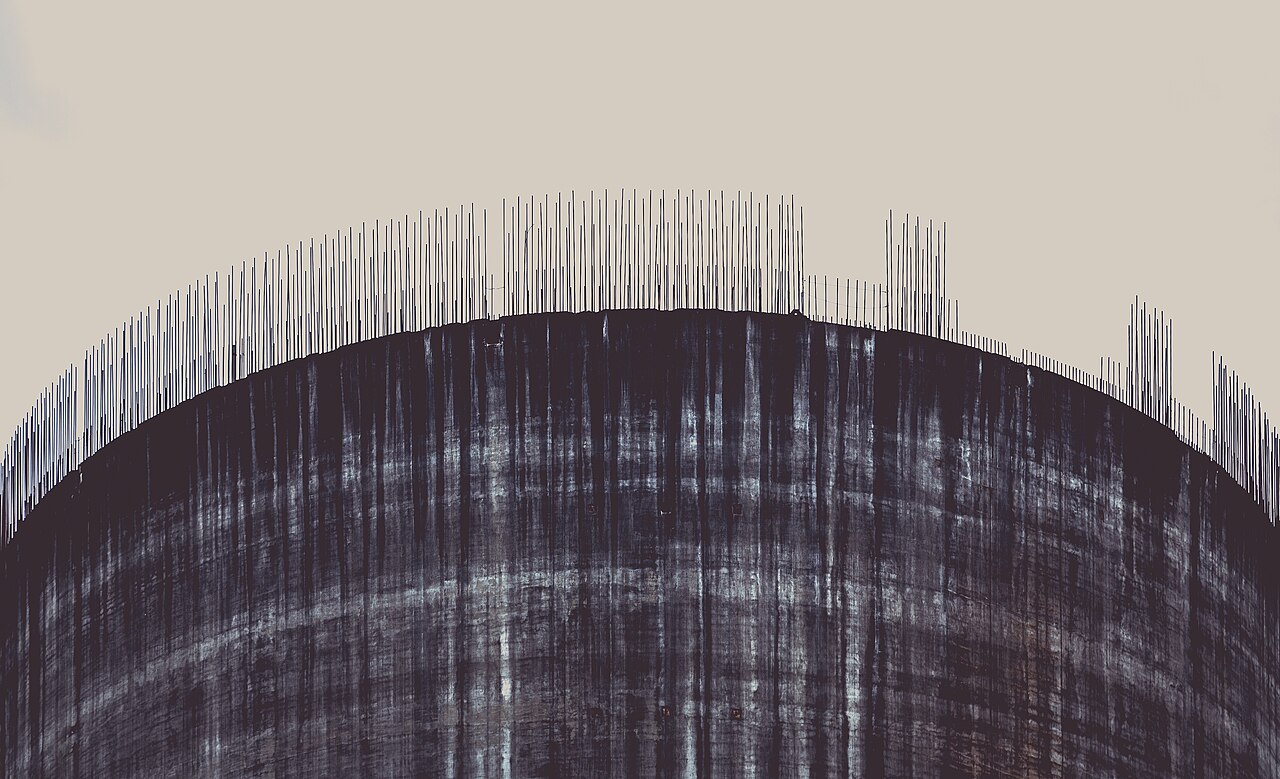

Four decades ago the Washington Public Power Supply System (WPPSS) embarked on a quixotic mission to build five nuclear plants to supply needed energy.
Founded by a group of utilities in the 1950s, WPPSS was created as a way to guarantee electric power to homes and industry in the Northwest. The 50s were a time when the region could boast of an abundance of inexpensive energy, an era that called on customers to “live better electrically.”
Throughout the 50s and 60s, aluminum companies flocked to the state, drawn by the relatively cheap and plentiful energy. Ten aluminum smelters, most sited along the Columbia River, employed 11,000 workers but consumed huge amounts of electricity – 3,150 megawatts annually, enough to light three cities the size of Seattle.
Then just as the region was growing, WPPSS began to face predictions of looming power shortages. The Bonneville Power Administration, which sells power from federal dams to local utilities, sounded an alarm in 1974. When delivering the troubling prediction, BPA administrator Don Hodel had little sympathy for environmentalists who wanted to conserve. He called them “Prophets of Shortages.”
The WPPSS board, composed mostly of farmers and small businessmen based in Richland, prepared to deal with the increasing shortfall. They believed predicted shortages could best be met by investment in nuclear power.
They decided the first plant, No. 2, would be located at Hanford, the decommissioned nuclear site. Two more plants, numbers 1 and 3, were to be sited at Satsop in Grays Harbor County. Finally, plants 4 and 5 were added to the scheme. Cost estimates for the five plants, originally set at 4.1 billion, eventually ballooned to 23.8 billion.
By 1983, the supply system, plagued by inflation and mismanagement, was facing failure. Rather than building its way out of shortfalls, WPPSS had stumbled into the largest municipal bond default in U.S. history. Lawsuits over an unpaid 2.25 billion dollars in WPPSS bonds would clog the courts for years and cost ratepayers heavily. It’s no surprise the system came to be known derisively as “Whoops.”
The WPPSS disaster of boom and bust should offer important lessons for today. Once again, our energy resources are challenged, threatened this time not by aluminum smelters but by massive new data centers that power artificial intelligence. These centers use vast quantities of electric power, ranging from a maximum capacity of 54- to 120 megawatts, enough to power 200,000 to 300,000 homes.
The centers typically occupy up to 500,000 square feet of space – equal to two football fields – to support tens of thousands of servers. In addition to massive amounts of electric power, the servers also require substantial amounts of water for cooling.
Seattle City Light reports that three companies (Prologis, Equinix and Sabey) have been eying four sites in this area for massive new data centers. Seattle already has a couple of dozen data centers but these are relatively small.
Seattle hasn’t yet authorized or permitted any of the giant data centers. But the prospect is already raising public alarm. Seattle Councilmember Eddie Lin reports his office email account recently was flooded with 54,000 emails supporting a moratorium on massive data centers.
Fears over possible consequences prompted Seattle Mayor Katie Wilson to release a statement about the data centers, saying, “I share city concerns about environmental justice, economic resilience and increased costs for Seattle ratepayers. That’s why my team is working closely with Seattle City Light, the City Council and stakeholders to identify long-term policy approaches, including a moratorium on siting new centers.”
The idea of a moratorium is worthy of consideration as this area is already facing other challenges to its electrical grid. A study by Energy and Environmental Economics funded by many of the state’s largest utilities has found that electricity growth combined with retirement of fossil fuel electric sources will create a resource gap of 9 gigawatts of effective capacity by 2030 and between 14 and 18 gigawatts by 2035. That’s how much demand could exceed supply on the hottest and coldest Northwest days.
When the Northwest electric supply falls short of demand, utilities must import costly power from other sources beyond the state and region. But the transmission lines that convey electricity to this region are already beginning to strain capacity and must be upgraded.
Emerging sources of energy – including geothermal, advanced nuclear and perhaps even visions of fusion may eventually produce clean, firm electricity to the grid. But presently these sources are unavailable and, in any case, not up to scale.
To reduce the risk of blackouts in the interim, it is prudent to delay permitting massive data bases. A moratorium may be the best answer. That’s the path taken this year by legislators in Maine although Janet Mills, that state’s governor, just vetoed the bill.
In the Pacific Northwest, a region still haunted by memories of the WPPSS failure, there is ample reason to move with caution. For the far-sighted, hope lies in more reliance on conservation and on approaches such as increased roof-top solar energy and “time of use” pricing. One potential source of power is Helion, an Everett-based start-up that makes use of fusion. Helion has broken ground in Chelan County; but there still is much uncertainty. Will the world’s first fusion plant produce more power than it consumes? Meanwhile this region should proceed along three fronts: delay, innovation and relying on available strategies.
Discover more from Post Alley
Subscribe to get the latest posts sent to your email.


But don’t ask questions. React first and get flustered, but don’t do the obvious thing such as ask the proponents to help solve the problem, if there is indeed a problem.
My reaction to these rumors is to learn more. (Of course, some of the people here know everything so there’s no reason to ask questions.)
I have no problem in practice with a “moratorium“ but I’d like it to take a more positive stance that here’s a business opportunity and we should investigate it… That’s not the tone…. The proper tone is to ask the proponents to be more specific and to respond with a bill of criticisms and tell them that maybe they can answer or maybe not… But the ostrich proposal is the one which will carry the day in Seattle.
No, a post like this is a harbinger of social stasis. Of do nothing.
If you’d like to learn more, a good starting point is the March 17, 2026 Post Alley article, “Seattle City Light Faces a Looming Power Shortage” (and the comments).
City Light has the relevant recent reports online (Strategic Plan, Integrated Resource Plan, Clean Energy Implementation Plan, Electrification page).
Councilmember Rinck’s Energy Committee had regular briefings during 2025 on these issues.
No, I guess I didn’t communicate very clearly. No I personally am not interested since I’m hoping to get out of Seattle as soon as possible so I really don’t care.
What both angers and amuses me is that rather than calling for questions, the general tone is moratorium as if people know enough to offer a judgment on the pros and cons.
That sounds to me like left-wing MAGA. “FACTS?!, we don’t need no facts. We have the high ground of morality.”
Ironically, none other than our own much hated President has been a consistent advocate for shielding ratepayers from the negative effects of data center development. His Ratepayer Protection Pledge, agreed to by Amazon,Google,Meta,Microsoft,Open AI,Oracle and XAI, encourages new data centers to “bring, build or buy” the new power generation necessary to meet their data center demands, paying the full cost of required generation capacity.
How does buying their needed power not put them in direct competition with residential and other consumers?
Building or bringing their own power, similar to Microsoft’s current modular nuclear project, would clearly be preferable.
On a brighter note, 2 MIT professors recently determined that by paring down and adding smaller compute models, power usage can be reduced by up to 90% with no loss in compute capacity.
This could be good news if they get it to pan out in a reasonable amount of time.
Readers here might be interested to know that the character in the White House is planning a work-around for permitting nuclear power plants: NRC-2025-1503. This allows applicants to go to the military for their permits instead of the NRC, opening up vagaries the rest of us will wind up living with.
Just a small historical quibble: the aluminum smelters and the dams were built together. Without the smelters there was not enough demand to justify the dams, and the dams were desired by policymakers. The big boom was in WW II for the war effort, then post-war for US industrial hegemony. PNW had 50% of US aluminum production. The smelter load was flat and not growing when nuclear plants were first proposed in the PNW to meet other load growth. The smelters were squeezed out when the rest of us wanted the hydropower the smelters had made possible. From a power system standpoint (and for salmon) the loss of those smelter loads, both constant and interruptible, has been an expensive loss and the total power production capability of the Federal Columbia River Power System has been significantly reduced as a result, adding to BPA cost woes. Not to mention that we now depend on China for our aluminum. If data center loads were fully interruptible as the smelter loads were, the power system would benefit. But they are the opposite.
Good comment Ric….The DSI’s were able – with BPA’s Notice of Insufficiency and a strong Congressional delegation – to focus BPA customers on the need for more energy … …..maybe Data Centers can play that role today. If not them, who?
I think the notion of protecting the rate payers/ citizens through “bring, build or buy” is, not surprisingly, over simplistic. It presumes there is a huge potential supply of power hanging like fruit. Even if we demand, as we should, that companies take the entire risk of new generation, they will still compete for available resources, driving up costs. We need a policy that protects citizens from limitless hikes and potential defaults.
“Moratoriums” for server farms are the canary in the coal mine.
We are – within 10 years – – energy deficit….and that’s without A1 farms. In other words, your lights may start to flicker or go dark at times of high demand.
Last time this happened?
The “fix” was the NW Power Act of 1980….it provides BPA the ability to purchase long term power – constructed by others – and as a Federal agency its borrowing costs are lower than other options, which means lower rates.
But BPA has “renounced” its purchase authority….a bad decision.
Unless that changes utilities like Seattle City Light will have to do it themselves.
That’s more expensive and politically fraught.
Sticker shock will come over time….not instantly like buying gasoline.
And when we finally see the result it will take 10 years on average to acquire needed power.
Ironically, it is the A1 server farms that should take the lead as they can see the coming shortfall.
Whether they will is a good question still to be decided..
Has Bonneville literally renounced its purchase authority? Gosh, if only those of us who devoted years of our lives to getting that Bonneville authority could have restored to us the things we lost in the process, in my case, including a marriage I really cared about.
Helion fusion, advanced geothermal, and small modular nuclear reactors (SMR) are still in the development stage. Too risky for financial markets.
Fortunately there are a host of very low tech and reliable methods to address that energy shortfall.
1) utility scale photovoltaic solar, which is now typically comprised of on-site battery storage. There are sites in the project planning stage scattered about the PNW region that are ready to go provided they can get through regulatory hurdles. Pacific Northwest hydropower also serves as a gigantic battery here because turbine sluiceways can be opened when the sun isn’t shining. PV solar will be key to meeting peak power during hot August summer days.
2) utility scale batteries. A bank of utility scale batteries on the west side of the Cascades eases the power load on transmission lines. Transmitting electricity during the morning and storing it in batteries means transmission lines aren’t overloaded during the heat of the day when demand peaks.
3) Good old natural gas turbines. They don’t need to run all the time, just when renewables aren’t sufficient like during our winter cold snaps. Burning a little bit of natural gas when needed is perfectly acceptable.
4) Energy efficiency. Just changing how we charge for electricity would ease the power crunch. Seattle City Light still charges a uniform rate rather than peak power rates like other utilities. Charging more during the day would make for wise energy use.
5) Heat pumps. Replacing baseboard heating with heat pumps will cut heating electricity use in half. It is actually more efficient to use natural gas to make electricity for a heat pump than to use natural gas in a forced air furnace.
6) Distributed Energy Resources. Within the next decade, it will be common for utilities to turn your water heater on-or-off or pull electricity from your power bank at home to meet local energy needs. You’ll get a discount on your electricity bill and the utility owners will avoid the risky investments in expensive power plants.
If only WPPSS had finished the projects, we’d probably not be having this conversation now. I remember the drum beat against nuclear powerplants being not based on finances so much as stoking fear of radiation, meltdowns, and other catastrophes courtesy of Jackson Browne, Jane Fonda, and… Joel Connelly. (You know, nuclear scientists.) OK, maybe Mr. Connelly was unearthing gross mismanagement, and that deserves praise. Meanwhile, a moratorium on data centers within the city limits of Seattle is a symbolic joke, par for the course for our new mayor. The serious projects are out in the rural areas where it’s much easier and cheaper to get away with these huge blemishes on the landscape.
On Monday I wrote to WA Commerce and inquired about regulations for these rural projects. They promised to get back to me by the end of the week.
And WPPSS, now known as Energy NW, is just as self-serving today as they have always been.
As to the proposals under discussion in Seattle, the companies know we have all heard the horror stories. If they wanted public good will, wouldn’t they launch some semblance of a PR campaign instead of going quietly to city officials? Seems to me suspicion is a reasonable response here.
WA Commerce responded to my questions, as promised. Here is a selection of what I asked and their responses. The fact that a lot of the decision-making devolves to the local level looks like thin ice for the public interest.
• What are the rules about where they may be built in urban settings and in more rural ones not required to plan under the GMA?
The GMA does not specifically reference “data centers” outright. Permitted uses are generally handled at the local level through their codes and regulations. There are provisions for siting land uses in urban, rural, and natural resource areas. The GMA provides framework and guidance for how land uses are to be permitted depending on use, intensity, and other factors.
It would be up to the local government to set requirements for size limits, height, noise, design, landscaping and proximity to existing land uses, like residential uses.
Data centers and similar land uses typically fall under the “industrial use” category and would be treated as such at the local level. Partially planning counties have more discretion around the siting of industrial uses.
• What is being done to keep the cost of their high water consumption out of competition with residential needs?
This is an important issue, but one largely under local control. The local utility purveyor that provides water services in the area would be able to address this on a location-by-location basis and at the permitting-level. The water purveyor decides their boundary service areas and sets the rates based on their analysis of capacity and usage. In the 2026 legislation session, HB 2515 considered sustainability issues, data centers to pay additional utility costs, and to report of water usage at qualifying facilities.
• What kind of land use regulations are being planned to meet this new kind of development?
Planning for land uses is nested within a bigger Growth Management Act (GMA) framework and other statutes, like the Local Project Review Act, and infrastructure planning efforts like the Washington State Energy Strategy.
As we plan for infrastructure needs, like utilities and support facilities, the state family has different roles and responsibilities in meeting new and innovative development challenges as directed by the Legislature. This framework allows the local governments’ discretion in permitting land uses. For data centers, as we mentioned above, most likely the local government is treating them as industrial uses.