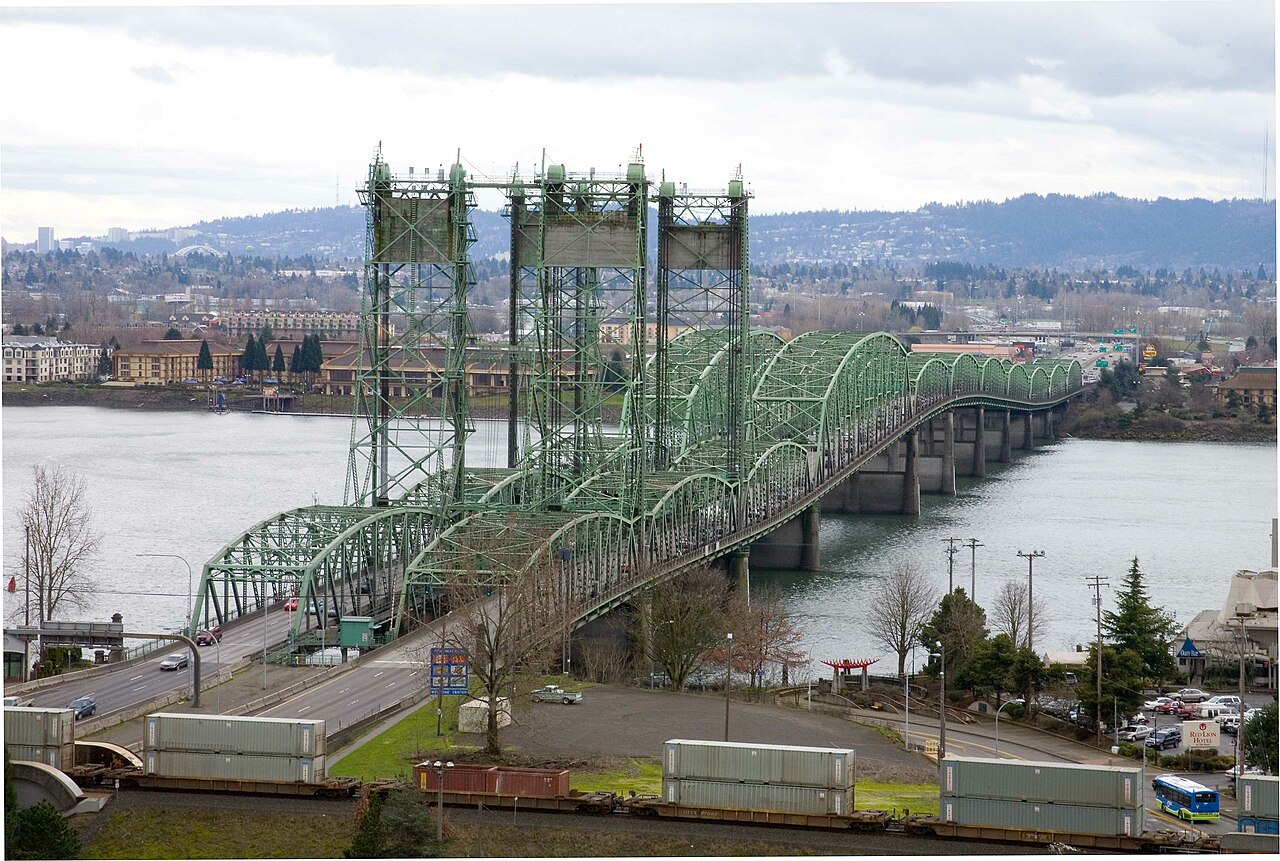

Don’t expect the drive from Portland to Washington’s Vancouver to get any cheaper whenever the rickety bridge between them is replaced.
When was precisely the word Gov. Bob Ferguson used at a Tuesday press conference. Flanked by lawmakers and hardhats from Oregon and Washington, he ran some sobering new numbers on the decades-old saga about replacing the Interstate-5 Bridge from Vancouver, Washington, to Portland. At present, the venture is slated to cost around $14.4 billion or about $2.2 billion more than either state (plus Uncle Sam) have budgeted for.
Hence the build-now, pay-later plan from Ferguson and Oregon Gov. Tina Kotek to fund the five-mile project in phases starting with a “core set of projects,” which include replacing the twin spans and light rail access. What they don’t include are new or wider freeway interchanges as previously proposed. That bargain-bin version of the project would cost $7.65 billion and a new I-5 bridge, minus the light rail part, would cost up to $5.9 billion.
The numbers above are nothing new thanks to Portland economist Joe Cortright, who found that officials sat on those figures for months. We at The Observer are old enough to remember when this project went for $13.6 billion in January and just $6 billion in 2022.
On its face, Tuesday’s news is a big win for urbanists and avid train riders. Politicos of a certain age can remember the I-5 Bridge Replacement coming with a light rail plan ever since Washington Republicans killed it, citing Portland TriMet’s pension liability.
Still, the fact remains that if the project can move forward without light rail, as the states might kick it to the curb if the project’s price tag surges again.
Oregon and Washington leaders are set on seeing the I-5 Bridge Replacement break ground in 2028. Tolls for the existing bridge to pay for its successor are slated for Spring 2027 and should go for $1.50 to $4.75. Don’t be shocked if those tolls go up.
This story also appears in The Washington Observer
Discover more from Post Alley
Subscribe to get the latest posts sent to your email.


I have often thought given the narrowness of the Interstate 5 corridor going through downtown Vancouver WA and the historic structures of the Vancouver barracks just to the immediate east, that the better solution would have been to build the light rail over the river at that point connecting into Downtown Vancouver, but the build a NEW interstate highway extension located to the WEST of downtown Vancouver, mirroring what now Interstate 205 does to the east. The new west interstate alignment could have followed what basically is now the Amtrak route for folks that have taken that train. A new high span bridge could have been built over the Columbia River at that point at much less cost and disruption that the current plan to replace and build a new interstate bridge at the current location. Also, this new potential interstate route would have provided opportunities to link the industrial areas of Vancouver and Portland across to the west end of Hayden Island and west of Jantzen Beach with some new interchanges on both sides of the river. Once built, all heavy truck traffic could have been diverted to this new western interstate bypass and only smaller, lighter truck traffic that met the weight limits, would be allowed to transit the existing bridge. I don’t know why the transportation planners and engineers didn’t take a long look at this option. Yes, the existing Interstate 5 bridge would still have the limitation of having to open and close for tall ship traffic. But since the current interstate would be then listed as “Business Route I-5, with the weight limits, all the heavy truck traffic and much of the through traffic headed further north or south on Interstate five would most likely use the new larger and taller span across the river to avoid potential delays. The “Business Route” using the current bridge would then be
used more for local traffic in proximity to downtown Vancouver and Jantzen Beach and would allow an easier access for light rail to tie into the downtown Vancouver area which would stimulate downtown residential and commercial retail and office development, a prospect the city economic interests should welcome.
Wrong bridge in the article photo, FYI. Though Astoria is lovely!