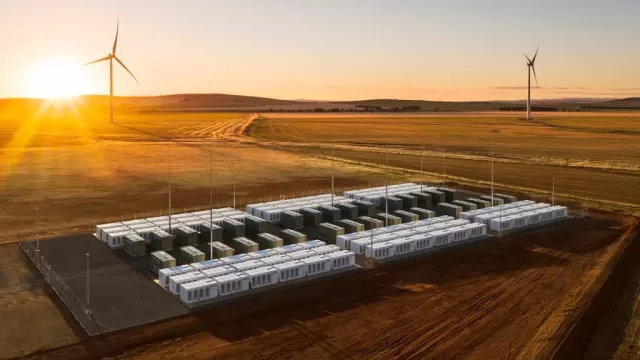

Seattle City Light (SCL) is facing perhaps the most consequential time of its 120-year history as the utility begins the search for new power resources needed to head off looming electricity shortages. Brownouts may be in the future.
Later this year, SCL will issue requests for proposals for new wind and solar generation to help close the growing gap between its traditional power sources (hydropower and the Bonneville Power Authority) and soaring regional demand.
After years of slow growth, in 2024 City Light officials delivered new forecasts of soaring power needs. The reasons? Climate-change regulations are forcing utilities to shutter generators fueled by natural gas and coal. Meanwhile, energy demand rises due to regional population growth, more extreme weather, and data centers’ burgeoning appetite for power.
City Light’s 2024 resource plan forecasted the need to add 1,825 megawatts (MW) of power by 2033 — enough to serve more than 1 million homes — up from an additional 400 MW forecasted just two years earlier. The future forecast exceeds the 1,207 MW annual output of the Columbia Generating Station nuclear plant near Richland, the state’s single power reactor.
Yet another jump is expected in a forecast update later this year, said Craig Smith, City Light’s interim CEO. “We’ve got to figure out how do we acquire those resources,” Smith said. “We are not the only ones. The whole region is short.” Smith, a veteran City Light executive, was named to the post by Mayor Katie Wilson, who fired former CEO Dawn Lindell shortly after taking office, provoking controversy.
Power experts are sounding alarms that utilities may not be able to build and purchase all the generating capacity they need before demand overwhelms the system. Regional power demand will grow by 30 percent, or 7,800 MW, over the next decade, according to the latest Pacific Northwest Utilities Conference Committee (PNUCC) forecast.
These factors, and the short timeframe to find solutions, are sending utilities scrambling for new sources of power, primarily wind and solar. Battery storage may be expanded, and utilities are starting to contemplate new nuclear power generation as a potential resource.
Kurt Beckett is the state official with a broad perspective on issues of new power development, and he is plenty concerned. Beckett chairs the Energy Facility Site Evaluation Council, which reviews and permits large energy projects. “We’re not moving at the pace that is required of the task. No one appreciates the scale of the infrastructure. No one is prepared for this,’’ said Beckett.
The region’s energy squeeze is not a far-off matter for companies such as Seattle’s CenTrio, founded in 1890 as Seattle Steam, which generates steam heat for 139 downtown office buildings, along with Harborview, Swedish, and Virginia Mason hospitals. Its waterfront plant houses four massive units fired to 1,500 degrees (F) by natural gas.
CenTrio is facing deadlines under the state’s Climate Commitment Act to convert its boilers to electricity. The company estimates its capital cost of conversion will be $11 million. Yet after more than two years of talks the company has not secured a final agreement with City Light for the 125 MW of power it needs.
The utility recently offered a service agreement to provide 25 MW of power as a first step, but without details on the power cost. Company CEO Ian Geopferd said his company is committed to meeting the state’s climate goals, but “we can’t agree to a contract until we know the power rate.” City Light power will be four to five times the cost of natural gas, Goepferd estimates, “but we still believe it’s the right thing to do, to pursue electrification.”
The utility is now preparing a new policy for assessing charges to big customers, but CenTrio’s Goepferd said he cannot commit to construction without knowing his cost. “That’s un-financeable,’’ he said.
River water cascading through Northwest dams has powered Northwest homes and businesses for more than a century. City Light’s Cedar River dam first provided power in January 1905, followed by dams on the Skagit, Pend Oreille, Tolt rivers, and Newhalem Creek. These hydro resources generate half the city’s power needs. City Light buys 42 percent of its power from the Bonneville Power Administration, along with contracts with other generating agencies.
The region’s broad, reliable, and flexible hydropower resources are the envy of the nation, providing power for energy-intensive businesses and water for Eastern Washington agriculture. Those sources kept pace with the region’s growth — until state and local governments began the urgent push to curb greenhouse gas emissions by discouraging the use of fossil fuels, along with drivers’ embrace of electric vehicles, data center expansion, and spikes of unusually cold and warm weather. Washington’s 2019 Clean Energy Transformation Act mandates utilities provide carbon-neutral electricity to their customers by 2030 and use 100% renewable or non-carbon emitting electricity by 2045.
Not only has demand grown from building and transportation sectors, the utility’s “resource adequacy’’ needs also have escalated due to winter peaks and future uncertainty about electrification. “With this rapid growth, we need to significantly expand our energy resources to meet escalating demand,’’ City Light said in its 2024 Integrated Resource Plan. That plan identifies the options for new power:
- Additional hydropower, solar, and wind
- Batteries, storage, and transmission solutions
- Enhanced geothermal and emerging technologies, such as small modular reactors, hydrogen, and fusion
City Light today has a small wind-power contract and plans to add power from two Oregon solar projects totaling 85 MW. But as of today, City Light has no schedules, contracts, or financing plans that guarantee Seattle will have the power it will need in the coming decade. Nor does City Light know how much more the new projects will cost ratepayers, although there is no doubt they will be more expensive.
With every utility facing shortages, competition is fierce for the small number of new power projects. Adding to the challenge is the growth of data centers, which are going head-to-head with public utilities for increasingly scarce resources. Puget Sound Energy, which gave up its ownership shares of a Montana coal-fired plant, was outbid recently by Amazon for a 9,400-acre solar project in Oregon. “Their problem is that they have to meet their load growth, and deal with competition,’’ which drives up the price for new power, City Light’s Smith said. “This is a new thing. It impacts us all.”
“(P)roject development timelines are getting longer. Local opposition has led to complex permitting and state-level siting processes,’’ and transmission lines are congested, the Pacific Northwest Utilities Coordinating Committee report warns. Only half of planned projects are being completed on time. Reviewing the record of delayed projects, the Western Electricity Coordinating Council warned that “if the resource build-out over the next 10 years mimics the last five years, by 2034, the West will have hundreds of hours each year when demand is at risk.”
Beckett, EFSEC chairman, said, the region needs the energy equivalent of seven Columbia nuclear stations. To Beckett, the problems lie in the “uniquely Balkanized’’ system of independent power utilities and lack of coordination in power planning. In a memo reviewing challenges for the state’s energy system, Beckett said the current lengthy review process creates delays and uncertainties and needs to be “transformed.”
Achieving the region’s clean-energy goals — and keeping the lights on — will require the state and utilities to focus on multiple strategies, said James Hove, Washington director of the environmental organization Climate Solutions. The organization is backing a bill in the Washington Legislature to create a new electrical transmission authority to help speed construction of new power lines and is pushing for regulations to ensure big data centers pay a bigger share of new power costs. New technologies can increase the efficiency of the existing power grid, along with expanded wind and solar generation. So far, Climate Solutions is neutral on new nuclear power plants.
Marco Lowe, Chief Operating Officer under former Mayor Bruce Harrell, said City Light has been too resistant to studying other approaches to power management relying instead on simply buying more power. “We are buying so much expensive power for peak load hours of the day. Let’s explore how we can shift the peak at a lower cost,” he said. Lowe urges SCL to implement the time-of-use rate concept under study for years, new home electrical controls that balance the electricity use in a home, home batteries, and roof-top solar.
CenTrio’s Goepferd said the city is already late in acquiring new power. “Historically, it takes a brown-out or a black-out for folks to really focus on it.’’ he said. “There is some risk, and unfortunately that’s what I think it’s going to take for it to become a priority,” he said. “And I don’t look forward to that.”
The coming months will bring great pressure on City Light and the City Council to choose a strategy that assures enough power while also achieving conservation and equity goals. A significant challenge will be how to make the necessary enormous capital investments while also keeping ratepayer costs affordable.
Councilmember Bob Kettle said strong leadership of City Light is especially critical now given the power-resource challenges ahead. Kettle was among several councilmembers critical of Wilson’s decision to fire Lindell. Meanwhile, Mayor Wilson backed away from her choice of Dennis McLerran as interim SCL head, instead tapping Rob Santoff, who’s been with City Light since early 2020 and is currently its chief operating officer.
Councilmember Debora Juarez, who will be in the spotlight as chair of the council’s Parks and City Light Committee, declined an interview request. “Our office is focused on addressing power demand, sustainability, and affordability for customers for Seattle City Light,” her office said. The city’s future depends on getting those questions right.
“We’ve been able to meet these challenges in the past. It can be done,” said interim SCL chief Smith. “However, we have significant challenges with transmission capability and energy resources. The biggest concern is uncertainty.”
Discover more from Post Alley
Subscribe to get the latest posts sent to your email.


Excellent info. Thank-you, Mike. Some serious and major issues. But some simple things, too. For example, tweak the self-imposed legislation in a common-sense manner, i.e., let SS keep the units they have, etc. (many other possibilities). Note: “Administration” for BPA.
There were some small errors in my post which I corrected here. Could you publish this post instead?
Good article!
It would be a wonderful public service if you or someone else at Post Alley or the Seattle Times would write a followup article which answers the following questions:
1) Which of these problems can the Climate Commitment Act (CCA) tax revenue address – and what is the status of any projects?
2) How much money from CCA tax revenue has been committed to projects which address your concerns? I’d hate to learn that there was little disbursal and that the funds disbursed were only for “study” (think: the CCA funds which weren’t disbursed to reduce flood risk in December 2025).
Let’s assume that the Washington Legislature will need to prod the people who manage CCA funds to address your concerns. Who, specifically needs prodding? What is their name, title, and organization?
Can anyone answer the following additional questions:
3) “Does the Washington legislature need to write new laws to clarify/expand how CCA funding is used?”
4) “Which legislators are being proactive on this issue, and which legislators need prodding?”
Well, this is alarming. And it’s not just SCL. I suspect most utilities — and ratepayers — will face similar challenges. Thanks for shining a bright light on a looming crisis.
Misspelled my own name. It’s Wilson, of course. Not enough coffee when I posted it. 😣
Thanks for this outstanding and informative article, Mike. Your analysis follows an interesting piece in the ST last week about overloaded electric lines inhibiting single and multifamily housing development. And yet, none of this was addressed in the proposed One Seattle Plan issued by Harrell and now in the hands of the City Council. In fact Marco Lowe was one of Harrell’s five Deputy Mayors and was overseeing development of the 30-year plan. I read the EIS for the Plan. These issues were not raised there nor were the other obvious infrastructure issues like the City water system, transportation system, park system etc. needed to accommodate an additional 80,000 – 200,000 residents and the attendant upzoning.
We need to pause this process, look deeply at infrastructure and talk with neighborhoods (as Norm Rice did) before finalizing this flawed and insubstantial plan. Rice’s Urban Village strategy was implemented through a neighborhood planning process that produced a long list of infrastructure improvements that were incorporated into the City’s capital budgets. We can do much better for the next generation.
.
Holly, That was an EXCELLENT comment because it identifies a good place to start solving a huge problem.
This is the kind of information exchange that Post Alley does really well.
Or, we could realize that jay Inslee is gone. Acknowledge the fact that wind and solar are nice secondary sources of power but will never be the primary source to power a modern society. There is nothing evil about using NG to power our state for the foreseeable future. Reliance on solar and wind will lead to the brownouts everyone wants to avoid. And continue moving towards small nuclear plants because that will likely be our future.
Good Comment, Jim. The CCA funds live on even though Inslee is gone (as do the constraints on how those funds can be used).
I sure hope that the CCA law and agency implementation is flexible enough to deal with our evolving reality.
Wind and solar complement the Pacific Northwest hydroelectric dams. When the wind isn’t blowing or the sun isn’t shining then the dam’s turbines spin up to meet demand. Then the wind is blowing or sun is shining then water is held back for when it is needed. As we get less and less snowpack due to global warming, it will be very important to manage the water in the dams to make sure it lasts through what is going to be even hotter summer months. The concern about baseload is blown way out of proportion due to the variety of electricity sources that the Pacific Northwest has available.
Those ‘small nuclear power plants’, if they ever come to fruition around here, are ungodly expensive. It could save a lot of money just to build those old-fashioned towers with newer methods.
Legislation is already being brought forward that would pave the way for these boutique SMRs, and it is being led by Energy NW, whose name at birth was WPPSS.
Last session, they had a bill that would have allowed utilities to buy in AND accept liability regardless of whether any power is ever delivered, just like Whoops.
Rate-payers beware!
If we don’t keep a close watch on this, we are likely to wind up with harmful, open-door regulations, just like the Seattle Comp Plan cited in Holly Miller’s comment above.
PS. Thank you, Mike, for another great column.
A rough estimate of the individual sources of increased demand would be interesting. Regional population growth. Extreme weather. Moving off fossil fuels, maybe breaking out transportation. Data centers. Just relatively. There’s some suspicion that this play out a lot differently if it weren’t for the data centers. (By the way, SB 6231 passed last week, so if Ferguson signs, the data center tax exemption is history.)
About solar. PSE lost out on bidding for a solar project in Oregon, so … tough luck, customers. Is there a bottleneck on new solar, that could be addressed?
Thanks for reading and commenting on what is a very complex story. A couple of corrections and clarifications are necessary. The BPA is the Bonneville Power Administration, rather than Authority. Ian Goepferd is the Vice President, not CEO, of CenTrio. Regarding the company’s plans to convert its steam plant from natural gas to electricity at its steam plant, the total cost to completely decarbonize its operations is about $100 million. A portion of that project, the capital cost of the planned City Light electrical infrastructure, is $11 million.
I’ve been disappointed in Seattle City Light for a long time in its lack of visionary leadership. I was impressed by Seattle’s forefathers in bringing electrification to Seattle from the hydro plant at Snoqualmie Falls and the city’s use of electric trolley busses, one of only 5 cities in the US to do so. I doubt anyone who has toured the Skagit River dam hasn’t been inspired. And let’s not forget that the Pacific Northwest was at the technological forefront for rail electrification with the Great Northern railroad. Europeans were traveling to Seattle at one time to learn from us.
Right now. I don’t see it though. One would think that the home of Amazon and Microsoft would also be pursuing innovative technology like virtual powerplants and consumer demand response. One would think that a publicly owned utility would find a way for citizens in Seattle to have more solar on their roofs and make it possible for renters to also participate.
One would think that with Seattle’s ambitious climate goals that it would be leveraging our public utility to make it easier to own an Electric Vehicle or e-bike.
One would think that Seattle City Light would be working with other city departments to plan how to improve tree canopy to remove risks for power outages by relocating lines and by reducing peak demand during hot summer months.
Something happened in that our political leaders lost their focus. Or maybe our business leaders did by not challenging city government to do better.
These risks are real going forward, but they are also opportunities. Opportunities to put in-place new technology and create new businesses to benefit the city. Let’s put our own expertise on developing new tech to work here. There is no reason in my mind that Seattle can’t be a pioneer like it was in previous times. All that is needed is to get out from under the Seattle process and get to work.