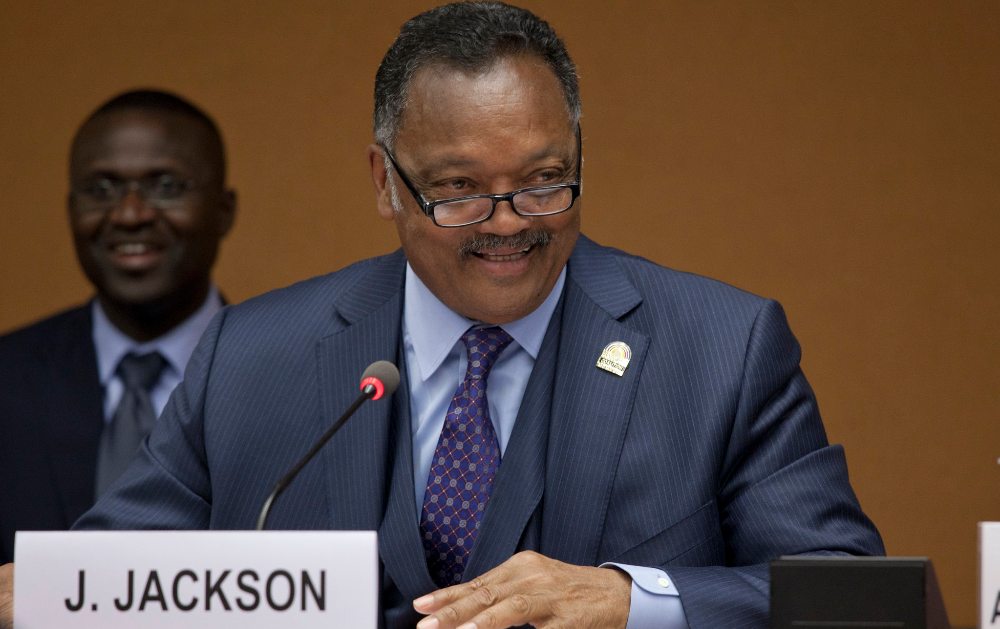

The celebration of Jesse Jackson’s life this week evokes unforgettable memories of Jackson on the presidential campaign trail 37 years ago. He sowed discomfort — constructively.
I remember being in McFarland, California, a dusty farm town, scene of child fatalities likely caused by excessive pesticide use. Jackson brought his campaign there, taking the stage with a bevy of Hollywood show folk and a tearful mother who had just lost her teen son. The candidate spoke with passion and then moved backstage.
He thought to ask if provision had been made to bury the boy. It had not. Jackson turned to Ned Beatty and Margot Kidder with an order: Bury the boy, with dignity.
Jackson had presence. He went where presidential candidates rarely go, and chunks of America with problems rarely addressed. He was the first visble black presidential candidate and force of nature.
He visited Seattle just once. He carried baggage. He was the child of a teenage mother. He was part of a seminal student civil-rights protest at a Woolworth lunch counter. He arrived in Chicago bearing a recommendation letter from the governor of North Carolina, and was given an audience with Mayor Daley. The mayor told Jackson to hustle up votes and he would get a patronage job. If he hustled votes, he could reap the reward of taking tolls in the Chicago Skyway. He never forgot that insult.
He was tall and regal, commanding the stage at two Democratic conventions. He could dominate a stage and did just that at a Democratic Leadership Conference meeting in New Orleans. This night, he is lying in state in Chicago.
Anothery memory: In New Orleans for a Democratic conference, the NCAA semifinals were being played at the Superdome. I copped a ticket with three refinery workers down from Baton Rouge. The guys didn’t care about Lyndon Johnson’s dumb son-in-law, or any of the Democratic moderates at the Democratic Leadership Council conference nearby. Jackson held their attention. The refinery workers detested his role as civil rights leader, and pretended leader of Black America. But Jackson cared about worker safety, which was important to oil industry workers, and he took on Big Oil.
He would visit the Seattle Post-Intelligencer editorial board, the presidential campaigns long behind him, and speculate if his children could ever reach for the nation’s top job. (One son is today in Congress.) But it was the cool, no-drama Barack Obama who ultimately grasped the prize. Jackson was pictured at the giant election night rally in Chicago’s Grant Park, tears streaming down his cheeks.
He was far from perfect. He referred to New York as “Hymietown.” He sired a child out of wedlock. He displayed, at times, a snarling temper — and an ego. He was human. But he also led civil-rights marches through Chicago’s white bungalow neighborhoods and braved the rock throwers.
Good bye, Jesse Jackson. The nation is the better for knowing you.
This article also appears in Cascadia Advocate.
Discover more from Post Alley
Subscribe to get the latest posts sent to your email.


Thank you for this worthy tribute to a civil rights hero.
Ah, yes, 1988. That was the year that many Democrats were looking for just a little more excitement than nominating Michael Dukakis for president. In 1988 I attended the Whatcom County Democratic nominating conclave as a loyal Jesse Jackson delegate. The principal conservative Democratic alternative to Dukakis that year was, interestingly enough, Al Gore. How times change.
I can’t say I ever believed that Jackson was a truly compelling candidate or had a real chance of being nominated. But, hey, anything seemed better than Dukakis. So why not give it a shot? Plus for me it was a genuine step toward an at least marginally more pragmatic re-engagement with politics. After all, in 1968 I had cast my sacred vote for Dick Gregory. Compared with him, Jesse Jackson was pretty mainstream. It was a long road back.
Thanks, Joel. You always write good stuff, imho.
Met Mr Jesse once and he acted like I was actually an important person.
Listened to my idea, thought, looked straight at me, and answered respectfully. If it was all an act (it wasn’t), he sure was good at it. We then shared a quick joke and laughed.
Lucky me!