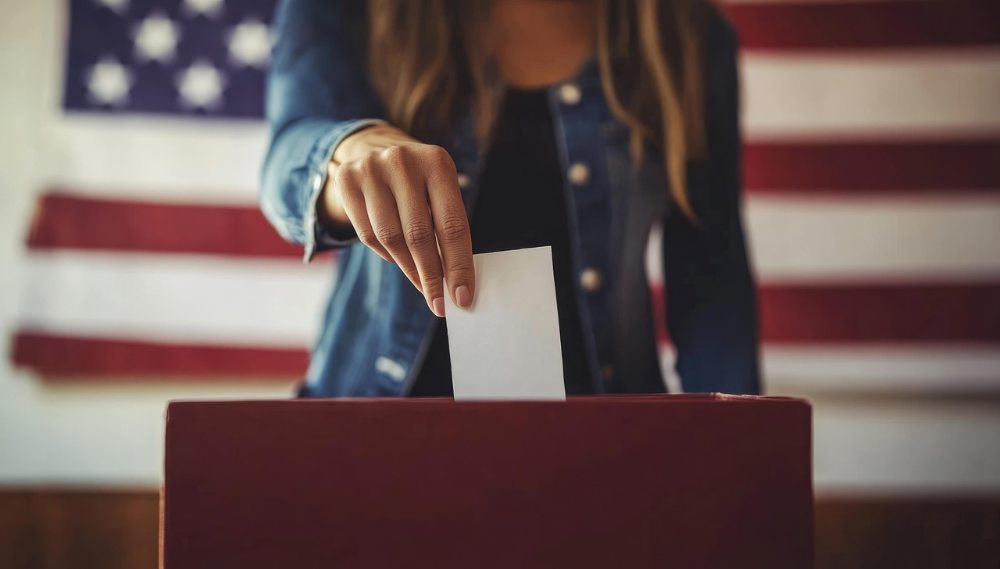

Donald Trump organized a multi-front attempt to steal the 2020 presidential election to keep himself in power, culminating in the deadly Jan. 6, 2021 invasion of the US Capitol. All his efforts failed, but he’s at it again, trying to save the Republican Party’s majorities in Congress this year—and possibly ensure a GOP victory in the 2028 presidential election— by trying to put the federal government in control of US elections.
If that doesn’t work, he could sequel his Jan. 6 game plan, this time instead of sending a ragtag mob to riot, using his federal storm troopers—ICE and the Border Patrol—to surround the polls in Democratic cities, ostensibly to “ensure election security” but actually to scare voters away.
Both strategies are in play. Trump has said, “the Republicans should say, ‘we should take over. We should take over in at least 15 places.’ The Republicans should nationalize the voting.” He also has said the states are merely “an agent of the federal government in elections.” And he posted on Truth Social that “states must do what the President of the United States tells them for the good of the country.” All gross misrepresentations of the Constitution.
Trump ally Steve Bannon has prepared the way for a paramilitary attack on voting places. “You’re damn right we’re going to have ICE surround the polls come November. We’re not going to allow you to steal the country again… We will never again allow an election to be stolen,” he said on his War Room podcast. Trump’s press secretary said she “can’t guarantee” that ICE would not be stationed at polling places.
In proposing to federalize elections, Trump is exhibiting his customary ignorance (or defiance) of the US Constitution, which gives states and Congress power to manage elections—and the Executive Branch, no power whatsoever.
But Trump could indirectly influence or even control the electoral process by organizing all 23 GOP state legislatures and governors to adopt his agenda for disenfranchising Democratic voters.
Trump signed an executive order (later struck down by the courts) to seize direct control of elections by banning mail-in voting, decertifying all voting machines, setting mandatory national standards for ballot handling, and imposing tight voter ID requirements for voter registration and voting.
In fact, GOP state legislatures already are imposing rules that disadvantage voters in Democrat-majority counties—limiting voting hours, placing polling places and ballot drop-off boxes in inconvenient places, disallowing third-party collection of ballots and refusing to accept ballots arriving after Election Day.
Many of them are following Trump’s lead on mail-in ballots, voter ID requirements and strict signature requirements on ballots. But voter restrictions are not uniform, and Trump or the Republican National Committee under Trump’s influence could encourage compliance.
Trump already has intruded the federal government into election management, with the Justice Department’s conducting a criminal investigation of the 2020 election in Fulton County, Georgia, even though Trump’s defeat was validated by dozens of judicial rulings and machine- and hand-ballot recounts.
The FBI has seized 700 boxes of 2020 Fulton County ballots and what FBI director Kash Patel said were “truckloads” of other material, including voter rolls and digital data. For unknown reasons, Tulsi Gabbard, Director of National Intelligence, was on the scene.
Trump is obsessive about claiming that the 2020 election was stolen from him, whereas he was the leader in plots to overthrow Joe Biden’s victory.
Among many instances of Trump pressure on state officials to alter 2020 election results, probably the most blatant was his threatening—on a tape-recorded phone line— then-Georgia Secretary of State Brad Raffensperger with criminal prosecution if he did not “find” 11,780 votes to overturn Trump’s defeat.
Besides trying to rewrite 2020 history, Trump is afraid of the consequences if Republicans lose control of the US House or Senate (or both) in this November’s elections, which is likely, given his unpopularity (average approval in major polls, mid 30s to low 40s, disapproval, mid-50s to low 60s), disapproval of almost all of his policies, and Democratic victories in office-year elections.
Trump told the House GOP Conference, “You’ve got to win the mid-terms because if you don’t…I’ll get impeached.” Also, a Democratic Congress could investigate his corrupt dealings and his attacks on adversaries and stymie his legislative agenda. Given the stakes, no scheme can be discounted.
In fact, Trump already has tried various other strategies to steal the 2026 elections. He encouraged GOP state parties to conduct mid-decade redrawing of election maps to create more GOP-leaning districts and fewer Democratic districts. That effort, so far failing, is still under way.
The Justice Department has requested complete voter rolls from 44 states, including sensitive personal information, and has sued 24 states for failing to comply. Additionally, Trump issued an executive order—struck down by the courts—to ban mail-in voting and counting of late-arriving ballots, decertify all voting machines and require proof of citizenship. He has continuously tried to undermine confidence in the US election system, leading to multiple challenges to official results.
As Georgia officials have complained, the federal seizure of Fulton County (Atlanta) voting data creates the possibility of tampering with ballots, which could result in late “finding” of the 11,780 votes Trump had requested Sec. of State Raffensperger find (out of 5 million cast).
The Justice Department’s Fulton County investigation—approved by a judge citing probable cause that a crime occurred in 2020–also could be designed to intimidate election workers. In a survey by the Brennan Center for Justice, 38% of election workers report having been threatened or harassed and 25% fear for their physical safety, leading hundreds to quit election work.
Another possible motive for the Fulton probe might be revenge against Georgia officials such as Brad Raffensperger, the former Secretary of State who rejected Trump’s effort to “find” the votes he needed to carry Georgia. Raffensperger is now running for governor against the state’s lieutenant governor, who has Trump’s endorsement.
Gabbard’s presence could be explained by Trump’s repeated (and debunked) claims about foreign interference in the 2020 election, particularly in Georgia. He has claimed there was a Chinese and Italian plot to hack voting machines to shift votes from him to Joe Biden. And he’s claimed that agents of the FBI and the Department of Homeland Security conspired to cover up the foreign intrusions.
Trump also is demanding that Congress pass the SAVE Act, requiring documentary proof of citizenship (a passport, birth certificate or drivers license attesting to citizenship) to register to vote and presentation of a photo ID to vote. Voting rights groups say 21.3 million Americans lack the necessary documents to register. The bill is due to pass the House shortly (for the third time), but cannot survive a Senate filibuster. With Trump falsely declaring that US elections are “rigged, stolen and a laughing-stock,” voting rights groups say that when the Act fails to pass, he will use it to argue that a GOP defeat was fraudulent.
Efforts to steal the 2026 election are but one ongoing Trump outrage. Others include:
ICE Violence and Occupation
The Trump administration’s dispatching of masked, violent ICE and Border Patrol forces to seven major cities reached a crisis point with the killing of two protesters in Minneapolis—Renee Nicole Good and Alex Pretti. DHS Secretary Noem, White House Deputy Chief of Staff Stephen Miller and the head of the Border Patrol, Gregory Bovino, initially called both victims “domestic terrorists” who wanted to kill law enforcement officers.
Video evidence showed that, contrary to initial government claims, Good did not hit her assailant with her car or try to do so, but turned the vehicle away from him before he shot her three times in the head. And contrary to officials’ claims, Pretti was not carrying a gun but a cell phone before he was dragged to the ground by multiple agents, pummeled by some of them.
His legal handgun was torn from his trousers and then he was shot ten times. His death was ruled a homicide. A federal prosecutor’s effort to open a civil rights probe of Good’s killing was blocked by the Justice Department, causing a dozen Federal prosecutors to resign and 303 former Justice Department officials to condemn the administration’s handling of the case. The Justice Department instead opened an investigation of Good’s wife, Rebecca, for allegedly obstructing a federal action by yelling “drive, baby, drive” to encourage Good’s departure.
A third death in ICE custody was ruled a homicide this week, that of Geralldo Lucas Campos, a Cuban immigrant killed at Texas Camp East Montana at Fort Bliss. ICE initially claimed that Campos tried to kill himself, but other detainees said they heard Campos in an altercation with ICE guards, leading to an autopsy that concluded he died of asphyxia caused by compression to his neck and torso compression.
The killings provoked expanded protests in Minneapolis and “National Shutdown” protests in many cities and “ICE Out of Everywhere” demonstrations in 250 cities. Bovino was removed from Minneapolis and replaced by “border czar” Tom Homan, who’d initiated the much-criticized family separation policy during Trump’s first term. Noem ordered that all agents in Minneapolis (and possibly in other cities) would wear body cameras, and Homan ordered withdrawal of 700 agents of the 3,000 deployed there. Trump said, “We’re going to de-escalate a little bit.”
The events led to calls, mainly from Democrats (and a few Republicans) for Noem and Miller to be fired (or, in Noem’s case, impeached.) Democrats held a hearing (attended by no Republicans) exposing other shootings by ICE hearing from victims’ families.
Democratic leaders listed a series of demands before they would agree to fund DHS including that agents not wear masks, that agents obtain a judicial warrant (instead of an administrative warrant issued by the executive) before raiding a home in search of immigrants, an end to roving patrols and random street arrests, adoption of use-of-force standards used by local police, and allowance of lawsuits against federal agents. Republicans oppose practically all of the demands.
Polls indicate that the public generally disapproves of ICE and its methods and supports the Democrats’ demands. Sixty-five percent say ICE has “gone too far” in its pursuit of immigrants, 62 percent think ICE’s activities have made America less safe, and 60 percent disapprove of ICE. Prior to Pretti’s killing, Trump’s approval rate on immigration had fallen from 50% to 41%. It is now at 39%. At the Winter Olympics opening ceremonies in Milan, loud boos erupted from the audience of 65,000 when an image of US Vice President JD Vance appeared on a stadium screen.
Big Brother
Besides conducting roundups, pepper spraying, house break-ins and resorting to violence, federal immigration authorities are now equipped with highly sophisticated technology to track and identify immigrants and protesters, rivaling that used in China.
The Washington Post reported on Jan. 29, prior to owner Jeff Bezos’s slashing the paper’s staff by a third, that ICE and the Border Patrol are now equipped with state-of-the-art surveillance technology enabling facial recognition, license plate reading, vehicle tracking, cell phone location and content hacking (thanks to a masterful Israeli product), as well as small and large drones used to monitor crowds. The technology is currently being used to locate immigrants and identify protestors, but privacy advocates say the systems are precursors to a generalized surveillance system to monitor dissident political groups and individual activists.
Another Racist Video
A late-night Trump Truth Social posting depicted Barack and Michelle Obama as apes, triggering immediate and bipartisan condemnation and raising questions about how (and by whom) the posting was put up. The AI-generated video appeared at the end of a longer video declaring the 2020 election as fraudulent. It was widely criticized as racist, with Sen. Tim Scott, the lone black senator, declaring it “the most racist thing I’ve seen out of this White House.” Trump’s press secretary initially defended the video, saying it depicted Trump as king of the jungle and Democrats as characters from the Lion King. She dismissed the backlash as “fake outrage.” But after 12 hours on the Internet, the White House shifted, blaming the video on an unnamed staffer who posted it in error.
Extortion
Trump is freezing more than $16 billion in appropriated funds for the Gateway tunnel connecting New York and New Jersey (“blue states”) but proposing to release the money if Dulles International Airport outside Washington, DC, and New York’s Penn Station are named for him. Seriously??
Epstein
After months of shifting administration claims about their existence and a Congressional demand, the Justice Department put an estimated 1,500 FBI agents and attorneys to work combing through six million pages of files pertaining to deceased sex offender Jeffrey Epstein. The Justice Department just released 3.5 million pages. Deputy Attorney General Todd Blanche, claimed the release was “the end of a very comprehensive” process.
Despite the review and a requirement that abuse victims would not be identified, 100 victims had their identities revealed wholly or in part. The identities, along with pictures of nude women, were hastily removed, but a lawyer for the victims said their “lives have been turned upside down.”
The pages released contained extensive redactions, and the government is keeping nearly 3 million Epstein pages secret. Dozens of prominent men are named in the documents, but the Justice Department has no plans to investigate whether they participated in Epstein’s sexual exploitation of young girls. Only a few prominent men have paid any real price: former Prince Andrew, who lost his royal titles and benefits, and financiers like Leon Black and Jes Staley, who resigned under scrutiny. Others have issued statements of regret about their association with Epstein, including Bill Gates, Leslie Wexner and Larry Summers. Many more, including Donald Trump, have insisted they had no knowledge of Epstein’s crimes.
Trump’s name appears more than 1,000 times in the released documents, mostly in news clippings and Epstein emails. But there are dozens of unverified tips to the FBI alleging illicit sexual actions on Trump’s part—all vehemently denied by the administration. Trump opposed release of the files and now maintains that attention to them is a waste of investigators’ time.
The two principal authors of the legislation ordering release of the Epstein files, Reps. Ro Khanna(D-Caifornia) and Thomas Massie (R-KY), have been unsparing in their criticism of the administration’s redactions and exposure of victims. They’ve vowed to hold hearings and never stop advocating for full release of Epstein files until his victims are satisfied.
The outrages never stop …. Stay tuned.
Discover more from Post Alley
Subscribe to get the latest posts sent to your email.


WANTED: Fraudster Detection for Election Protection
“It was the best of times, it was the worst of times…”
Give Trump some credit. He has done the impossible.
In his crude and relentless awfulness Trump is radicalizing people who have spent entire lifetimes categorically rejecting radicalism, who have given him every benefit of the doubt and every opportunity to make modest course corrections — good folk who have bent over backward to ascribe deeper meaning to every incoherent expression of his vile lunacy.
But despite their best efforts, it can’t be done. Trump is as bad as he appears. The conclusion is inescapable. The only way out of the maze is going to be by taking some form of radical action. It can be humane, it can be loving, it can be forgiving of those who very belatedly see the light. But it cannot be equivocal or half-hearted. It must be firm and decisive. Trump can no longer be accommodated.