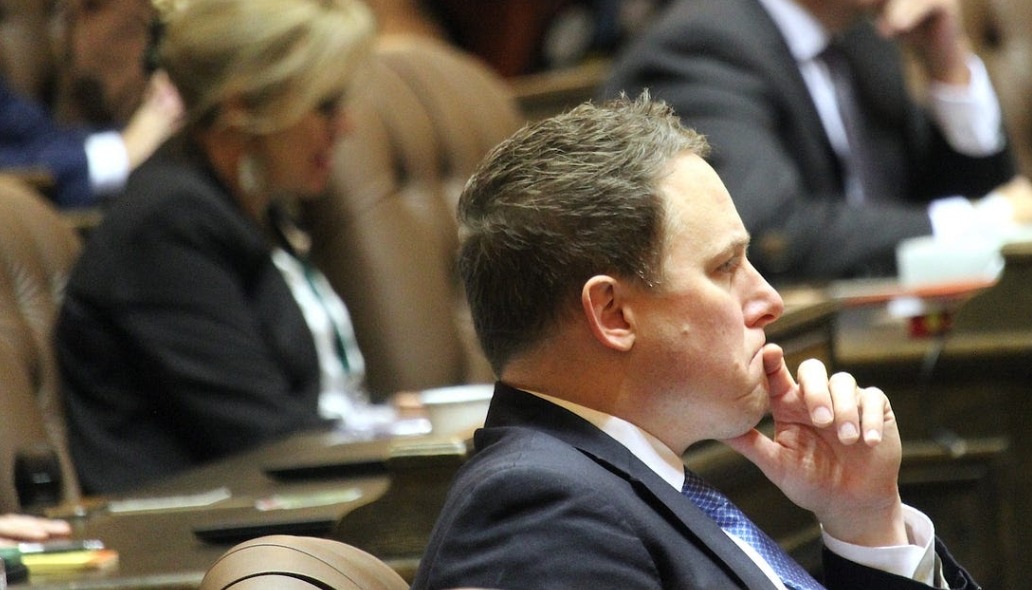

The all-night, all-day debate over the proposed income tax on Washington’s wealthiest wage earners was historic in several respects.
First off, it was insanely long, easily eclipsing the 11-hour debate over workplace ergonomics regulation back in 2022, which prompted us to wax metaphorical about clock management. Lawmakers ground through dozens of amendments, arguing for more than 24 hours from around 5:30 pm on Monday until the final 51-46 yes vote at about 6:15 pm Tuesday.
Slowing down the process was part of the point, with Republicans wholly opposed to the entire idea, insisting on lengthy oral roll call votes for most amendments. Such a large amount of time spent on a single bill this late in the session could create a legislative logjam with the end of the session looming on Thursday.
Second, it was a wide-ranging, if occasionally numbingly repetitive, exploration of an idea we wrote about earlier this year: Tax fairness versus revenue sufficiency, or the tension between materially reforming a tax system that falls heavily on the poor and lightly on the rich versus just raising a bunch of new cash to pay for state government.
Much of that part of the debate was driven by Rep. Kristine Reeves, D-Federal Way, who tried to buck her caucus multiple times without success. For example, her amendment to send 49 percent of the tax’s revenue to a new Affordability and Tax Relief Account dedicated to a variety of middle-class tax relief failed 47-49 in one of the closest votes of the night after an icy exchange between Reeves and Finance Chair April Berg, D-Mill Creek, the chief House architect of the bill.
The failure of that amendment and dozens like it were a demonstration of both caucus discipline and what you can think of as a safety cushion created by the Democrats’ large majority. That amendment failed even though nine Democrats voted for it, including several with reason to tread carefully on politically dicey ground.
In the end, the majority turned away nearly every attempt to further redistribute the billions of dollars from the income. For example, the majority rejected:
- Lowering the sales tax from 6.5% to 5% (The sales tax is widely condemned for its regressivity)
- Earmarking money from the income tax for Medicaid reimbursement
- Earmarking money for child care assistance
- Earmarking money for K-12 education
- Raising the tax threshold to $1.5 million for couples
The marathon debate was also a historic opportunity to put members of both parties on the record on a host of hot-button issues of tax policy and spending. These are votes that many politicians would go to significant lengths to avoid. For minority Republicans, you can think of this as the blocking and tackling of legislative politics, building a record that can be weaponized come campaign season, when every House member will be on the ballot.
The most momentous of those votes was on final passage of the income tax, which was 51-46, with these Democrats joining the Republicans in voting no: Reeves, Dan Bronoske of Lakewood, Melanie Morgan of Spanaway, Adison Richards of Kitsap County, Alicia Rule of Blaine, Clyde Shavers of Clinton, Joe Timmons of Bellingham, and Amy Walen of Kirkland.
That’s a rough map of the few remaining districts that have been genuinely in play in recent elections as Washington politics have shifted left during the Trump era. This whole exercise is predicated on the idea that those dynamics have fundamentally altered the landscape to transform the passage of an income tax — unthinkable just a few years ago — into good politics elsewhere.
The bill now goes back to the Senate, which is expected to swiftly adopt the changes and ship it on to Gov. Bob Ferguson’s desk. Ferguson’s promised signature will inevitably trigger legal challenges and a repeal campaign.
Discover more from Post Alley
Subscribe to get the latest posts sent to your email.