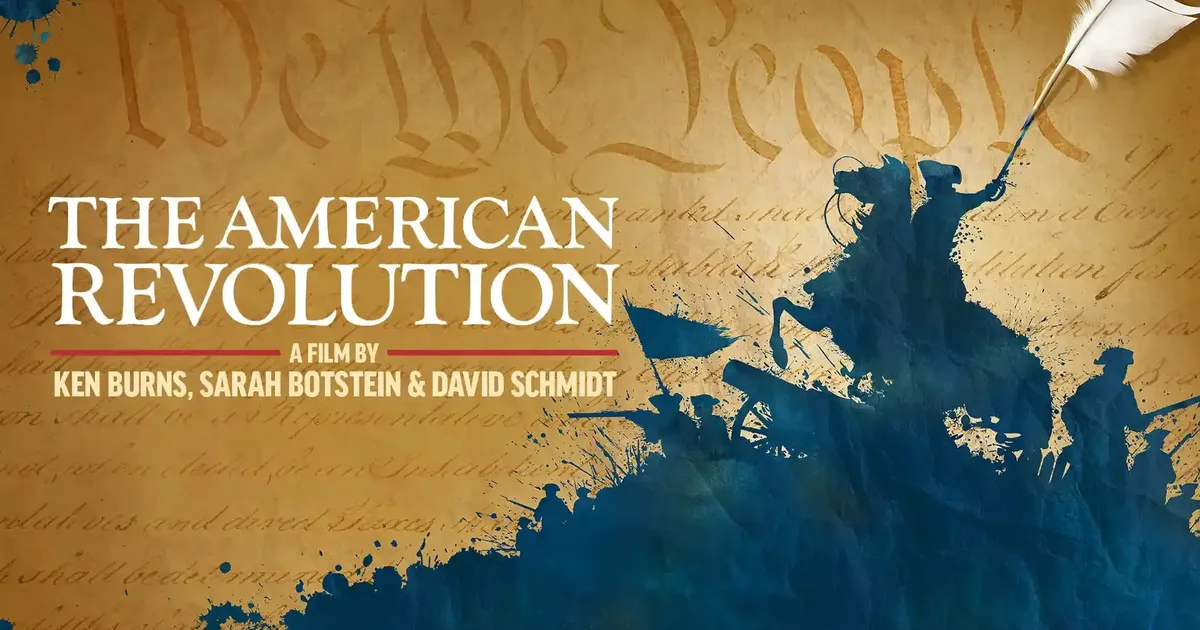

I have been watching the Ken Burns PBS documentary on the American Revolution, and am struck by the many things in that formative history of the nation that are not registered by the current political advocates of all stripes, and especially by those espousing “Christian Nationalism,” and particularly “White Christian Nationalism.”
I start with a bit of irony: the documentary says that the Continental Army was integrated, and that the American army would not be integrated again for 200 years. The Native Americans, who had been bounced between alliances with the French and English, now had to choose between the British and the Americans. The six tribes of the Iroquois Confederacy, or “Haudenosaunee,” which had held together with an ingenious arrangement of representative-democratic government over centuries, were splintered by the War.
Well before the War and revolutionary fervor, Benjamin Franklin had visited and studied the Haudenosaunee, and at a point years before the Declaration of Independence, had called a meeting in Albany of the then-seven colonies to explore following the Native lead in establishing a confederation of colonies. Delegates were impressed with the centuries-old alliance, and agreed to pursue it, but could not sell the plan to their colonies back home.
Washington’s troops that wintered at Valley Forge were 10 percent Black. That means over 1,000 Black men, mostly freed slaves, fought alongside white settlers and Indians. In another twist that doesn’t get in my history books, Burns’ documentary claims there were several languages spoken by the Continental soldiers that winter at Valley Forge: English, German, Dutch, French, and any number of Native American tongues. It truly was an integrated army.
Burns does not dwell on religion. Jefferson and his friend John Adams traded edits of the Declaration, and ended up with “endowed by their creator,” “self-evident,” and “Nature’s God” as they reached towards the infinite. There are several tallies, but it appears that the largest number of signers were Anglican, with a few Quakers, Baptists, Congregationalists, one Catholic, at least two Unitarians, and several who considered themselves Deists.
Washington apparently attended several churches, but might have considered himself a Deist. Adams was a definite Unitarian. Jefferson, the primary architect of the Declaration, attended churches but leaned towards Deism and Unitarianism. His beliefs are probably best reflected in a book he constructed, The Life and Morals of Jesus of Nazareth, commonly referred to as the Jefferson Bible. It excludes all miracles by Jesus and most mentions of the supernational, the resurrection, and passages that portray Jesus as divine.
This collection of all the ambiguities that today’s enumeration of founders’ religious affiliations demonstrate made the careful wording of the document important and made the idea of religious toleration central to the Continental cause.
Phil Deloria, one of the Native historians who appears in the documentary, points out the recruitment of Native soldiers that occurred simultaneously with the promise of Indian lands to White settler soldiers for their service. Washington, Jefferson, and many founders held slaves, and even those who, like Jefferson, opposed it philosophically, thought that the new nation would not survive without upholding the institution for the southern colonies. And the “all men” of the Declaration did not include Blacks, Indians, women, or white men without property!
Was it Christian from the beginning? It’s not in the founding documents, but animates the “Great Awakenings,” the first of which occurred in the 1730s, and our founders were products of that series of events, which was largely aimed at reforming and intensifying the individualistic Protestantism of the time.
And the Declaration and the Constitution all preceded the “Second Great Awakening,” which occurred in the first decades of the nineteenth century. This Awakening reached out to the unchurched, and spawned new churches like Joseph Smith’s Mormons and a broad missionary movement among several older Protestant denominations. Missionaries went to preach among the Moslems in the Holy Land, the Hindus in India, and the indigenous Hawaiians and Native Americans in the Western territories of the expanding United States. That is how the Whitmans and the Spaldings came to missionize among the Cayuse and the Nez Perce in the 1830s.
Our country’s origins are complicated. It was even, as the Burns’ documentary explains, an international conflict, with people of many countries, languages, religions, and colors of skin its participants. The attempts of current Christian nationalists to squeeze our origins into a simple golden founding event are a disservice to history and the nation we are still becoming.
Discover more from Post Alley
Subscribe to get the latest posts sent to your email.


A very interesting article. One that may require more personal research and consideration. Thanks for posting.
I agree with you about a complicated origin to the founding of the USA as I was surprised in the make-up of those who fought for independence and the discussion of George Washington possibly being a deist. This too does add more to my dismay as to “The attempts of current Christian nationalists to squeeze our origins into a simple golden founding event are a disservice to history and the nation we are still becoming”.
As to any of Burns’ documentaries, they cannot and should not be taken lightly. Thank you for the column.
Ken Burns did a remarkable boiling down our early history to 12 hours. It is often a one or two semester course. PBS might consider a weekly course with online zoom discussions.
Thanks for giving us what commercial tv cannot.