
Last week it suddenly dawned on me that next year I will turn 80. Eighty! I have virtually none of the usual afflictions and health conditions that plague people as they age. I’m convinced that the healthier foods available throughout Italy (no ultra-processing,
preservatives, or chemicals) has played a major role in my unexpected longevity.
Although I do not possess Italian genes, I seem to be benefitting from association with those who do. I am living longer and finding interesting things to do that I never used to have time for. Such as cooking and baking. So, late in my retirement years I have been learning how to make Italian dishes.
I am not attending classes, as so many American visitors and expats are smart to do. Instead, I am trying the self-teaching method. I receive superb (if not long-suffering) advice from my wife, who is an excellent cook. But she is starting up her business and has little time for preparing meals or tutoring me. As anyone knows who has initiated a new business, days are filled with one part exhilaration, one part angst, and one part panic, with no time available for anything else in life. So, it has fallen to me, generally, to keep us fed.
Every day I walk up the street in my black chef’s apron carrying lunch to my wife, who is
hunkered down in her shop, resolving a problem with a delivery, a vendor, a bank, an errant order, or talking to a client. I slip in a covered plate of pasta, stew, or a sandwich and quietly bow back out. I know better than to interrupt the action. I stroke the shop cat curled up and snoozing her basket and quietly slip off.
I have been successful with easy dishes such as pasta, thanks to the vast array of noodles, sauces, and sausage available even in our little village markets. The macellaria (meat market) offers superb cuts of chicken, turkey, pork, and beef, as well as a pancetta bacon that must have been delivered by God.
Before she leaves for the day, my wife often gives me a brief tutorial about a dish I am contemplating. If I follow her sage advice, it usually comes out just fine. If I don’t, I decide to improvise, or I forget some ingredient or step into the process. The outcome is often an embarrassing disaster.
I also repeatedly manage to flip the circuit breaker power box by turning on one too many appliances. To save energy, power companies put limits on domestic power consumption. You can increase the limit, but only by paying a higher rate. Accordingly, once a month, I accidentally plunge the house into darkness.
I also make goofy errors in judgement. Recently I cut open a familiar looking package that typically contains a small pork roast with a bone, encased in gelatinous gunk. I clean off the jellied hunk and pry off sections of meat to cook, typically in a slow cooking pot with vegetables and herbs. It makes a tasty stew.
Trouble was, the package I opened was not the familiar pork item. Instead of a bone-in roast, it was a zeppelin-like shape — smooth, oblong and boneless. I cut it into pieces and tossed them into the pot. Four hours later, wife returns home. “What IS this? She sniffed the contents of the pot with squinted eyes. I claimed it was stew, just in a different form. Sadly, I was mistaken. I had instead cut apart a sort of Italian version of liverwurst — spreadable sausage used to create mid-afternoon snacks on toasted bread rounds — one of the popular versions of bruschetta. Stew, it was not.
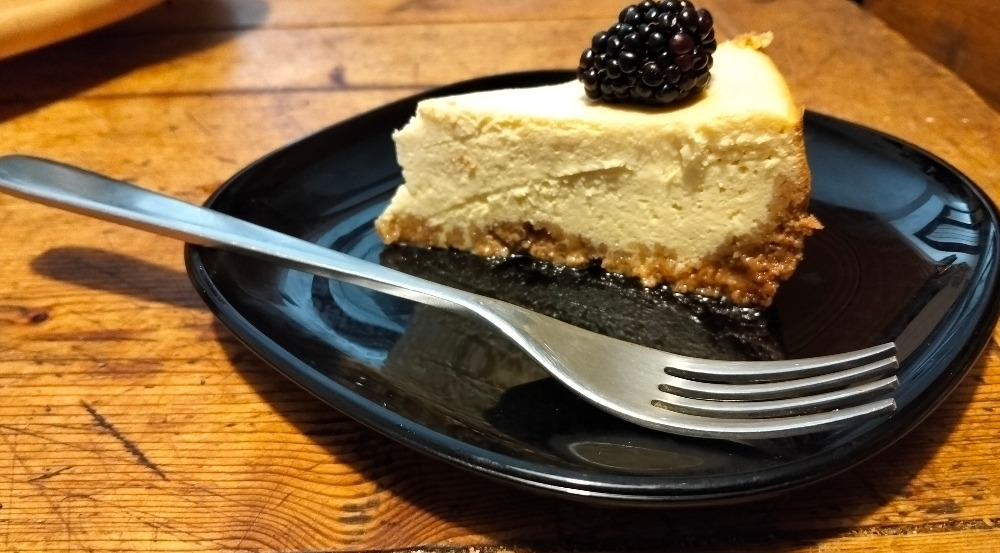
From time to time, I have had successes. Chicken breasts or thighs with various sauces have received the Spousal Seal of Approval. Once the review was “This is as good as I could make.” Since then, I have compensated for the mistakes-were-made “stew surprise” by making an excellent Sicilian-style cheesecake. Which we both have been consuming at a fast rate.
Recently, I’ve pretty much nailed a dish of fresh Adriatic Rose Shrimp brought by truck from coastal ports twice a week. Sauteed in butter, spicy paprika, with garlic and onions and perched on a bowl of bucatini pasta, the dish is simple, elegant, and insanely delicious. I always regret not buying more than a kilo.
I have not yet taken up the challenge of cooking the Mantis Shrimp, local to the region, which has big “false eyes” on its fanlike tail. The Italian name is Cicale di Mare – which literally means Cicada of the Sea. Picture, if you will, a steaming pile of this shellfish, drenched in butter, on your plate. To get to the meat, which is approximately the size of a pinky finger, you must prize the rock-hard, armored, and spiked shell with your fingers.
Moreover, the crustaceans are so fresh that they are still squirming in the display case inches from your eyes. So far, I have declined.
Discover more from Post Alley
Subscribe to get the latest posts sent to your email.