
The historical record shows that Americans almost always give strong percentage approval (high 70s to 90s) when US forces first go into combat. This dates back to the Korean War. Support historically often collapses the longer the war goes on, US casualties mount, and prospects for victory disappear.
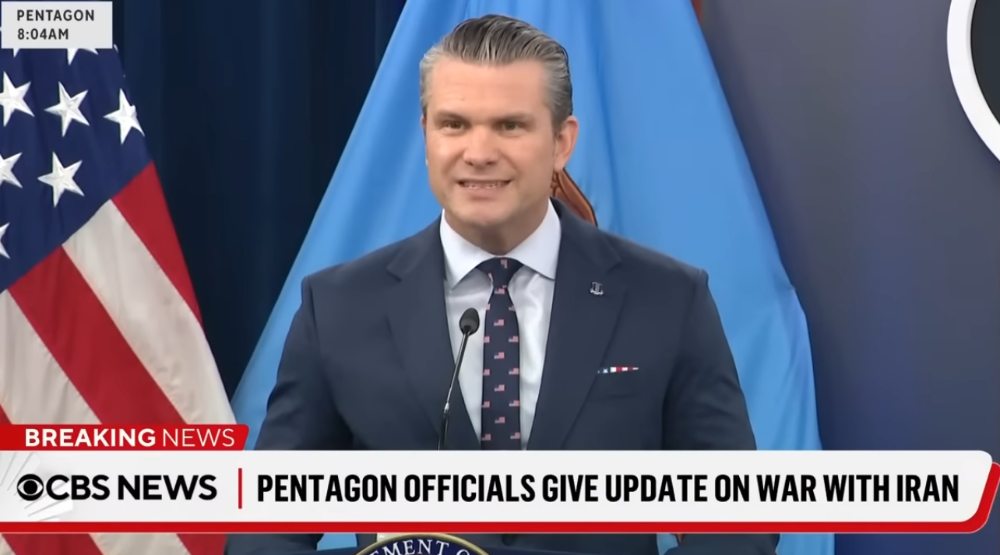
Trump had no such support for starting his air war against Iran. Five respected polls show that Americans opposed the war (or “excursion” as Trump now calls it) by 61% to 39%. That’s partly because Trump keeps giving confusing estimates of when the war might end— “very soon, but not this week” one day and “we have to finish the job” another day. On March 11, he said “we have won the war” thirteen times even though Defense Secretary Pete Hegseth said it was the “most intense day” of the war so far.
Moreover, he and other officials have given multiple, sometimes conflicting reasons for going to war. Trump claimed Iran was “weeks” away from having a nuclear weapon. He also cited “47 years of Iranian aggression.”
Defense and intelligence officials emphasized the need to eliminate Iran’s missile strength. Secretary of State Marco Rubio had two different rationales in 24 hours: that Israel was going to attack and Iran could be expected to strike American targets so the US should strike first. Then he dropped the Israel rationale and said the US should strike first rather than allowing Iran to do so.
Trump also said his motive was “freedom for the Iranian people” and said they should “take back your country,” implying a humanitarian aim. Trump never used the term “regime change” but said Iran needed “new leadership” that he would help install. He and other officials stressed that this would not be another “forever war” and Trump said it might be over in “two or three days.” Then he shifted to “four weeks or less.”
He did not speak to the nation for 10 days and then only in a March 9 press conference in which he gave a mixed message: that the war would be over “very soon” and that US objectives were “pretty well complete,” though he also called it “the beginning of building a new country. The public had no clear idea of the administration’s war aims.
One critic said the Trump administration was caught up in “strategic incoherence” and another said it was “jazz improvisation.”
The mixed messaging and shifting estimates of how long the war might end have severely damaged Trump’s credibility. Only 36 percent of Americans approve of his handling of the war, according to the Marist poll. And his overall approval rating has slipped into the high 30s.
And while the US and Israeli militaries substantially degraded Iran’s missile and drone supplies and manufacturing ability, and set back whatever nuclear enrichment Iran had under way—Trump hugely overstated (or lied) when he said Iran was “weeks away” from having a nuclear weapon and would have an ICBM capable of reaching the US “soon.”
The US intelligence community and arms control experts say there is no evidence that Iran has an active nuclear weapons program and that if it did, it would take “months” to build a bomb. And that Iran couldn’t have an ICBM capable of striking the US for ten years. And there is no evidence that the US faced an “imminent threat” from Iran. And military experts say Iran’s military is not capable of conquering or “taking over” the Mideast.
My hunch is that Trump was forecasting a short timetable in order to calm markets. If so, he briefly succeeded with oil prices (down from $115 a barrel to $95)—until Iran mined the Strait of Hormuz, whereupon prices rose above $100. US gas prices have risen from $2.98 a gallon to $3.60. Trump evidently fears the negative political effects of continued rising gas prices, which he has said repeatedly will fall back as the war ends.
And, probably most important to his rich friends, he saw stock prices plunge early in the war, (the Dow -954, S&P -161 and NASDAQ -814) , then rally (Dow +776 S&P+85 and NASDAQ +298), then sink again when Iran mined the Strait of Hormuz (Dow -659, S&P+12, NASDAQ-374).
Meantime, Russia has been giving Iran intelligence to help it target US assets in Iran—that is, kill Americans. And Trump has outrageously not condemned Russia but actually moved to lift sanctions, permitting it to sell its oil and make money to finance its war against Ukraine.
Not that Trump cares, but the huge drawdown of US air defense missiles in Iran is reducing available supplies to Ukraine, which is another gift to Vladimir Putin. Trump has “paused” direct weapons deliveries and intelligence to Ukraine since the beginning of his administration to pressure Ukraine into accepting Trump’s Russia-friendly peace plan.
Ukraine has agreed to the plan, but resists giving land to Russia that it has not conquered on the battlefield. Russia, however, has not accepted the plan, continues making maximalist demands and has unleashed a blizzard of missile and drone attacks on Ukrainian civilian and energy targets, hoping that sub-zero temperatures will undercut Ukrainians’ morale. Ukraine can access some weaponry from European purchases from the US, but those supplies are now limited.
China says the combatants should stop fighting, but there’s a theory that, with two of the three major powers in the world in combat and US arsenals depleted, the time might be right to invade Taiwan
One point of expert contention is whether Israel pulled the US into the war, whereas Trump claims the reverse is true. I’d bet on the former. And, according to CNN and Washington Post foreign affairs expert Fareed Zakaria they have different objectives: Israel seeks the total destruction of Iran’s regime, which may end up in a civil war. Israel is attacking Iran’s oil infrastructure and civilian targets. Civil war is not in America’s interest: Trump (and Iran’s Arab neighbors) want a stable Mideast and free-flowing oil.
Sen. Lindsey Graham boasted that he had counseled Israel on ways to convince Trump to join the war. He also said he told Trump that collapsing Iran’s regime would be “Berlin Wall stuff.”
To illustrate the lack of strategy going into the war, Trump said he “had a feeling” Iran was preparing something. He apparently thought destroying Iran’s nuclear and missile infrastructure would be as easy as defeating Venezuela’s military leading to the capture of dictator Nicolas Maduro. He also may be trying to establish a legacy of defeating all of America’s adversaries. Iran is the eighth he has attacked and Cuba may be next.
He said the attack provided an opportunity for ordinary Iranians to “take over your government…this will probably be your only chance for generations.” He said that Iran would not agree in negotiations to halt its nuclear weapons program and that Iran was developing nuclear weapons and missiles that could “soon” reach Europe and the United States. (The Defense Intelligence Agency said that Iran could develop an intercontinental ballistic missile by 2035 if it chose to pursue one.)
On March 3, Trump said that Iran’s air force, navy and air defenses had all been “knocked out,” yet forecast that the war might last “far longer” than four to five weeks. He said he would not stop the war until the US had achieved “unconditional surrender,” which he defined as Iran’s having no weapons left to fight with.
He also implied he sought regime change, saying Iran needed “new people in charge” and that he wanted to be “involved in choosing Iran’s next Supreme Leader.” He declared Ali Khamenei’s son, Mojtaba, Iran’s just-anointed Supreme Leader, to be unacceptable. But the appointment signals that Iran’s regime is far from changing yet, and the most militant and violent elements of the regime—the Islamic Revolutionary Guard Corps and its allied Basij militia, remain a threat.
Once hit, Iran retaliated by firing hundreds of missiles and drones at Israel, US bases all over the Middle East and often random targets in Turkey and Cyprus. Much of the ordinance has been intercepted, especially that targeting Israel, and Iranian munitions, drones excepted, are running low.
Iran’s mines in the Strait of Hormuz have damaged several vessels, including oil tankers and traffic there is stopped. Iran predicts the price of oil will rise above $200 a barrel and induce countries desperate for oil to urge the US to stop the war.
Iran’s various terrorist allies, Hezbollah in Lebanon, Shiite militias in Iraq and Houthis in Yemen, have been mobilized and are waging war against Israel, which hopes to destroy them as threats.
It’s not out of the question that Iran might employ suicide bombers to attack Israelis or Americans. (The administration has acknowledged Iran has “sleeper agents” in the US, but Trump said they are all identified and followed. Iran mounted a plot to kill Trump—which some observers think was part of the reason Trump attacked. And Iran issued credible death threats against two first-term foreign policy officials. On leaving office, both turned into Trump critics, whereupon Trump canceled their Secret Service protection.)
Rancor and mismanagement at DHS that led to Kristi Noem’s firing, plus the Democrats’ refusal to fund DHS have weakened the department’s anti-terrorism staff. And FBI director Kash Patel’s firing of experts in cybersecurity also will ill serve US security.
The US lost 49,000 jobs in February, the third payroll decline in five months. Normally that would cause the Federal Reserve to cut interest rates, as Trump has long demanded to stimulate the economy, but a spike in the inflation rate might cause it to hold steady.
More Outrages this Week
UnSAVE America
Trump’s No. 1 domestic priority is passing the SAVE America Act, a dastardly effort to disenfranchise enough Democratic voters to (he thinks) insure Republican victory in the 2026 midterms. He’s said he won’t sign another piece of legislation until SAVE is passed and is putting intense pressure on Republican Senators to repeal the filibuster (reducing the number of votes to pass a bill from 60 to 51) or conduct a “talking filibuster,” a throwback to the days Southern Senators held the floor for days on end to block civil rights legislation.
The bill is advertised as simple “voter ID” legislation—requiring an ID card before voting—which has 80% public support and is in effect in 36 states. But the bill contains other requirements that could disenfranchise millions of voters.
The bill requires voters to show birth certificates or passports to register to vote, proving they are citizens. The Brennan Center for Justice says that 21 million Americans lack ready access to those documents, particularly young people, voters of color, low-income citizens, rural voters and the aged. As many as 69 million married women have names not corresponding to their birth certificates. Half of Americans lack a passport.
The bill exposes election officials to civil and criminal penalties for registering persons without the proper documents, giving them an incentive to err on the side of rejecting applications. It requires officials to purge voter lists every 30 days, creating a massive unfunded burden on election officials. And it requires states to hand over voter rolls to the Department of Homeland Security for matching with citizenship records. Mail-in voting would be all but banned, as would voter registration drives.
The bill is based on an often-proved false premise: Trump’s assertion that Democrats have encouraged frequent voting by non-citizens. The Trump administration itself found that only .02 percent of voters were non-citizens in 2024.
At the moment, it appears that the bill will fail in the Senate, but senior Sen. John Cornyn just endorsed it and agreed to vote to abolish the filibuster in order to secure Trump’s endorsement in his runoff primary election in Texas. Senate Majority Leader John Thune has withstood Trump pressure, however—and vilification from Trump’s base—in the belief that the filibuster will be needed by Republicans if Democrats regain a Senate majority.
Never-ending Epstein
Attorney General Pam Bondi has been called to testify before the House Oversight Committee, with five Republicans crossing over to vote with Democrats over the objection of the committee chairman. In fact, Republican Nancy Mace sponsored the motion leading to the subpoena. All this means that the Epstein inquiry will never die.
Bondi still has not released about 3.3 million Epstein documents. One FBI report from a woman accusing Trump of abusing her when she was 13, previously withheld (in error, the Justice Department assures us) is now public, but likely will never be investigated. It’s unlikely, in fact that any powerful men named in the files will ever be prosecuted, though a variety of public figures have suffered professional or reputational damage because of their close association with Epstein.
Every man suspected of sex crimes has denied the allegations and none has been charged, evidently because prosecutors claimed they did not have enough evidence to do so. It’s a deeply dissatisfying situation and I hope it will change as more documents are released.
Discover more from Post Alley
Subscribe to get the latest posts sent to your email.