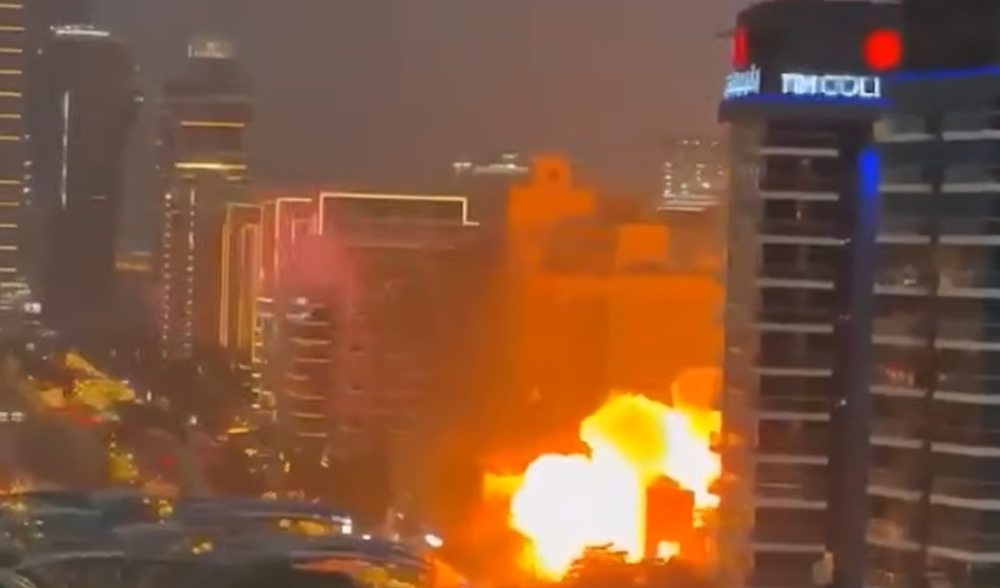

One of the outcomes of the Vietnam War and the protests against it was to eliminate the military draft. While I opposed that war and registered as a conscientious objector, I also regretted it when the draft was eliminated.
Why? Well, a draft meant that a whole lot of people and a wide cross-section of American society had a great deal at stake in any decision to go to war. It wasn’t just the men who would be drafted, it was their parents, wives, children, employers, and communities. A President had to think about that. A decision to go to war meant that a whole lot of Americans would pay a price, for many the ultimate price.
It was not a decision that should be taken lightly. Eliminating the draft has made it easier to go to war. It should never be easy to go to war. We should be always very, very reluctant to go to war. It is a last resort.
Another thing that made it properly difficult to go to war was the requirement of the Constitution that war be declared by an act and vote of Congress, the people’s elected representatives. This meant that a President and administration had to make a compelling case for war. It meant that there would be back and forth, debate and deliberation. And it meant that senators and representatives would be on the record as either supporting a war or not.
Supreme Court Justice Neil Gorsuch recently reminded us of the importance of congressional deliberation as a core part of a democratic republic. In a concurrent opinion on the tariff decision, Gorsuch observed, “Yes, legislating can be hard and take time. And, yes, it can be tempting to bypass Congress when some pressing problem arises. But the deliberative nature of the legislative process was the whole point of its design. Through the process, the Nation can tap the combined wisdom of the people’s elected representatives, not just of one faction or man. These deliberations temper impulse . . .”
By eliminating the draft and by-passing Congress, it has become far easier to go to war. Moreover, the stake we citizens and our elected representatives have in any war is now, by virtue of these changes, very much reduced. We have, as the phrase goes, “less — maybe no — skin in the game.” That is not a good thing.
One more factor is contributing to making it easier, far too easy, to go to war — technology. So called “precision-targeted” bombs, the use of unmanned drones and reliance on air power put more distance between most Americans and a war. That makes going to war easier. It makes Presidents less cautious and less reluctant to go to war or to engage in military operations that may be impulsive or not vetted by others.
I understand that the Iranian regime is terribly repressive and evil. For a long time it has been going after Americans, and it has kept the region in a state of violent chaos. Worse, it has slaughtered its own people, most recently by the thousands, this January. Young Iranians, in acts of great courage, peacefully protested the regime and were mowed down. I grieve for Iranians and for what was once one of the world’s great civilizations, Persia.
In a recent, and excellent interview on the program, “Amanpour and Company,” David Brooks said the thing about Trump is “he is never completely wrong.” There is usually an element of truth in his actions and attacks, be they on Maduro in Venezuela or elite universities in our own country. “But,” said Brooks, “he overreacts.” “It is as if you went to the doctor with an acne problem and the doctor says the answer is decapitation.”
All of the factors cited above — the absence of a draft, by-passing a supine Congress, and technological distancing — favor impulse and overreaction. They undermine a proper reluctance to go to war and the conviction that war is a terrible last resort. President Trump said recently that the only restraint on any action he wanted to take was his “own morality.” I for one did not find that reassuring. After all, this is the guy who told us in 2015, “I could shoot someone on 5th Ave. in New York and no one would do anything.”
So here we are. One man rule. No restraints. No guard rails. And really, at least when it comes to war and foreign interventions, no democracy.
Discover more from Post Alley
Subscribe to get the latest posts sent to your email.


I’m not sure what you mean by “eliminating the draft” — as far as I know, 18 yr old males still register for the special service and could be drafted, if authorized by Congress.
War technology has evolved considerably since Vietnam, particularly with regard to remotely controlable devices to inflict damage on other countries without putting American soldiers in harm’s way.
But we’re all less safe for it. The world is watching, and our comeuppance will arrive eventually.