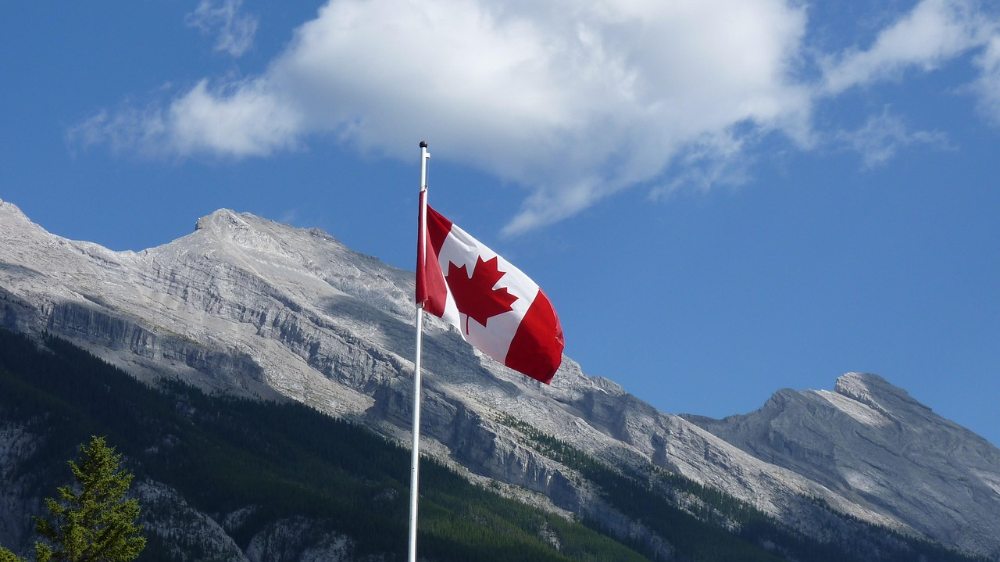

Trade wars have a way of producing inept generals. A case in point: Donald Trump arguing that America doesn’t need anything that Canada produces. As remedy to his belligerent ignorance, the President should look upstream on “our” Columbia River. The master stream of the Northwest has been reservoirized in interior British Columbia, holding water — at great environmental cost — for downstream power generation in the US. As well, B.C. Is our major natural gas supplier.
Canada’s Prime Minister Mark Carney is a smart guy. Educated in the U.S., his bachelor’s degree is from Harvard, his pedigree from Oxford. He is a a former Governor of the Bank of Canada and Bank of England. He is off to India, Australia, and Japan this month, part of a mission to double trans-Pacific trade.
He is about eating Trump’s lunch. “His intellect and experience are a good match for whoever occupies 1600 Pennsylvania Avenue,” says Craig McCulloch, a Vancouver journalist. Canada has fielded its best player in the global hunt for markets
We have a dog in this hunt. Among assets Carney offers trading partners is the Port of Prince Rupert, in northern B.C., which is the closest destination for trans-Pacific trade, with a railroad infrastructure that sends cargoes to the heartland of America. Sen. Maria Cantwell summoned reporters to an outdoor dock, on a raw cold day some years back, to point to the threat that that Prince Rupert posed to Ports of Seattle and Tacoma.
The Port of Prince Rupert was originally developed for export of metallurgical coal to Japan. Its opening featured a scene of hilarity. The government of B.C. Premier W.R. “Mr. Bill” Bennett had cut back the province’s social services, generating protests in places like Prince Rupert, a union town. A sit-in blocked the road to the export terminal. A bevy of Japanese bigwigs, gents in their 60s and upper 50s, had to hoof it to where dedication ceremonies were to take place. As they arrived, the suits were greeted by a local native high school band playing the Colonel Bogey march from The Bridge on the River Kwai.
Canada’s politicians have a fixation when it comes to megaprojects. The Prince Rupert port was developed to service two giant coal mines at Tumbler Ridge in northeast B.C. But those mines closed in 2000 and 2003. The action in the port is now cargoes headed east.
“We want to build our own cars and we don’t need cars from Canada,” Trump has claimed. But the Canadian and U.S. economies are intertwined. In 2024, Canada exported 1.1 million vehicles to the US. The U.S. sent north 650,000 vehicles.
Canada exports electricity from the giant Churchill Falls hydro project in Labrador. It sends oil south on the controversial Keystone Pipeline. The recently completed Trans Mountain Pipeline expansion will soon mean a sevenfold expansion of tanker traffic oil in the Strait of Juan de Fuca, but it also supplies West Coast refineries.
As well, Canada exports people. “Many Canadians shop and vacation in the United States: In the West, they winter in Arizona, and in the East the choice of dististinction is “la Florida,” as Les Quebecois call it,” says Vaughn Palmer, a veteran Vancouver Sun columnist. Some stay permanently. Comedian Michael J. Fox grew up a Vancouver boy. The late economist John Kenneth Galbraith was an Ontario native. Ex-BC. Premier Dave Barrett had a brother, an oceanographer in La Jolla, California.
They also shop here. A 30 percent decline in Canadians heading south — Carney has launched a buy-Canada effort — is particularly hurtful to Whatcom County. As a local joke has it at the Bellisfair Mall in Bellingham, the first words spoken by a Vancouver-area child are: “Attention K-Mart shoppers.”
Trump has shattered those ties, and has Carney scrambling to find expanded trade as well as influence as a “middle power.” Carney so positioned Canada in a recent, acclaimed speech at the World Economic Forum in Devos, Switzerland.
The Prime Minister’s political standing back home is healthy. With predecessor Justin Trudeau at the helm, polls predicted the governing centrist Liberal Party would be reduced to 55 or so seats in Canada’s governing House come last year’s spring election.. Instead, under Carney, his country’s “natural governing party” took 159 seats, just short of a majority. The left New Democratic Party was virtually wiped out. Three lawmakers have since defected from the Conservative Party, the official opposition party in Parliament. Carney is close to getting his majority in Parliament.
Trump’s “51st state” nonsense has produced unprecedented unity across Canada. The Angus Reid Institute, the country’s leading poll taker, summed up its findings in a release headlined: “Canadians continue to demand hard line on U.S. trade.”
A final point, made by Vaughn Palmer in an email to me: “Many Canadians make the distinction between the country and the people, especially individuals.” Translation: Trump is the ugly face of America.
This article also appears in The Cascadia Advocate.
Discover more from Post Alley
Subscribe to get the latest posts sent to your email.