
A strange new choreography seen in countless videos has riveted eyeballs around the world as ostentatiously armed and masked federal immigration agents break down doors or haul people out of cars. In Minneapolis, flocks of activist observers holding mobile phones high over their heads swoop in, alerting neighbors with shrill whistles and filling the otherwise quiet streets with shouts of “ICE out!”
Cities, suburbs, and small towns across the country targeted by the Department of Homeland Security have virulently rejected the Trump administration’s mass deportation program. A remarkable aspect of Minnesota’s resistance is not only the willingness to endure violence and arrest, it is the effectiveness of an extraordinary mutual-aid network that support it, largely behind-the-scenes.
That activism and those networks vanquished the invasion. On February 12 the White House border tsar announced the end of the surge, which began in December,
The appalling size of the militarized immigration roundup, it’s ever-shifting and dubious intentions, and its deliberate aggressiveness and brutality spurred the rapid assembly and coordination of a volunteer infrastructure that supports targeted neighborhoods and people. “It was a mistake to pick the Twin Cities, “ said Thomas Fisher in an interview. He is the Director of the Minnesota Design Center at the University of Minnesota’s architecture school, “We have ways to fight back they didn’t get.” (His comments are his own, and not necessarily the views of the University of Minnesota.)
Volunteers began standing on street corners, watching for ICE activity and alerting neighbors to its presence with shrill whistles. Activist cadres arrive, organized via Signal chats.
With targeted people fearing drive-by detentions, a massive effort to keep those families fed has grown. Volunteers ferry children to school, and adults to jobs so that they are not snatched on the street. Teachers support frightened and confused children in the schools.
Fisher, shared a list of resources that the Design Center has compiled and regularly updates. “It shows the size and scope of the community networks here,” he explained. Across 17 categories it includes some 200 aid groups as well as on-line and in-person resources that train and support activists, and help arrestees know their rights. There are groups offering legal assistance in multiple languages, access to rent and small-business support, and portals to report illegal behavior by Border Patrol and ICE agents.

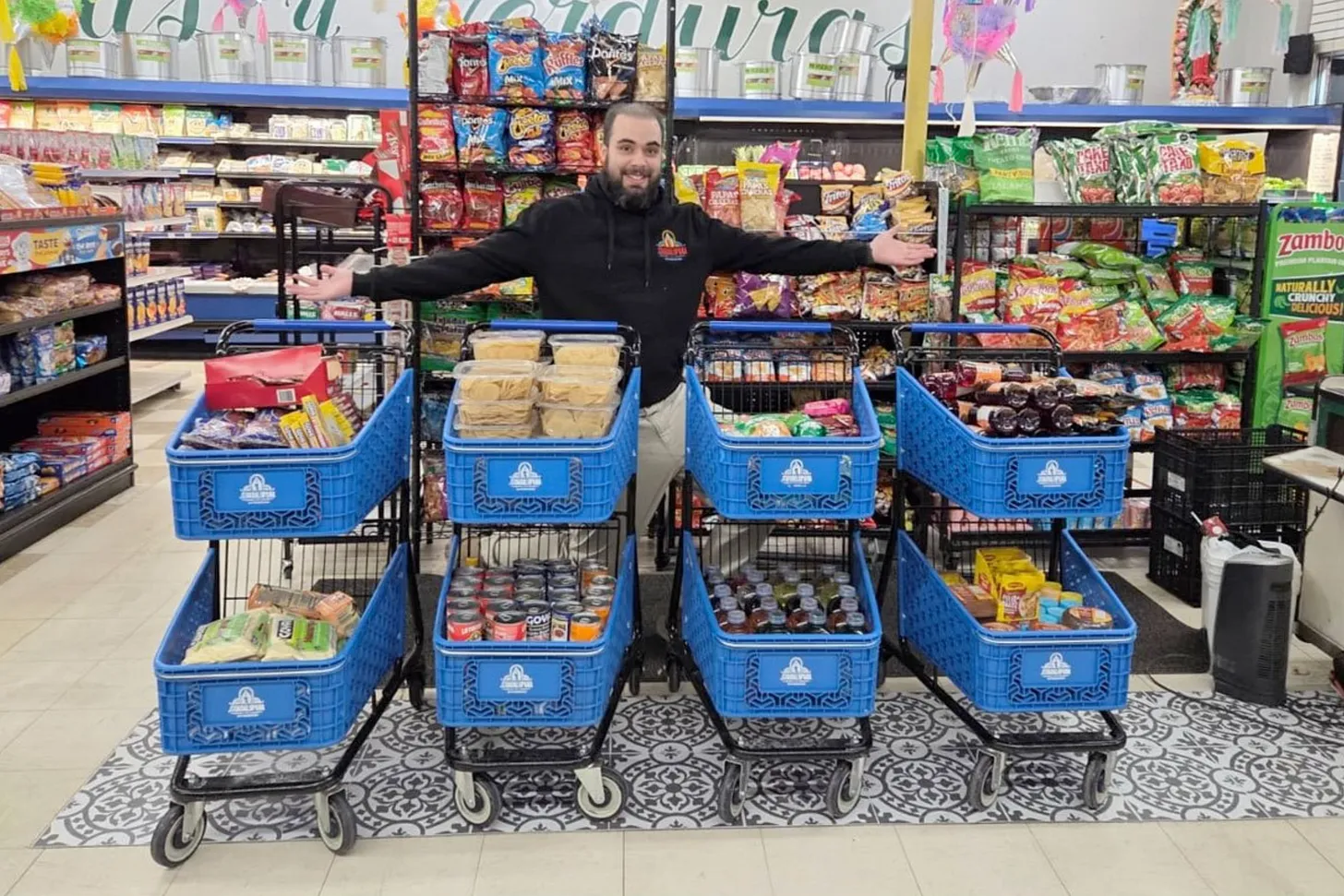
More than 60 food stores, food pantries, coffee shops and delis accept food donations and coordinate volunteers to contact needy families and deliver groceries to them. Restaurants run by immigrants and Somali refugees are listed so that people can support them through their patronage.
There are links to connect those who wish to donate to assist people who have been forcibly detained and deported, including GoFundMe accounts for the families of Renee Good and Alex Pretti, both gratuitously shot by ICE agents. Tow truck companies offer free return of vehicles abandoned when their drivers are detailed by ICE agents. (The MN50501 Mutual Aid link includes many of these organizations.)
A Mutual Aid Ethos
Mutual aid organizations are found everywhere, but the depth and speed with which Minnesota’s networks organized in response to the surge was not happenstance. It springs from a unique mutual-aid ethos endemic to the Twin Cities.
The masterminds of mass deportation probably felt that cities were weak and would readily cave when overwhelming militarized force was applied. It hasn’t worked out that way. The Twin Cities built this infrastructure so rapidly because it is a place with a specific, widely shared identity and an ethos that is worth defending. The resistance won tactical victories against overwhelming force, and it exposed the moral bankruptcy of the entire enterprise, melting national support for mass deportation.
Learning to build a mutual-aid infrastructure is increasingly important. It’s not just empowered authoritarians wielding limitless funds who may keep attacking cities. Economic volatility is not going away.
Climate-change effects are also delivering body blows to communities in the form of storms, floods, fires, droughts, and rising sea levels, as well as general weather volatility. (I write as a rare deep freeze in New York City threatens the vulnerable.) A resurgent right wing in Congress and the current administration supports the withdrawal of disaster recovery and rebuilding resources. More and more, communities are on their own.
“Minneapolis shows up”
Activists in the Twin Cities, imported tactics that succeeded in Chicago and Los Angeles, but the surge also revived activist and mutual aid organizations founded to help people during the Covid pandemic and to protest the police killing of George Floyd in 2020.
“Trump and his people argued that the agitators must all have been paid,” said Fisher. “How little they understood this culture. The last thing people here expect is to be paid for doing work in the community.”
Anyone who chooses to live in the Twin Cities, knows that a winter climate of treacherous blizzards and sub-zero temperatures is no joke. “There’s a willingness to help forged by knowing we are all at risk,” wrote Anna Marie Cox in The New Republic. Thus neighbors shovel snow off an elderly person’s driveway and stop and help rescue a car stuck in snow, since the occupants “could freeze to death,” said Fisher. Since everyone will sometime need assistance, people take pride in helping, knowing it will be returned in kind.
“This is what Minneapolis does: It shows up,” a shop owner told the New York Times. “I mean, we’ve done it for decades.” Historically, Minneapolis saw considerable immigration from Scandinavia, where the severe climate—as well as the Lutheran church’s emphasis on selflessly helping the needy—encouraged a solidarity, where cooperation and collaboration becomes the natural means of addressing challenges.
Exposing the brutality of mass deportations
Though DHS swamped the city with some 3,000 agents of ICE, the U.S. Border Patrol, and other agencies, phalanxes of observers—cell-phones held high—showed senseless indiscriminate violence being applied against ordinary people and those least able to defend themselves. Some images embedded themselves in the national consciousness: Liam Conejo Ramos (below right), the five year old boy with the Spiderman backpack sent to a grim detention center in Texas. A 56-year-old U.S citizen (below left) being hauled out of his house in his underwear.
But of course a high price was paid: Unforgettable video captured an ICE agent firing point blank into the driver’s side window of Rene Good’s car (she was a U.S. citizen), and the shooting of VA nurse Alex Pretti (also a citizen) as he lay prone and unmoving.

America came to realize that these are not the hardened criminals the administration claimed were being targeted, especially as officials brazenly lied about the actions of Pretti and Good when video evidence to the contrary could be—and was—accessed by anybody. The lies and the excessive and unnecessary violence undermined national political support for mass deportation—a signature program that helped Trump win election.
It may yet lead to the resignation of the shameless Kristi Noem, head of the Department of Homeland Security, and other officials. It could be a tipping point: the moment when the nation at last tuned into the Trump administration’s massive abuses of power.
How the Twin Cities won
It’s an extraordinary accomplishment by thousands of volunteers against the enormous resources the federal government threw into the battle it started with Minneapolis and some of its suburbs.
Can any city do this? The Twin Cities’ mutual aid infrastructure resonated with me because of work I had done for a book on Seattle’s distinctive value system, which is similar to that of the Twin Cities and sprang from similar roots. Seattle created effective mutual-aid organizations in times of extreme stress, such as a general strike that closed the city down in 1919 to protest mass layoffs after World War I. Seattle was particularly hard hit by the Great Depression but its famous “Hooverville” shack town devised its own self governance and barter economy (infuriating business interests), called a “Republic of the Penniless.” When Boeing went into a tailspin in 1970 leading to mass unemployment, volunteer-run food banks proliferated and community gardens blossomed with some of their production given away.
Minnesotans and people of the Midwest and Pacific Northwest tend to be politically liberal but are by other definitions conservative: they follow the rules; a certain probity is innate. They are not by nature cynical and they don’t game the system. These are people who move to the political left when the powerful push them up against a wall (which seems to be how most non-wealthy Americans feel these days). They expect honesty, decency, respect, and responsiveness from government. The DHS surge, along with its horrors, infuriated Minnesotans because it violated the social contract.
Mutual aid programs are often castigated as socialist or communistic—and they are often led by people with leftist viewpoints. Mutual aid is only ideological in its rejection of the kind of mindless individualism that rarely countenances collective action, such as strains of Christianity that recognize no obligation to aid the larger community.
Other cities are beloved and command loyalty in ways not found in urban places where no larger identity transcends the subdivisions and strip malls. Yet many lack the Minneapolis acumen.
Minneapolis offers a recipe for other cities under siege by an administration that possesses a special animus toward cities that don’t bend the knee. The ingredients: Find out what people need. Organize and volunteer. And connect organizations with each other to present a comprehensive, unified resistance. People who have felt helpless to defend America against a lawless, corrupt and vindictive administration now know what they can do.
Discover more from Post Alley
Subscribe to get the latest posts sent to your email.


Thank you for writing one of the best pieces I’ve ever read in Post Alley. It’s brilliant not because it adopts my political ideology (though it mostly does); it’s brilliant because it offers both practical advice and a hopeful vision. We all can learn from Minneapolis: give a damn; get off toxic social media and get physically connected with neighbors; listen to them; lift up those who need our help now; don’t wait for (or piss and moan about) government.
The magnificent resistance by the people of Minneapolis is truly a gift that will keep on giving. They have set an example for us all that is inspiring — and they have created a template for future victims of Trump’s aggression to emulate. Minneapolis’s experience will not only inform the efforts of other cities but is the standard by which these efforts will be measured.
Trump has an eye for symbolism. He targets victims whose defeat will be demoralizing to his future prey. One reason he chose Minneapolis was no doubt his calculation that it represented a progressive bastion whose humiliation would send a strong message to other cities. This high profile strategy was successful early on, perhaps due to the element of surprise. He brought the Paul, Weiss law firm to its knees, a Big Law titan widely regarded as a model of what a socially responsible firm should look like. Trump crushed the administration at Columbia University and continues to taunt Harvard. Harvard is resisting, but would be happy to settle if the price is not outrageously high.
But Trump dramatically lost his gamble with Minneapolis. The contrast between the ugliness of ICE’s behavior and the courageous and peaceful humanity of the resistance has become instrumental in turning the national tide of public opinion against Trump. Minneapolis was challenged and rose to the occasion. The would-be dictator retreated.