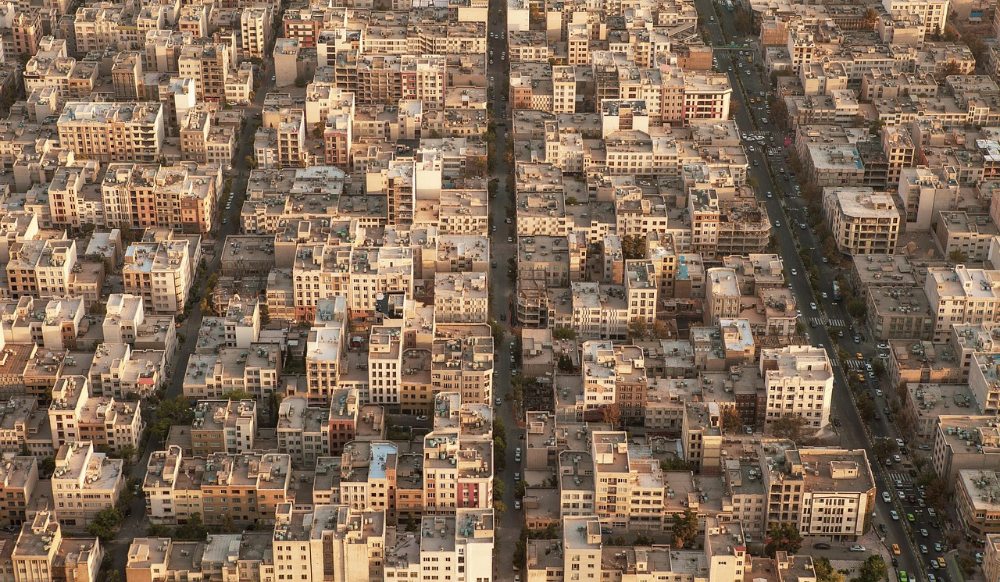

On Saturday, we and our Israeli allies made war on Iran with bombs and missiles. Later that day, our time, President Trump declared that Israeli strikes had killed Supreme Leader Ayatollah Ali Khamenei and some 40 of his close associates. On Sunday, Iran’s remaining leadership admitted to Ayatollah’s death.
On Sunday also, American news had video reports of people on the streets of Iran’s capital city, Tehran, waving placards with the dead leader’s image. A few streets away, other Iranians were dancing and singing, celebrating Khamenei’s death.
Ninety million Iranians and millions of Iranian exiles in countries around the world do not agree on the value of this execution. Iranians are not only not of one mind, but not of one religion, language, political persuasion, or degree of education and wealth.
I was there for one month in 1968, when the population was a mere 27 million. I experienced the wide diversity then, and even assuming that emigration has taken more of the wealthy, the educated, and those from religious minorities away, everything I have read about Iran in the past 58 years tells me that diversity still exists.
There are still people who speak Azerbaijani, Arabic, Kurdish, and various dialects of Farsi. There are still communists and monarchists — followers of the late and deposed Shah Reza Pahlavi hopeful for the return of his son, Reza Pahlavi — in quiet hiding or in prisons. There are still Sunni Moslems (the vast majority in Iran are Shia), Bahais, Jews, and Christians. And there are secularists who wish for an Iran without religious leadership of any kind.
The pundits and Iranian partisans of all persuasions, arguing one way or another on breaking up the religious government of the Ayatollahs, born in the revolution of 1979, all wonder at next steps. They cite Iraq and Afghanistan, when we did not have next steps planned. They cite human rights, women’s rights, national sovereignty, religion, the character and economies of neighboring Arab states, and the overwhelming influence of Israel, and about next steps right now, this day and week.
I think that an outcome we cannot even imagine is as likely as any of those put forward today. I have great hesitancy based on the facts of previous American interventions that linger in the minds of proponents of the Ayatollahs and those who advocate for human and women’s rights and democracy.
The futures they all imagine are tied to continuing involvement of America in Iran’s internal affairs, from at least 1953 to today, from a CIA-engineered coup; through the Peace Corps; the Shah’s oil boom and vast expenditures for American weapons; the Shah’s White Revolution of the 1960s; the 1971 multi-million dollar celebration in the Persepolis desert to mark 2,500 years of the Persian Empire; the 1979 Revolution and its American hostages; the Shah’s contentious settling in the US at the behest of Henry Kissinger; helicopter crashes in a foiled rescue attempt that probably ruined any chance for a second Carter term; a vicious eight-year war with Iraq, 1980-88; and the 12-day war of June 2025; and this week’s bombings.
In 1968, I was part of a two-person evaluation team assessing the programs employing hundreds of the Peace Corps Volunteers working across the country. My partner, Park, had taught at the American University in Beirut, learned Farsi, and married an Iranian. I was on Peace Corps staff in Washington D.C., had served as a Volunteer in Turkey, and was near-fluent in that language.
I would travel in the Northeast of the country, including Tabriz, the center of Azerbaijani Iranians. My “Ankara Turkish” made it possible for me to communicate in Azeri. I also visited some of the Kurdish-speaking sites in the Northwestern part of the country. Park would handle the heavy load of Volunteers in the major cities for whom Farsi was the common language, and we would go together to several places where Arabic was standard.
My first memories of Tehran are of Park taking me to the bowling alley which was adjacent to the Hilton Hotel, where young Iranians in mini-skirts shorter than any I had seen in Washington D.C. smoked and cavorted. I recall the women in police uniforms at traffic circles blowing their whistles, and the huge Tehran bazaar.
All of this comes flooding back with today’s headlines. Memories, and 60 years of following events in that country from a distance through reading and personal encounters. The most salient bit of knowledge about Iran, the overthrow of democratically elected Prime Minister Mohammad Mossadegh and reinstatement of Shah Pahlavi in 1953, was not part of my knowledge until much later. Mossadegh had nationalized the oil industry, and the British — think British Petroleum — and our CIA engineered the coup. The CIA formally admitted their role in the overthrow in 2013 — 60 years after the event. I read about it in Stephen Kinzer’s book, All the Shah’s Men, published in 2003. The Iranians I met in 1968 were very much aware of the American role in that overthrow.
Let me evoke other events of my time that echo today. About the Christian missionary who was caught, being smuggled out of the country. He and I stayed in the same hotel in Tabriz, where he hid in his bed and literally shook, waiting for the arrival of a rescuer (Christian missionizing was illegal, even then). The huge American consulate in Tabriz was from another time, when missionaries were welcome and the consulate had a full staff. It was skeletal in 1968.
Or the Peace Corps Volunteer in Mahabad, a rabid Kurdophile who knew the clans by the scarves men wore, who told of American journalists who came through interviewing Kurds who traveled through Mahabad — the site of a brief 1946 Kurdish revolution and independent state — as Shah-financed Kurds traveled into Iraq to needle Sadaam Hussein in Iraq.
In those years the Iraqi ruler gassed many of his Kurdish subjects, and in a later war with Iran (after the Iranian Revolution) Iraq was backed by the United States seeking revenge against the Ayatollah-led Iran. This terrible war cost the lives of thousands of young Iranians, who charged into battle with wooden weapons and the promise of Muslim heaven.
My interviewee, the Volunteer in Mahabad, was older, a military veteran who wore his old combat boots and lusted after the pretty and devout Baptist Volunteer who lived in the same town and stayed with a Christian family. We went to a restaurant that served alcohol, so it must have been owned by an Armenian or Jewish family. Moslems could not serve alcohol in their restaurants in a bargain with the regime.
He quietly named the clan alliances of Kurdish customers. We ordered drinks, and then were joined by a table of gendarmes, who were Azeri. The Shah routinely sent gendarmes from one ethnic group to regions with majorities from another group. The Azeris began ordering vodkas, lighting them afire, and drinking them.
We met with a group of Peace Corps engineers and city planners at a conference in Tehran. They worked at several sites around the country, but had a common complaint. They had joined the Peace Corps to do good work for ordinary citizens, and they were often put to working building parks and monuments to the Shah. They thought it an indication of his growing megalomania. The subsequent Celebration of 2,500 years of the Peacock Throne in lavish tents in the desert confirmed their suspicions.
On the other hand, several Volunteers working in literacy and health care lauded the Shah’s White Revolution, which gave women the vote. So, the Peace Corps Volunteers, like Iranians themselves, were not of one mind. When Park and I told Ambassador Armin Meyer how divided the Volunteers were on the issue of the Shah, citing the monuments to the Shah that Volunteers were asked to work on, we were essentially asked to leave his office.
The ambassador must have wanted the Shah’s success and shepherded his oil policies, his purchases of American weaponry, his friendship with America that would all be the diplomatic legacy he left to his own country.
There was another story, one I would continue to learn about in Stephen Kinzer’s All the Shah’s Men, in Azar Nafisi’s Reading Lolita in Tehran, and in a new book I am reading now, The Lion Women of Tehran, by Marjan Kamali. The story is about the factions and the machinations at the time of the 1979 Revolution, about the presence of communists and democrats along with the religionists. About how America was so afraid of the communists at the time and saw the Ayatollahs as more amenable to our interests. Which of course proved wrong!
It is, as most people with long experience in the Middle East say, a very complicated affair with no clear outcome. I quote another Iranian writer who goes by the name Mitra Vand, which is a pseudonym:
“This rescue, arriving in the form of missiles, does not seem to have come with a plan for the day after. There are many reasons to hope, but we must also ask the most uncomfortable questions: What if freedom is not the immediate outcome? What if the regime survives? What if repression deepens? What if the space for change narrows instead of expanding?
“These are the questions swirling in my mind as I hold my newborn child in my arms. I think of the mothers who will never hold theirs again. History will debate strategy. The mothers will count graves.”
Discover more from Post Alley
Subscribe to get the latest posts sent to your email.

